
Last updated September 21, 2026
Full 25-point door and opener safety check with every visit - springs, cables, rollers, tracks, and your LiftMaster or Chamberlain opener included
You get a price before we start. It does not change when the truck arrives.
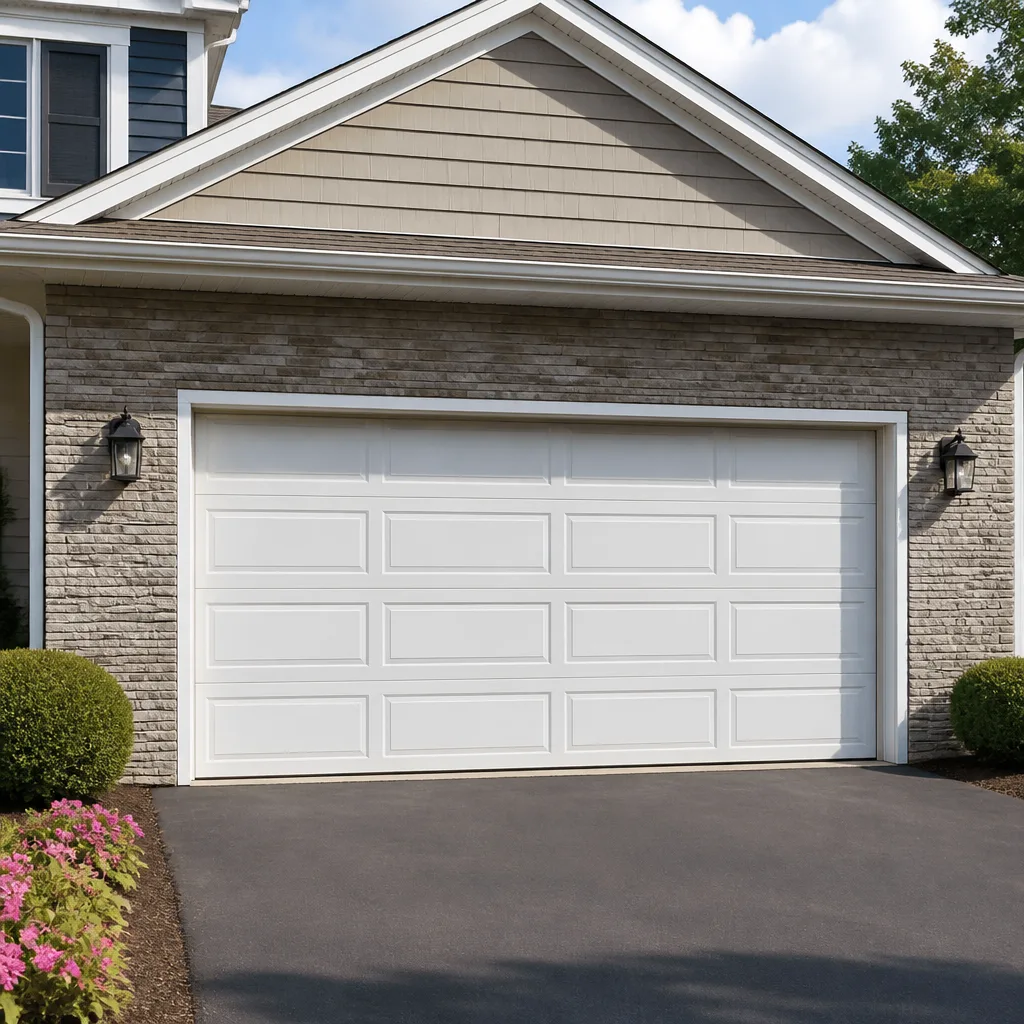
Carriage house
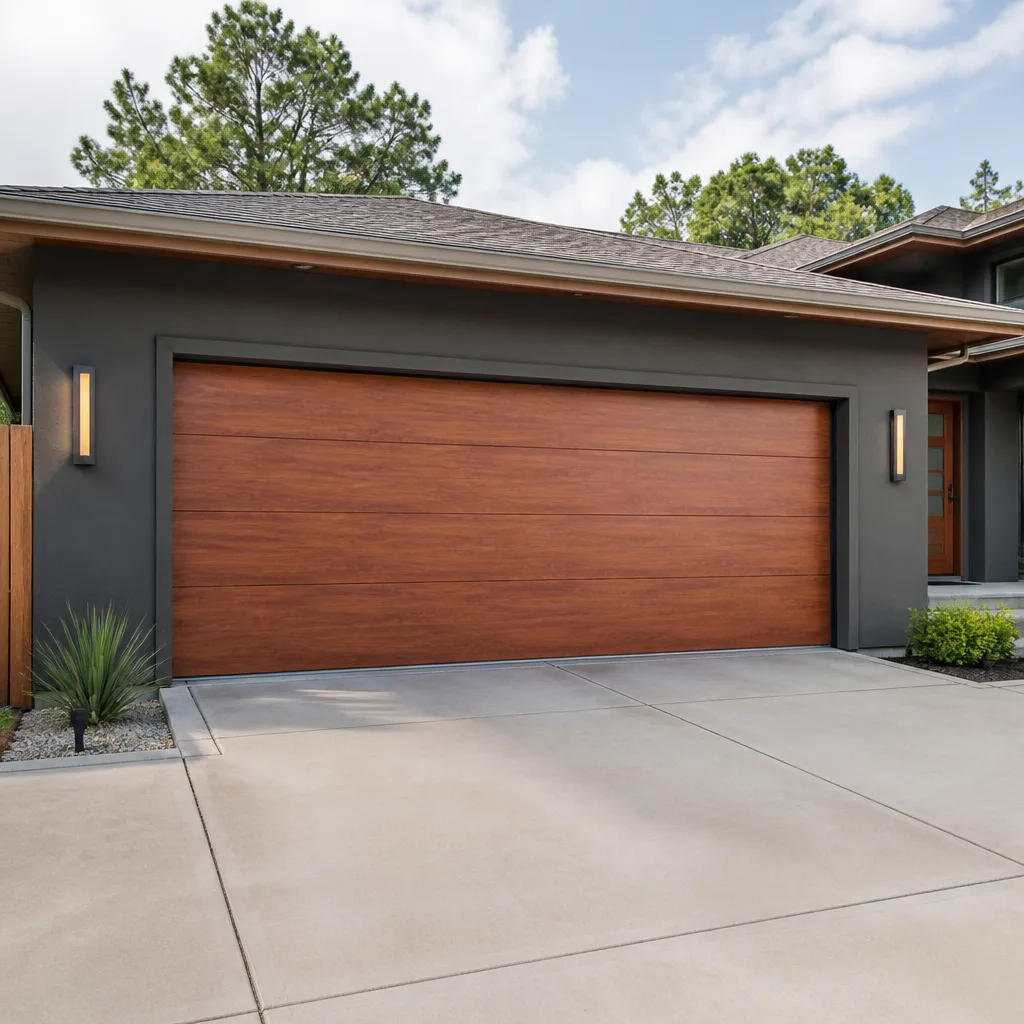
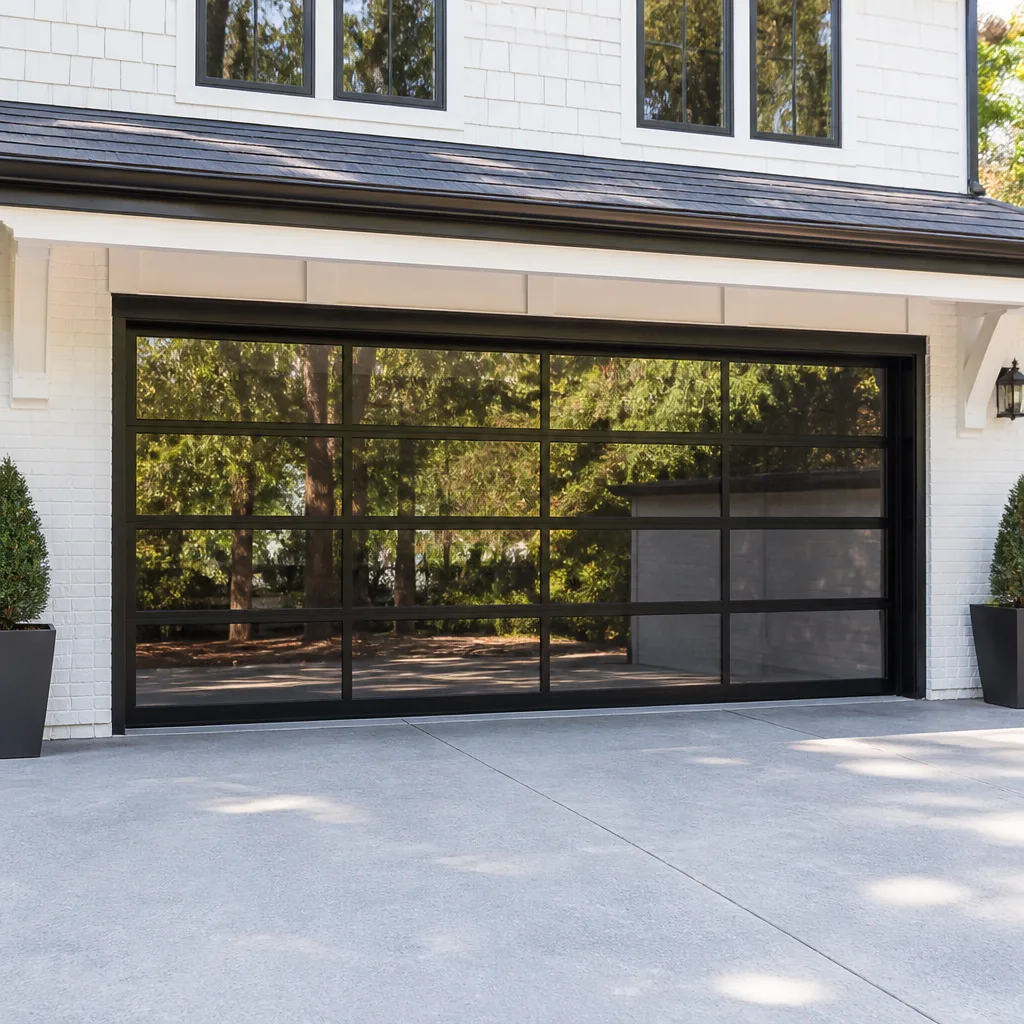
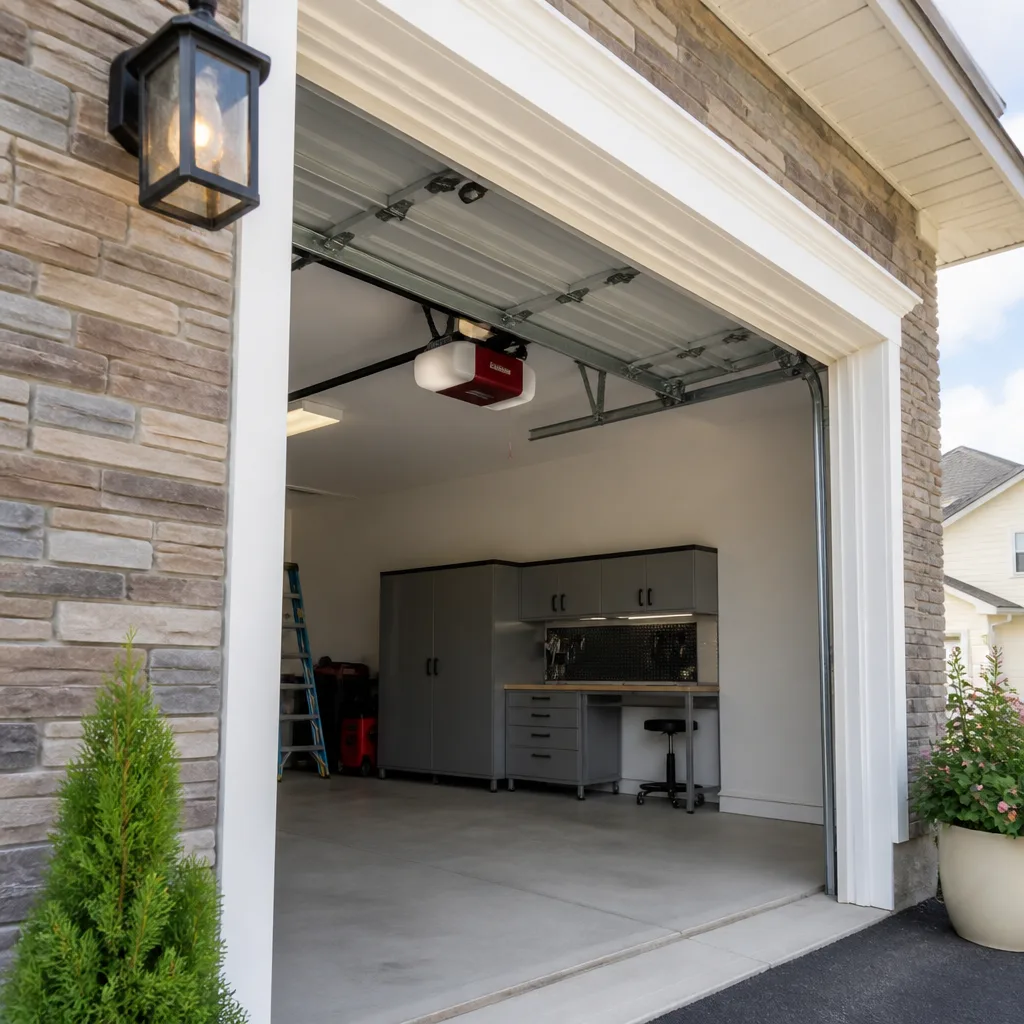
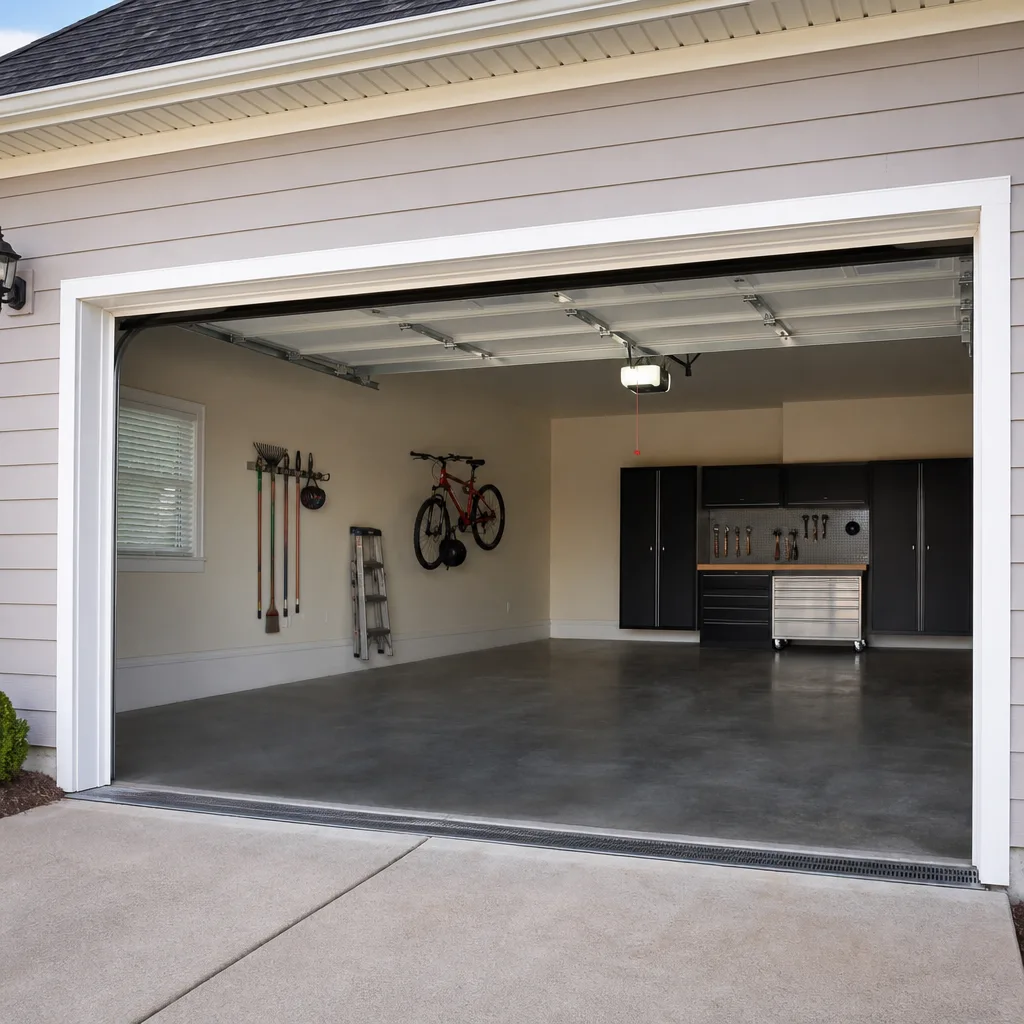
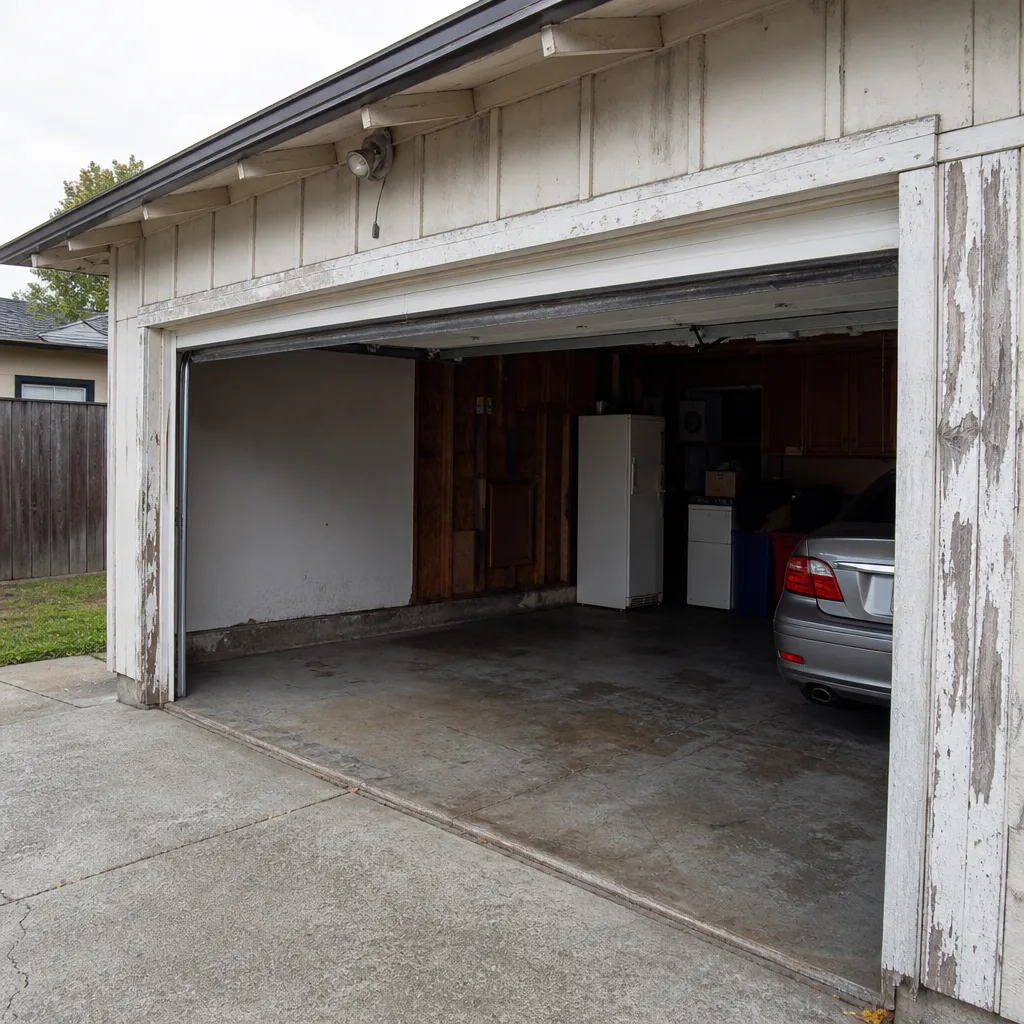 Before
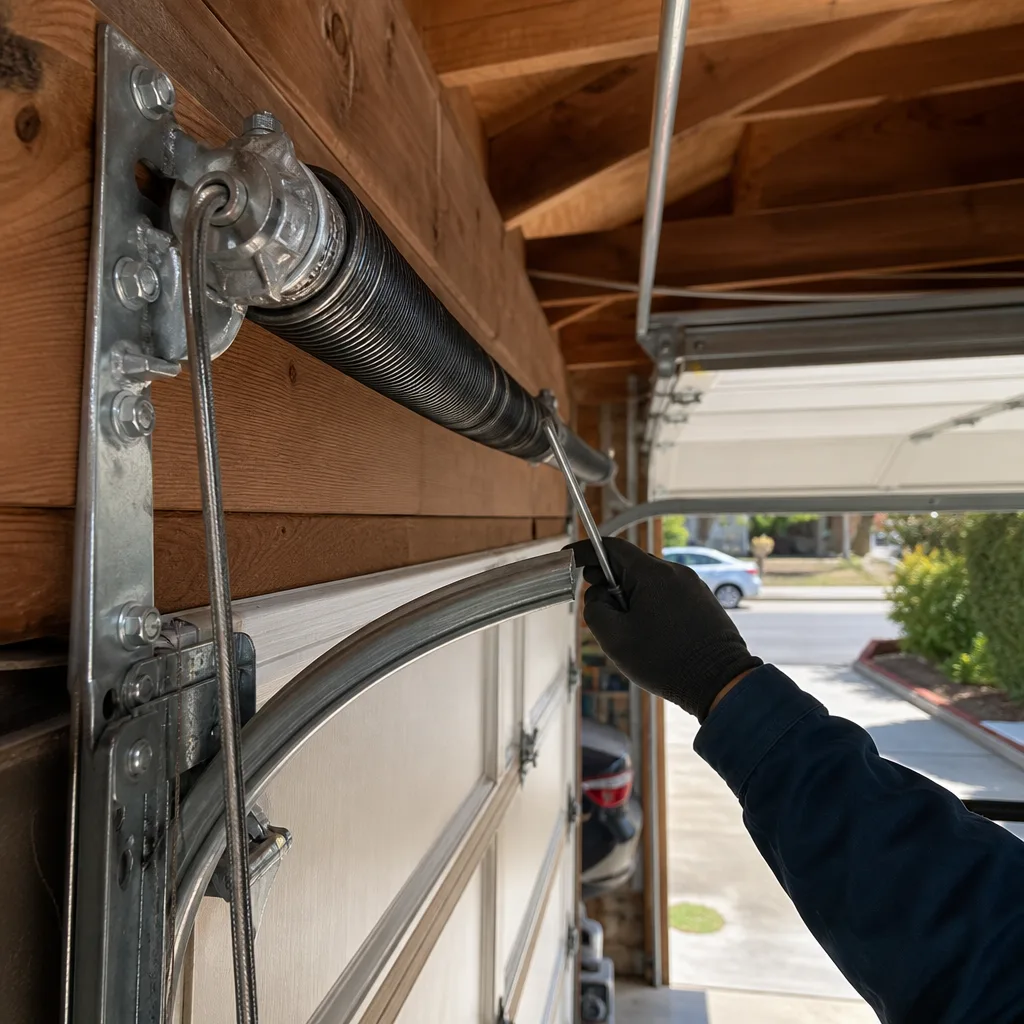 After
After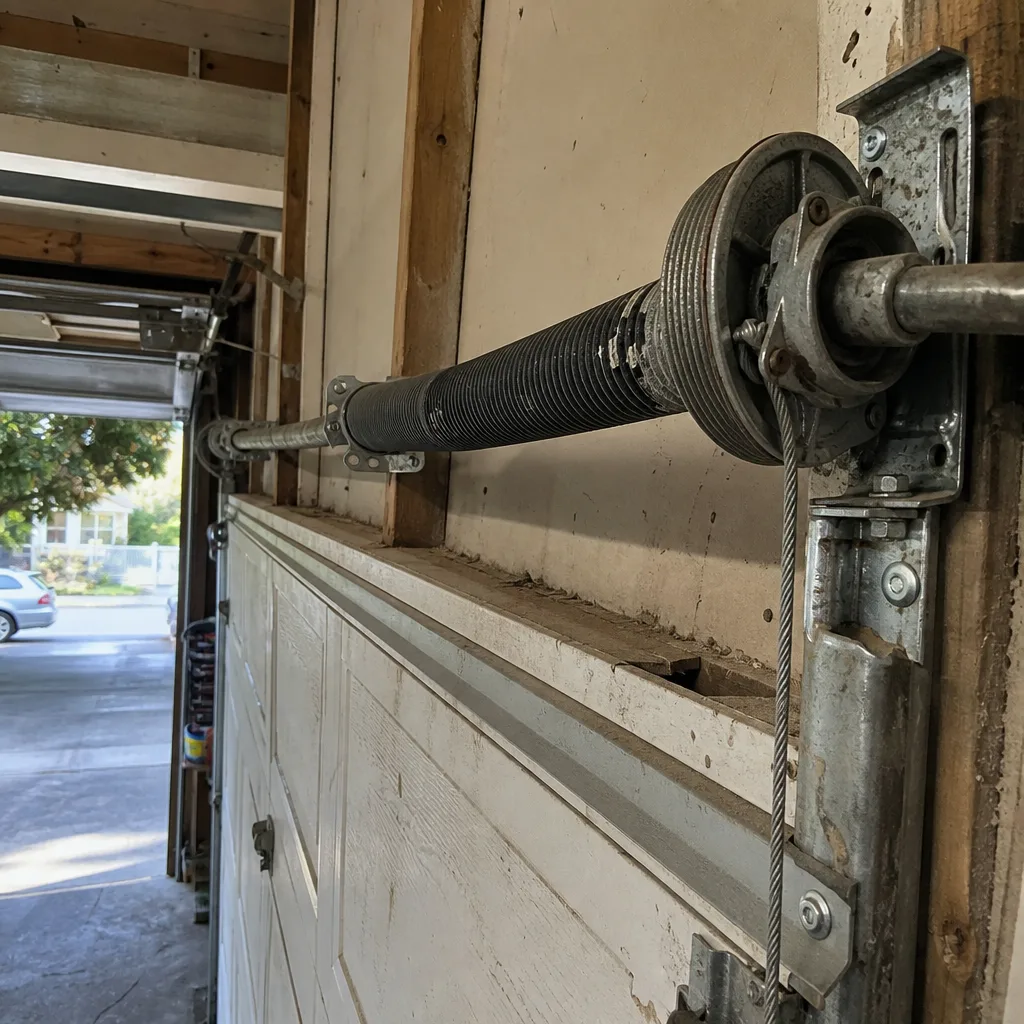 Before
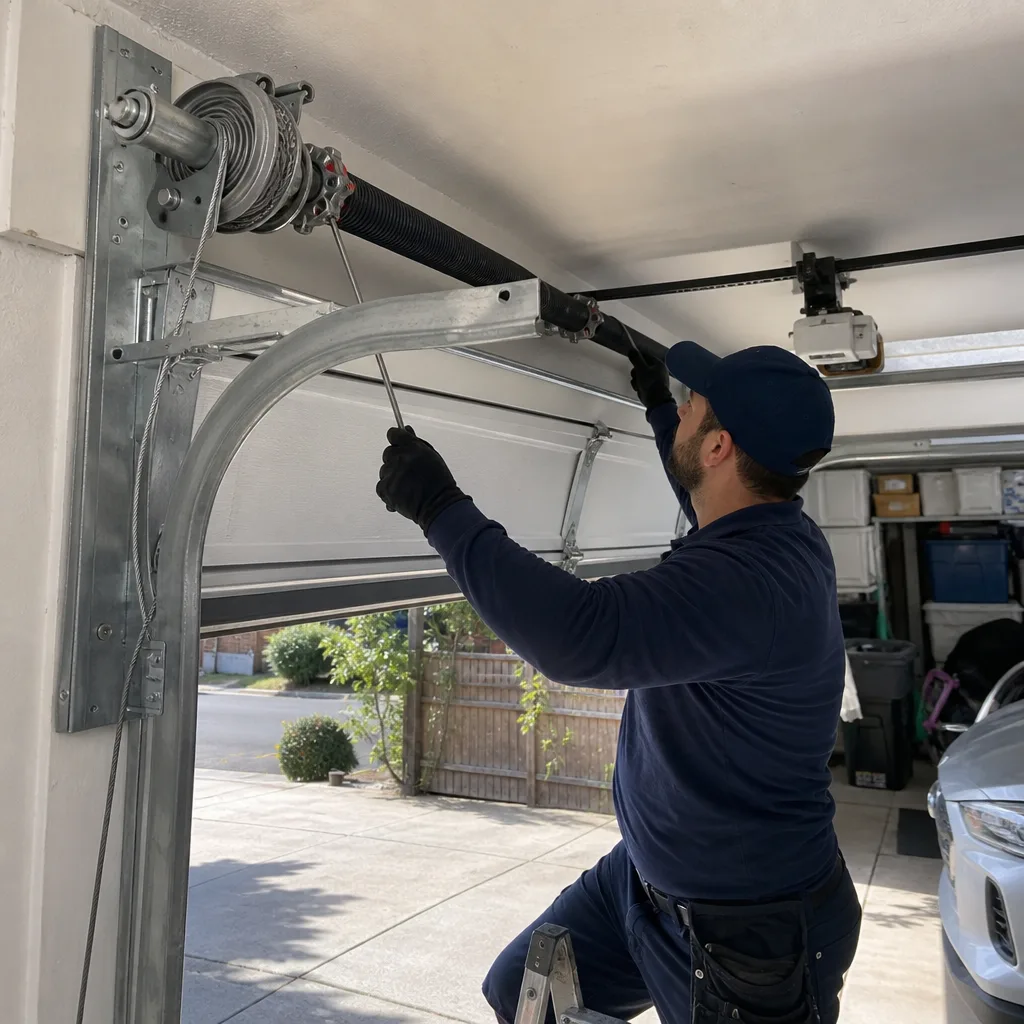 After
After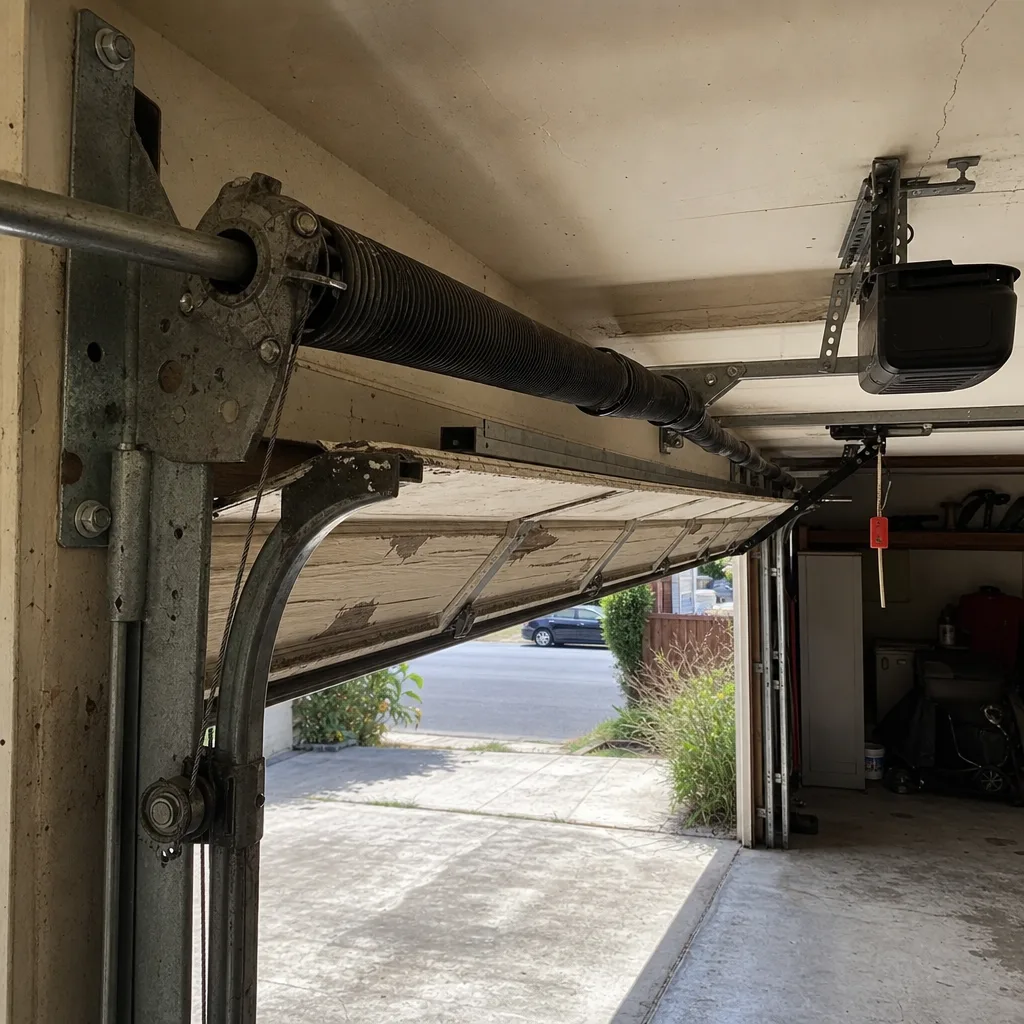 Before
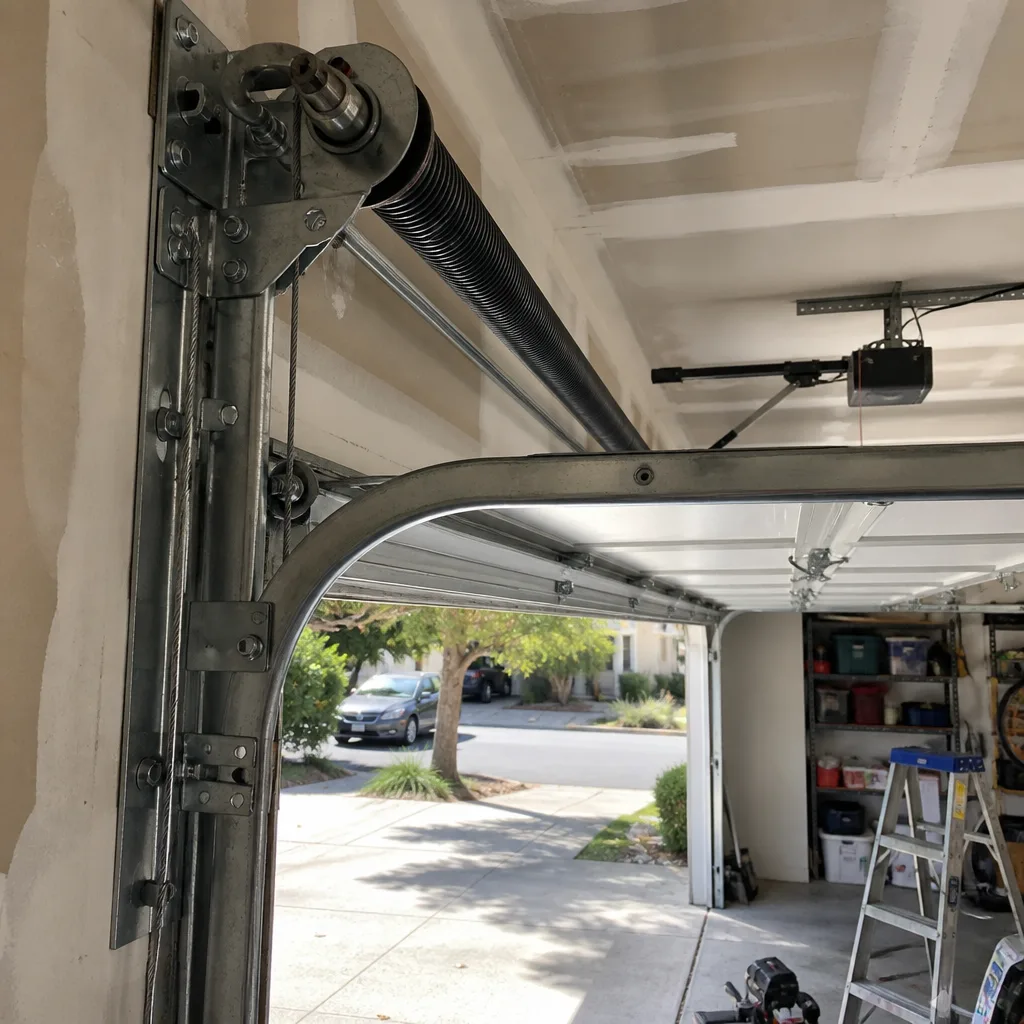 After
AfterSeasonal Garage Door Care for Oakland: Year-Round Homeowner’s Guide
Oakland’s dry season routinely produces temperature swings of 30 to 40 degrees between morning and afternoon. That daily expansion and contraction of steel door sections loosens hardware that tested fine in winter - a failure mode that doesn’t exist in more temperate climates and isn’t covered in standard maintenance literature. Most garage door guides assume four distinct seasons. Oakland has three: a wet season, a dry season, and a June-gloom transition. This guide maps maintenance tasks to those actual periods, with specific thresholds, inspection points, and a one-page log template that turns two years of homeowner notes into actionable history for any technician who quotes your next repair.
Quick Answer
Garage door maintenance in Oakland should follow three seasons, not four: a pre-wet inspection in October (weather seals, cable check, drainage), a dry-season hardware re-torque in May (addressing thermal expansion), and a June-gloom assessment for wood door swelling. Photo-eye sensors need cleaning every 6-8 weeks during wildfire smoke season, typically August through October. A simple seasonal log tracking these tasks prevents most emergency calls and gives any contractor documented history before they quote.
Table of Contents
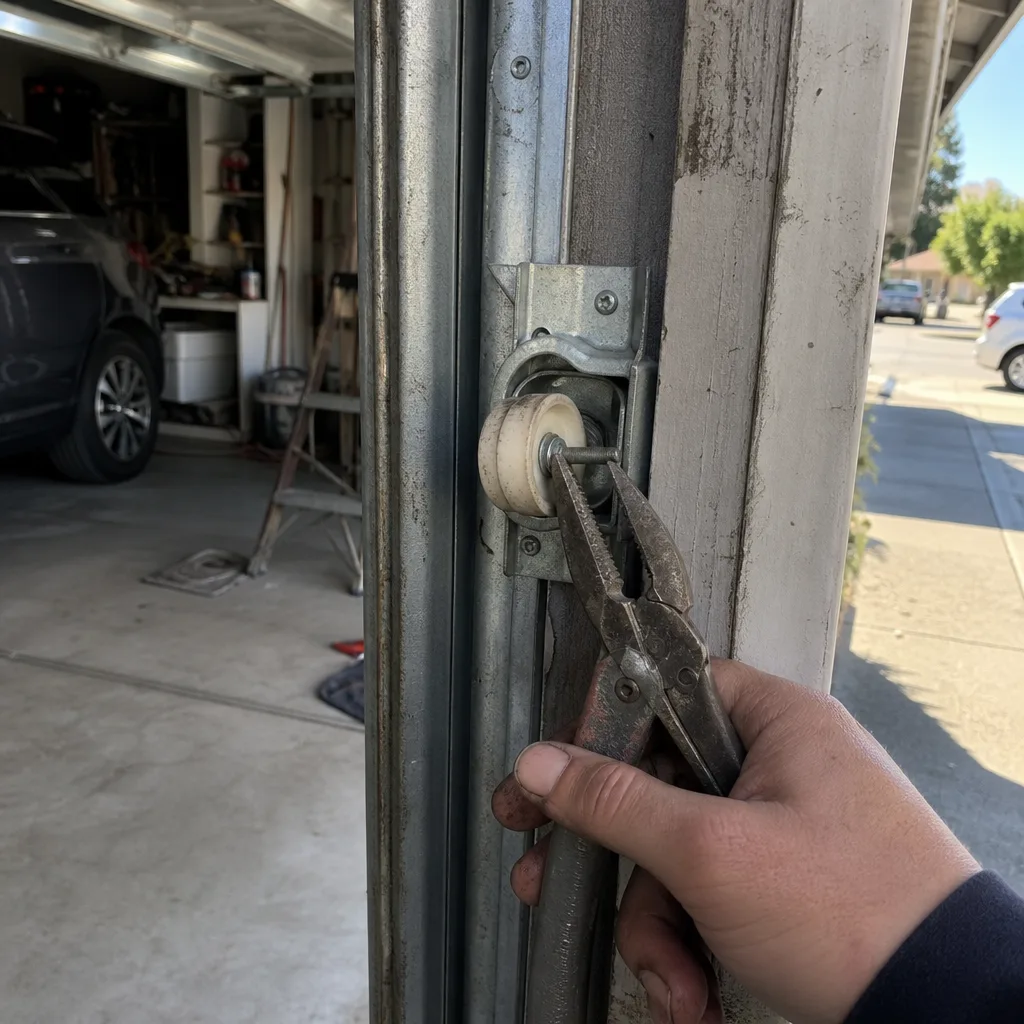
- Wet Season in Oakland: October Through April
- Dry Season in Oakland: May Through September
- The June-Gloom Transition: Wood Doors and Humidity Thresholds
- Wildfire Smoke Season and Photo-Eye Sensor Maintenance
- Thermal Expansion Hardware Check: Which Fasteners Back Out
- The One-Page Seasonal Log Template
- Common Mistakes to Avoid
- When to Call a Professional
- Frequently Asked Questions
- The Bottom Line
 Before
 After
AfterWet Season in Oakland: October Through April
Oakland’s wet season delivers nearly 90 percent of annual rainfall, concentrated between November and March. For garage doors, this shifts the risk profile from thermal stress to water intrusion, seal degradation, and cable corrosion. The critical window is October, before the first major storms, when dry-weather cracks in weather stripping haven’t yet become active leaks.
Pre-Wet Inspection Task List
- Weather seal compression test. Close the door on a strip of standard 20-pound copy paper at multiple points across the threshold. Pull the paper with moderate, steady pressure. If it slides out without tearing, the bottom seal has lost compression and needs replacement. In Oakland’s Hills neighborhoods - Montclair, Piedmont Pines, Redwood Heights - we see accelerated seal hardening from UV exposure at elevation, often 18-24 months instead of the typical 36-month lifespan.
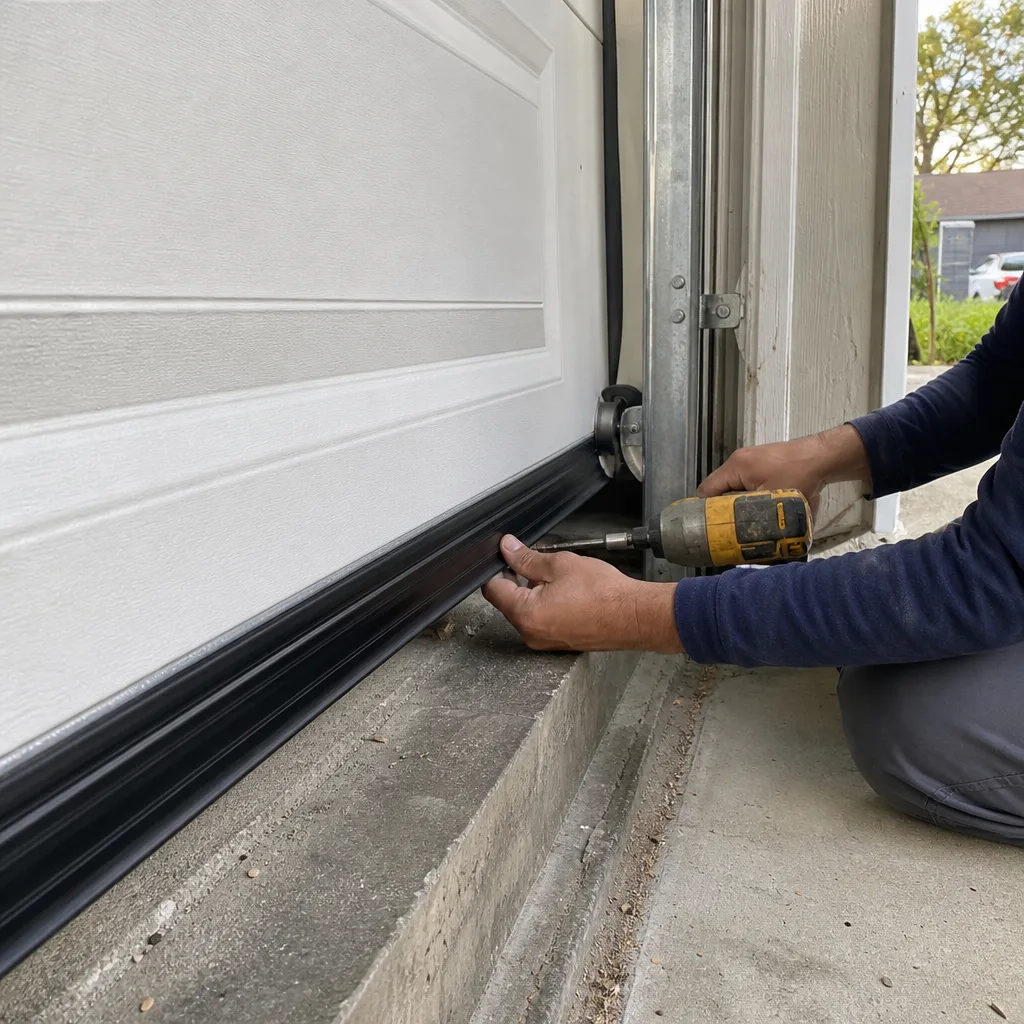
- Bottom seal replacement threshold. Measure the existing seal’s profile (T-end, bead-end, or bulb-type) and note the door width to the nearest quarter-inch. Replacement is straightforward on steel doors with retainer channels; on older wood doors in Rockridge or Temescal, the retainer may be nailed or screwed directly to the bottom rail, requiring more careful disassembly. The cost for professional replacement in Oakland runs $85-$180 depending on seal type and whether the retainer itself has corroded.
- Cable visual inspection. Torsion cables - the braided steel lines that lift the door - develop surface rust in Oakland’s wet season when garage humidity rises. Look for fraying, kinking, or any broken strands within two inches of the bottom fixture, where water drips from the seal gap. A cable with more than three visible broken strands needs replacement; one with surface rust but intact braiding gets documented and re-checked in 60 days. Safety note: torsion cables are under extreme tension and store lethal energy. Visual inspection only - never touch or attempt adjustment.
- Track drainage and debris clearing. Vertical tracks accumulate leaves from live oak and eucalyptus, particularly in hillside garages with sloped driveways. Remove the bottom track bracket bolts, slide the track outward slightly, and clear debris with a dry brush. Check that the concrete pad beneath the vertical track hasn’t cracked or settled; water pooling here accelerates bottom roller corrosion.
- Opener safety reverse test. Place a 2×4 flat on the threshold and close the door using the wall button. The door must reverse within two seconds of contact. Test the photo-eye obstruction function by passing a broom handle through the beam while closing. Both tests are required by California Building Code and are non-negotiable before wet season, when reduced light and wet surfaces increase the consequences of a failed reverse.
The documented photo record we deliver on every Garage Door Repair in Oakland visit includes these five inspection points when wet-season service is requested, so the customer has dated evidence of seal condition, cable status, and safety system function before the rains start.
Dry Season in Oakland: May Through September
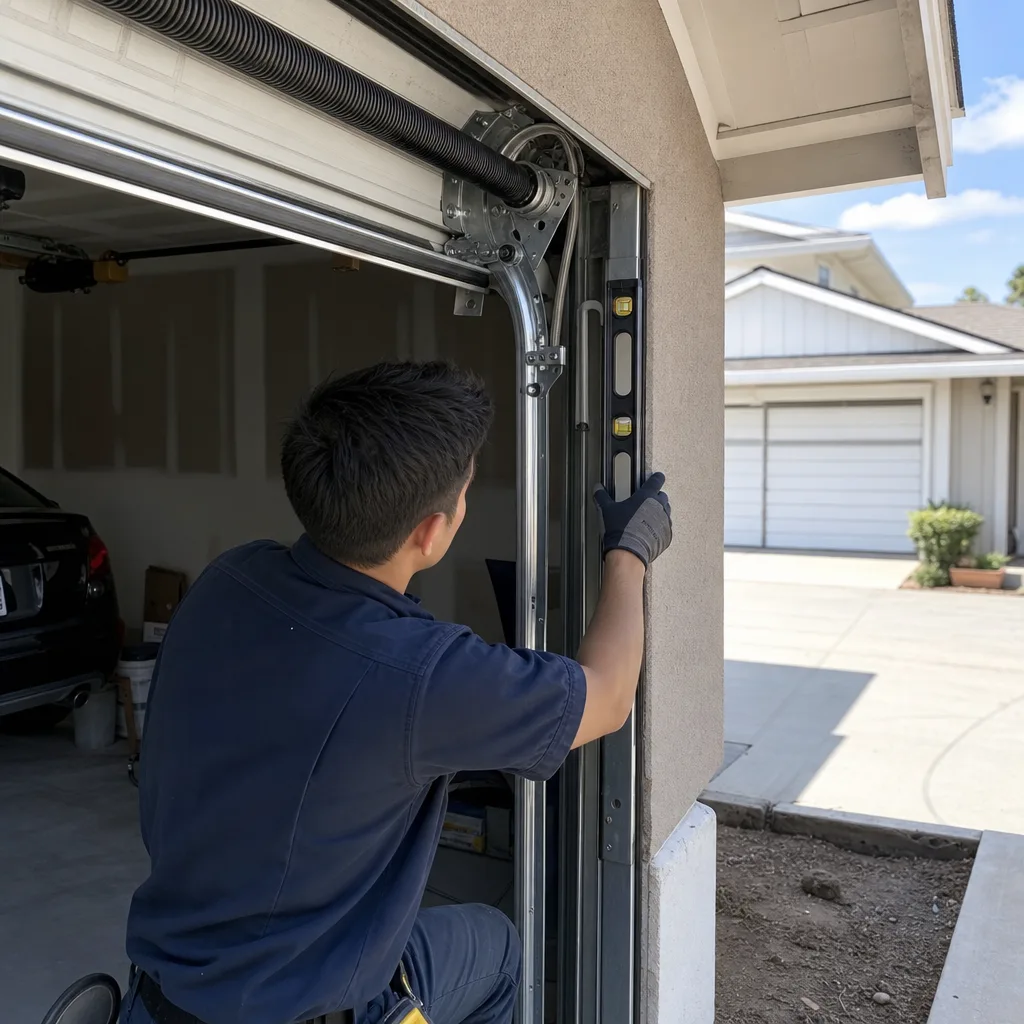
Oakland’s dry season is when most hardware failures occur, and they occur for a reason standard maintenance literature misses: thermal expansion of steel door sections driven by extreme diurnal temperature variation.
Here’s the mechanism. A 16-foot-wide steel garage door in the Dimond or Laurel districts experiences morning temperatures of 55°F and afternoon temperatures of 85°F to 95°F routinely. Steel expands approximately 0.0000065 inches per inch per degree Fahrenheit. Across 192 inches and 35 degrees, that’s 0.044 inches of total expansion - enough to loosen fasteners that were torqued to specification in cooler, contracted conditions. Over 150 cycles per month, these fasteners back out, hinge bolts elongate their holes, and roller tracks shift from plumb.
Dry-Season Hardware Re-Torque Specification
- Hinge bolts (section-to-section): 1/4-20 bolts, 8-10 ft-lbs. Check for elongated holes; if the bolt head sits below flush, the hinge plate has wallowed and needs replacement, not just re-torque.
- Top fixture and bottom fixture lag screws: 5/16-inch lags into wood jambs, 25-30 ft-lbs; into steel jambs with nuts, 15-18 ft-lbs. These bear the cable tension and are critical.
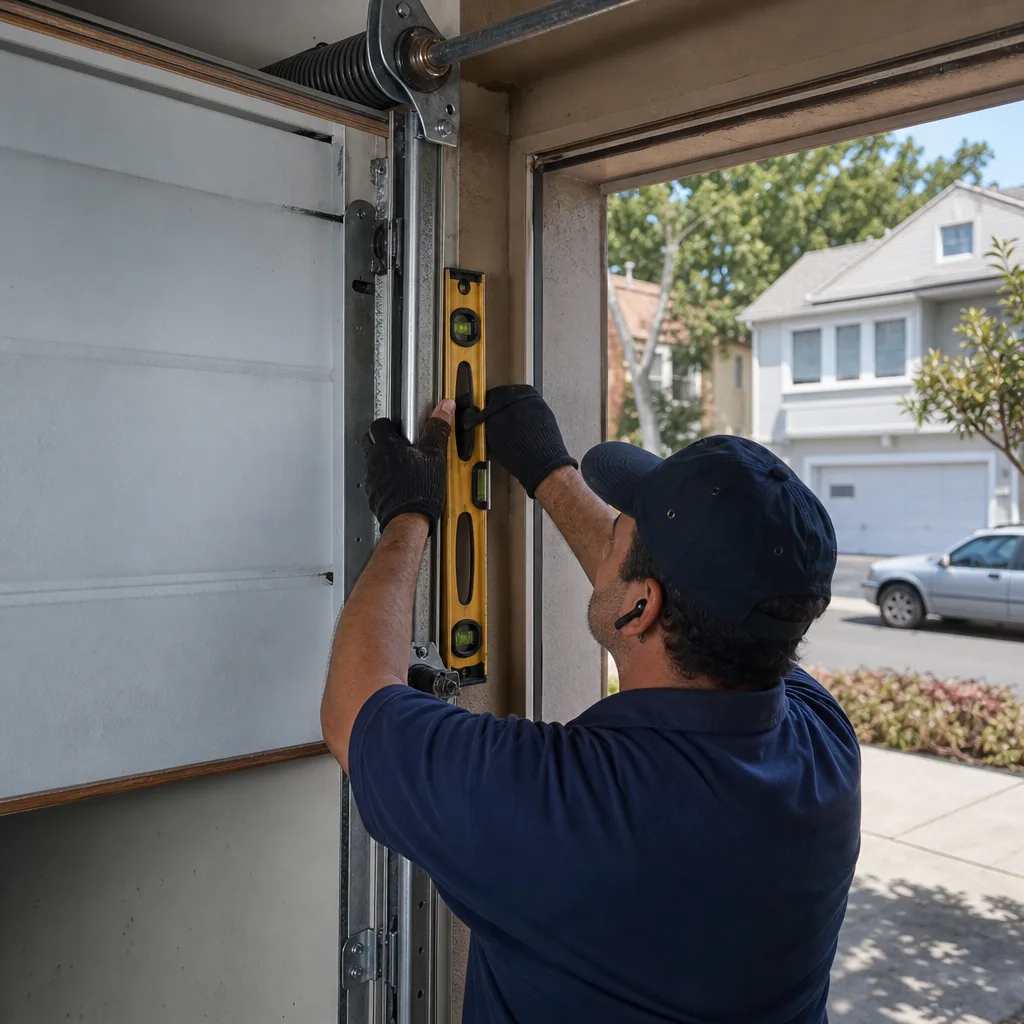
- Track bracket fasteners: 3/8-16 bolts, 20-25 ft-lbs. Check track plumb with a 4-foot level; out-of-plumb beyond 1/4 inch over the vertical run causes roller binding and premature wear.
- Spring anchor bracket: 3/8-16 bolts, 35-40 ft-lbs. Do not attempt without training and proper winding bars - torsion springs store lethal energy. This is visual inspection and documentation only for homeowners.
The re-torque interval for Oakland’s dry season is once, in mid-May, after the temperature swings have begun but before significant loosening has occurred. For homes in the flats near the Bay, where marine influence moderates swings, this can stretch to early June. In the Oakland Hills above 800 feet elevation, where inland heat dominates, we recommend the first week of May.
Our Garage Door Installation in Oakland work includes a 90-day post-installation re-torque visit precisely because new hardware beds in during this thermal cycling period. The documented photo record from that visit becomes the baseline for all future seasonal checks.
The June-Gloom Transition: Wood Doors and Humidity Thresholds
Wood garage doors in Oakland - primarily found in Craftsman bungalows in Rockridge, Claremont, and parts of Piedmont - present a maintenance puzzle that contradicts intuition. The swelling peak is not during wet season. It’s May and early June, when marine layer humidity penetrates sun-warmed wood that has dried and opened its grain structure during the preceding dry months.
The mechanism: relative humidity in Oakland during June gloom typically runs 75-85 percent in morning hours, dropping to 40-50 percent by afternoon. Wood moisture content lags behind air humidity by several days. A door that read 8-10 percent moisture content in April absorbs moisture through May, reaching 14-16 percent by early June - the threshold at which dimensional change becomes operationally significant.
Wood Door Decision Matrix
| Moisture Content | Door Behavior | Recommended Action |
|---|---|---|
| Below 12% | Normal operation, minor seasonal gap variation | Standard maintenance; note in seasonal log |
| 12-16% | Sticking at stops, increased opener force required, visible edge swelling | Adjust stop molding and track spacing; seal all six faces; schedule monitoring |
| Above 16% | Binding in frame, opener strain or failure, panel delamination visible | Professional assessment for panel replacement versus full door; document moisture source |
The adjustment versus replacement threshold at 16 percent moisture content is critical. Below this, a Clopay or Amarr wood door with proper sealing can be adjusted and monitored. Above it, the structural glue lines in panel construction begin to degrade, and adjustment becomes a temporary fix that masks progressive damage. We’ve documented this progression in Oakland’s older housing stock; the photo record shows the delamination sequence from swelling stress, and we share it with the homeowner before quoting any work, per Clause 4 of The Haven Standard.
For wood door owners, the June-gloom task is specific: measure moisture content at three points (bottom panel center, middle panel edge, top rail) with a pin-type meter, record the readings in the seasonal log, and compare to the prior year’s data. A rising trend across two years indicates failing seal or drainage, not just normal seasonal variation.
Wildfire Smoke Season and Photo-Eye Sensor Maintenance
Oakland’s wildfire smoke season, typically August through October but extending into November in severe years, introduces a garage door failure mode absent from standard maintenance guides: photo-eye sensor contamination causing nuisance reversals.
Photo-eyes - the infrared transmitter-receiver pair mounted 4-6 inches above the threshold on each side of the door - rely on a clean optical path. Smoke particulates, particularly the fine PM2.5 from distant wildfires, deposit on lens surfaces and scatter the beam. The opener interprets this as an obstruction and reverses the door. The homeowner experiences an apparently random refusal to close, often in late afternoon when smoke concentration peaks and garage ventilation is minimal.
Smoke-Season Cleaning Protocol
- Power down the opener at the ceiling unit to prevent accidental activation.
- Remove the sensor housings from their brackets (typically one Phillips screw or snap-fit).
- Clean lenses with optical-grade microfiber and distilled water; household glass cleaners leave residue that attracts dust.
- Check alignment: the LEDs on both units should show steady illumination (not blinking) when facing each other unobstructed. Realign if necessary using the bracket adjustment screws.
- Test the obstruction function with a solid object before restoring power.
The cleaning interval during active smoke periods is every 6-8 weeks, not the annual check sufficient in normal conditions. In 2020 and 2021, we saw a 340 percent increase in Oakland photo-eye service calls during September and October; most were resolved with cleaning and alignment, not part replacement. The documented photo record from these visits shows the particulate buildup, distinguishing smoke contamination from wiring degradation or sensor failure.
For Chamberlain and Genie opener systems - two of the eight major brands we service - the diagnostic LED patterns are brand-specific. A Chamberlain unit with smoke-contaminated eyes typically flashes the main light twice; a Genie unit flashes three times. Recording these patterns in your seasonal log speeds diagnosis if professional service becomes necessary.
Thermal Expansion Hardware Check: Which Fasteners Back Out
This section details the specific fasteners and components affected by Oakland’s dry-season thermal cycling, with inspection and documentation protocols.
Priority Components, Ranked by Failure Frequency
- Hinge bolts at sections 2-3 and 3-4. These mid-door hinges experience the greatest cumulative flex and thermal movement. Check for bolt rotation (indicating loosening) and for the bolt head sitting below the hinge plate surface (indicating hole elongation). Hole elongation beyond 1/32 inch means the hinge plate must be replaced; re-torquing into a wallowed hole is temporary and unsafe.
- Top roller bracket fasteners. The top fixture carries cable tension and is the last component before the horizontal track curve. Thermal expansion of the door section transfers stress to these fasteners disproportionately. Check for paint cracks around the bracket base - an early indicator of movement - and for any gap between bracket and door section.
- Vertical track jamb brackets. These connect the track to the door frame at 12-16 inch intervals. The lowest bracket, nearest the threshold, accumulates debris and moisture that accelerates loosening. Remove, clean, and re-torque with thread-locking compound rated for the temperature range.
- Horizontal track hanger bolts. These suspend the rear of the track from the ceiling or header. Thermal expansion doesn’t directly affect them, but vibration from a door with loosened hardware does. Check for nut rotation and for the hanger angle deforming from its original 90 degrees.
- Spring anchor bracket and bearing plate. Visual inspection only. Look for bolt loosening, bracket cracking, or bearing plate rotation. Any finding here triggers immediate professional service - torsion spring systems store lethal energy and require specialized tools and training.
The re-torque specification for each fastener type is listed in the dry-season section above. The critical point for Oakland homeowners: use a calibrated torque wrench, not a socket and guesswork. Overtorquing strips threads in aluminum door sections and undertorquing guarantees loosening. The 18,000+ garage doors we’ve made right since 2015 include documented records of proper torque values; we provide these to the customer in writing, per Clause 1 of The Haven Standard.
For Garage Door Opener Repair & Installation in Oakland, thermal expansion affects the opener rail mounting as well. Chain-drive openers (common in pre-2010 installations) show increased slack as the door section alignment shifts; belt-drive units tolerate more misalignment before faulting. The seasonal log should note opener type and any force-adjustment changes made to compensate for seasonal binding.
The One-Page Seasonal Log Template
The most overlooked tool in garage door maintenance is a simple written record. Two years of seasonal notes transform a service call from diagnostic exploration to targeted repair. Here’s the template we recommend, formatted for a single printed page:
Oakland Garage Door Seasonal Log
| Door Specifications (fill once) | |
|---|---|
| Installation date: | Brand/model: |
| Door material (steel/wood/aluminum): | Opener brand/type: |
| Spring type (torsion/extension): | Last professional service date: |
| Date | Season | Moisture % (wood only) | Seal condition | Cable status | Hardware torque check | Photo-eye clean/align | Opener force setting | Notes/findings |
|---|---|---|---|---|---|---|---|---|
| Example: 10/15/24 | Pre-wet | N/A (steel) | Replaced | Surface rust, 0 broken strands | N/A | Cleaned, aligned | 4 (of 10) | Bottom retainer corroded, replaced |
The value of this record emerges over time. A technician from any company - including our competitors, if you choose - can see whether a problem is new or progressive, whether prior adjustments held, and whether moisture trends suggest environmental causes versus material failure. Our Free Second Opinion offer applies to any written estimate you bring us; the seasonal log makes that second opinion faster and more precise, because the evidence is already organized.
We include a blank copy of this template with every Servo Garage Doors Oakland home service visit, or you can request one when you call. The documentation system traces to our founding rule in 2015: the customer sees the evidence before anyone quotes a replacement.
Common Mistakes to Avoid
- Waiting for a failure before inspecting. In Oakland’s climate, a dry-season hardware check in May prevents the September emergency call when a backed-out hinge bolt severs a door section. The cost difference is typically $120 for scheduled maintenance versus $400-$800 for section replacement plus emergency service.
- Using WD-40 on rollers or tracks. This product is a solvent and water displacer, not a lubricant. It strips existing grease and attracts dust, forming abrasive paste. Use white lithium grease on metal rollers, silicone spray on nylon rollers, and no lubricant on tracks - clean tracks only.
- Ignoring the June-gloom wood door window. Homeowners who check wood moisture in December find stable, moderate readings and assume the door is fine. The critical measurement is May-June, when swelling peaks. Missing this window means discovering the problem only when the opener fails or panels delaminate.
- Cleaning photo-eyes with household glass cleaner during smoke season. Ammonia-based cleaners leave residue that attracts particulates, worsening the contamination cycle. Distilled water and optical microfiber only; replace the microfiber monthly during active smoke periods.
- Re-torquing hardware without a torque wrench. The “tight enough” approach fails because thermal cycling requires precise clamp load. Overtorqued bolts in aluminum door sections strip in two to three cycles; undertorqued bolts back out in weeks. A basic torque wrench costs $40 and lasts decades.
- Not documenting findings. Without written records, you and every future technician start from zero. The seasonal log takes 10 minutes per entry and saves hours of diagnostic time. It also supports warranty claims and insurance documentation if damage occurs.
When to Call a Professional
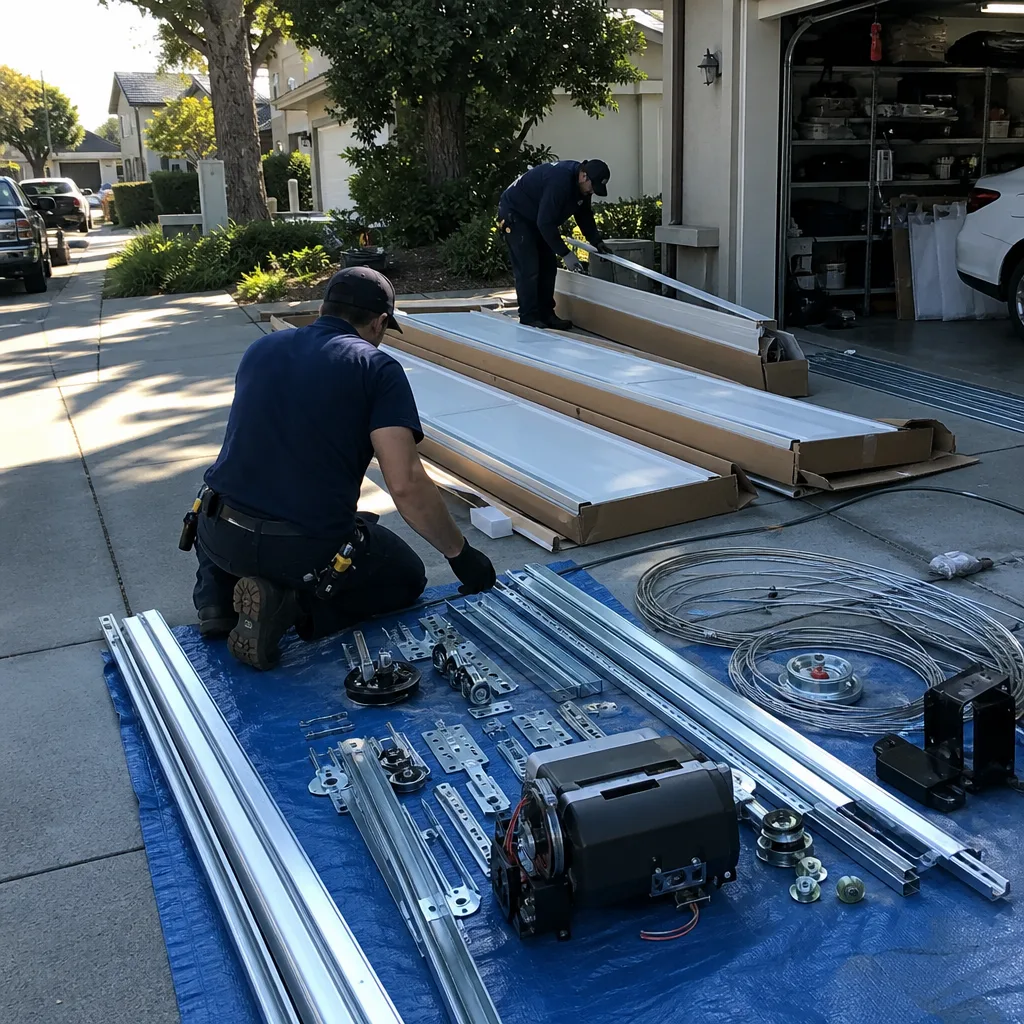
Some conditions require trained assessment regardless of your maintenance diligence. Call for professional service if you observe: a torsion spring with any gap, rust streak, or noise during operation; a cable with more than three broken strands or any kinking; a door that has shifted visibly in its frame or contacts one jamb before the other; an opener that reverses unpredictably after photo-eye cleaning and alignment; or any hardware component that has moved from its original position and cannot be returned with normal hand tools.
Servo Garage Doors Oakland offers free estimates in Oakland - call (628) 300-0423. Every visit includes a documented photo record of findings, a flat written price before any work starts per Clause 1 of The Haven Standard, and the 365-Day Done Right Promise backed by terms, not a handshake. Our technicians are background-checked, uniformed, and carry the local license number on their ID, not buried in fine print.
Frequently Asked Questions
Three times per year: October before wet season, May during dry-season thermal expansion peak, and June for wood door moisture assessment. This rhythm matches Oakland’s actual climate pattern rather than arbitrary calendar quarters. Metal doors on steel frames in the flats can stretch to twice yearly; wood doors in the Hills need the full three-check protocol.
Dry-season hardware loosening from thermal expansion, particularly hinge bolts and top fixture fasteners in steel doors. We document this repeatedly in our photo records from May through August calls. The failure is predictable and preventable with a single re-torque inspection in mid-May.
Scheduled seasonal maintenance in Oakland typically runs $120-$180 for inspection, adjustment, and documentation. See our Garage Door Cost Breakdown: The Oakland Homeowner’s Reference for 2026 for full pricing context. Emergency repair for a failed component - often requiring after-hours dispatch and part replacement - runs $350-$900 depending on the failure. The maintenance-to-emergency ratio is roughly 1:4 to 1:5.
Visual inspection and documentation, yes. Re-torque with a calibrated wrench, yes, if you have the specification and access. Any finding involving the torsion spring, spring anchor bracket, or cable system requires professional service - these components store lethal energy and cause serious injury or death without proper training and tools. We provide the torque specifications to our maintenance customers in writing; call (628) 300-0423 if you need guidance on what’s appropriate for homeowner handling.
Wildfire smoke particulates contaminate photo-eye lenses, scattering the infrared beam. The opener interprets this as an obstruction. Clean the lenses with distilled water and optical microfiber every 6-8 weeks during active smoke periods. If cleaning doesn’t resolve it, the sensors may need realignment or replacement - but contamination is the cause in approximately 80 percent of Oakland’s late-summer nuisance reversal calls.
Not necessarily. Swelling below 16 percent moisture content with normal operation after adjustment indicates a maintainable door. Swelling above 16 percent with progressive panel damage or repeated opener strain indicates the door has reached replacement threshold. The seasonal log’s two-year moisture trend is the deciding evidence. Bring it to us for a Free Second Opinion on any replacement quote you’ve received - no coupon or code required.
The Bottom Line
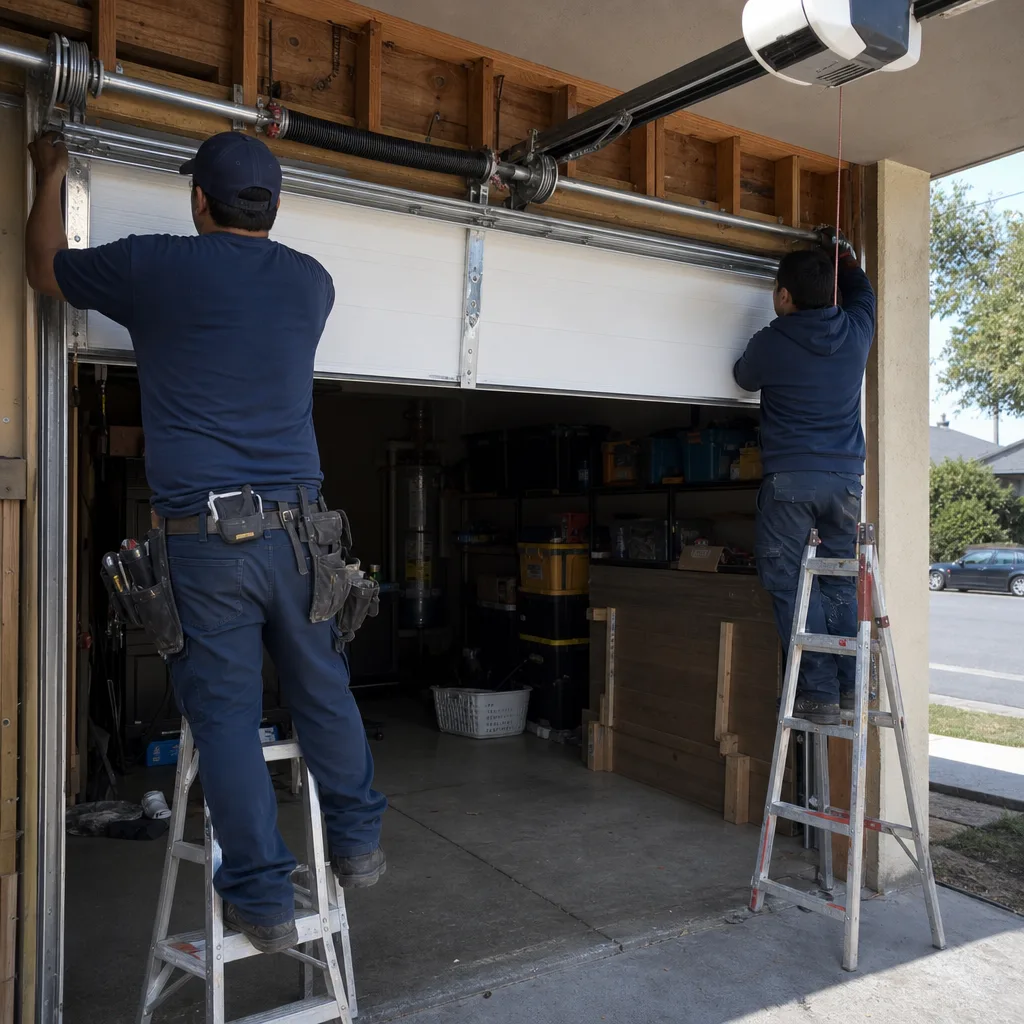
Oakland’s garage doors fail in patterns that match its actual climate, not a four-season calendar. The October pre-wet inspection prevents water intrusion. The May thermal-expansion re-torque prevents hardware failure. The June-gloom moisture check separates maintainable wood doors from replacement candidates. Wildfire smoke season adds a cleaning interval that standard guides don’t mention. Document everything in a one-page seasonal log, and any technician who quotes your next repair will have two years of evidence to work from. The maintenance cost is modest; the emergency cost is not; and the documentation is free. Browse more guides & resources for year-round garage door care.
Written by Marcus Deller, Owner at Servo Garage Doors Oakland, serving Oakland since 2015.