
Last updated September 21, 2026
Full 25-point door and opener safety check with every visit - springs, cables, rollers, tracks, and your LiftMaster or Chamberlain opener included
You get a price before we start. It does not change when the truck arrives.
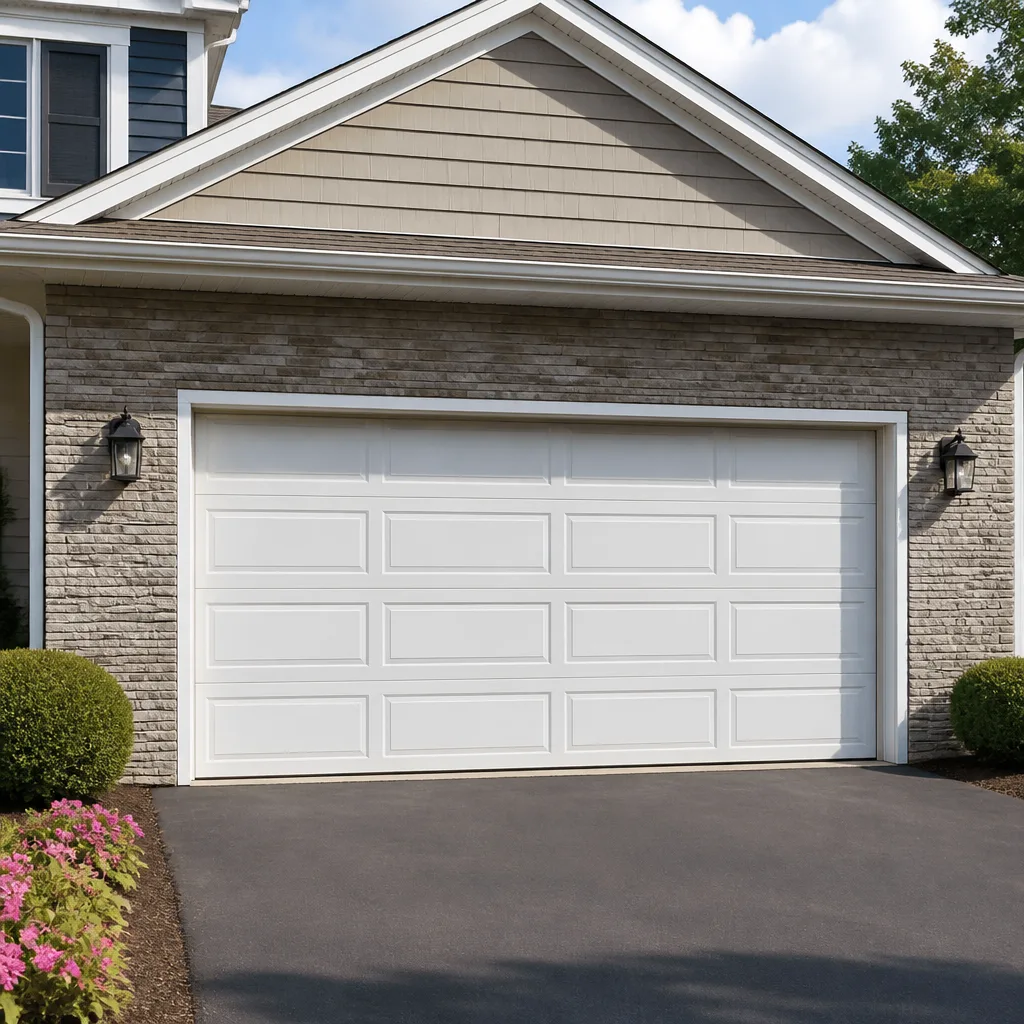
Carriage house
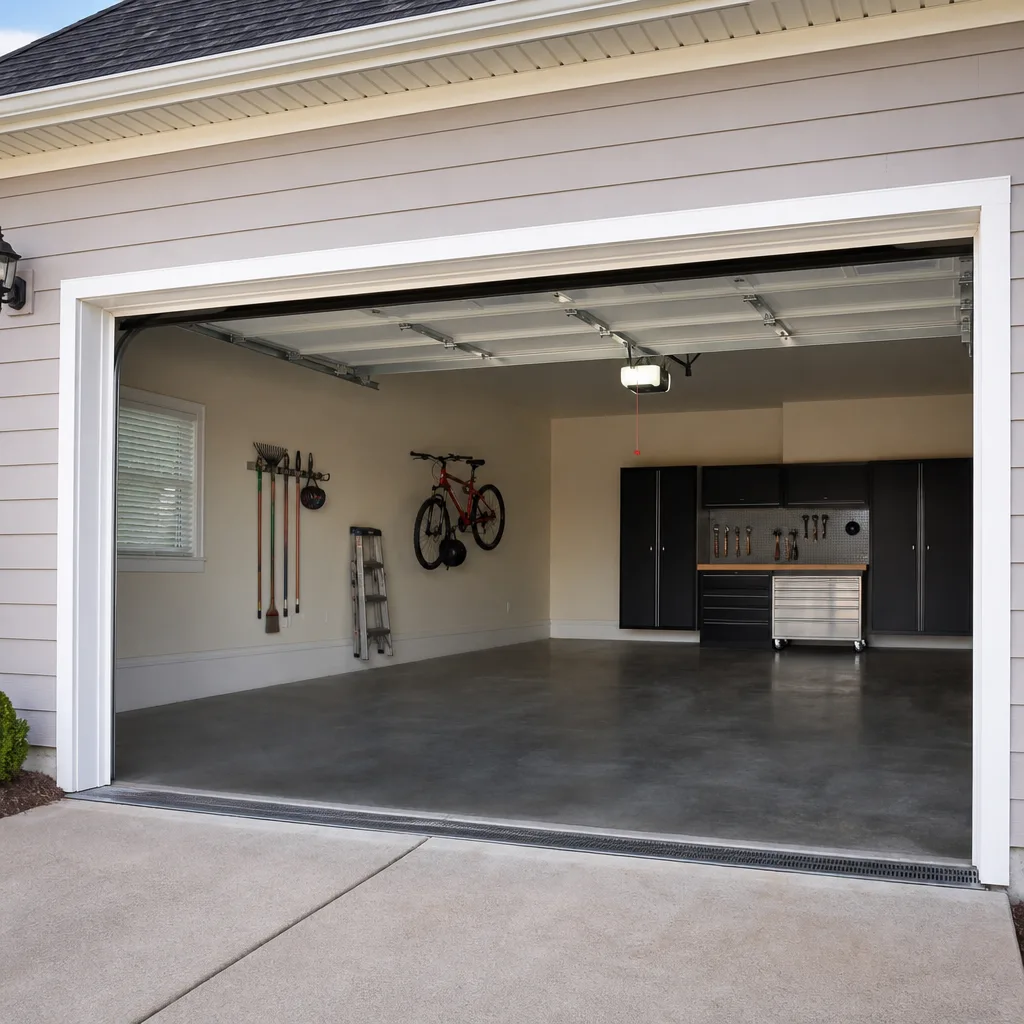
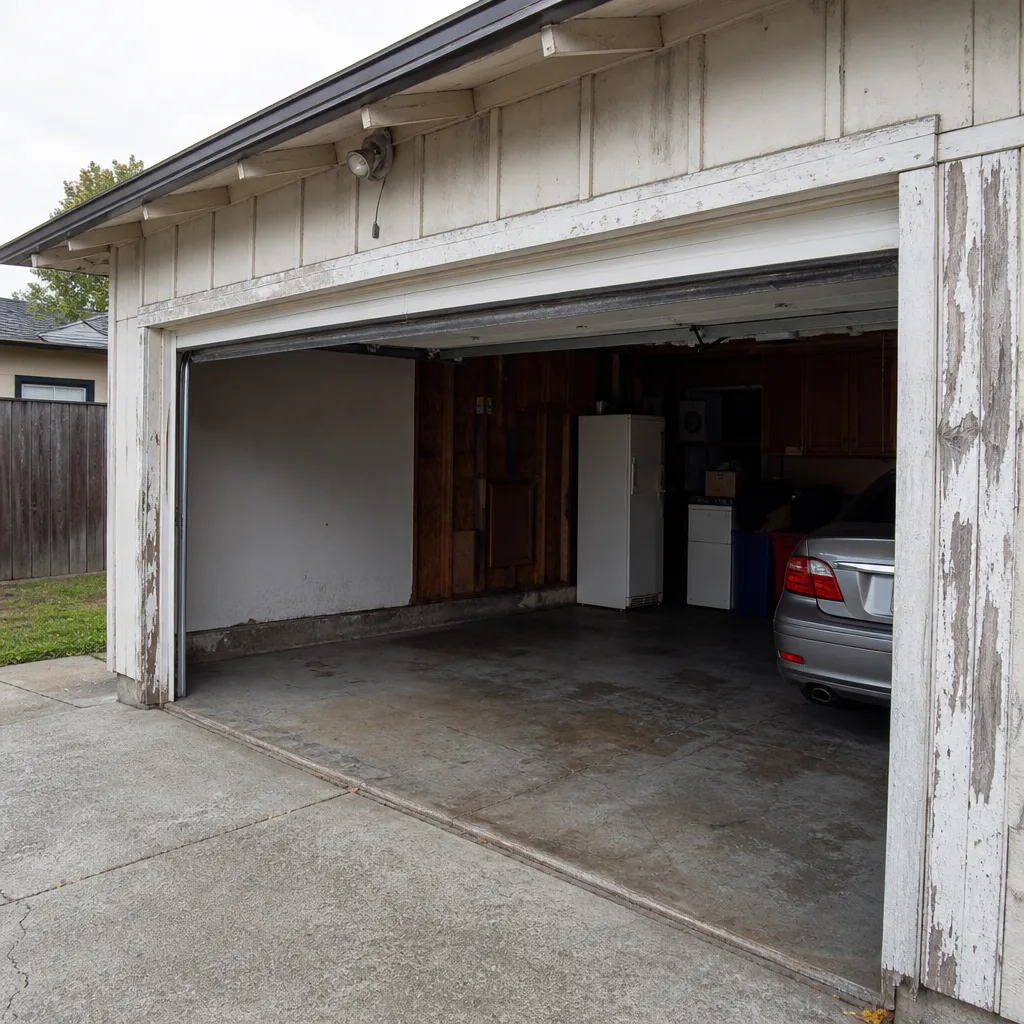 Before
 After
After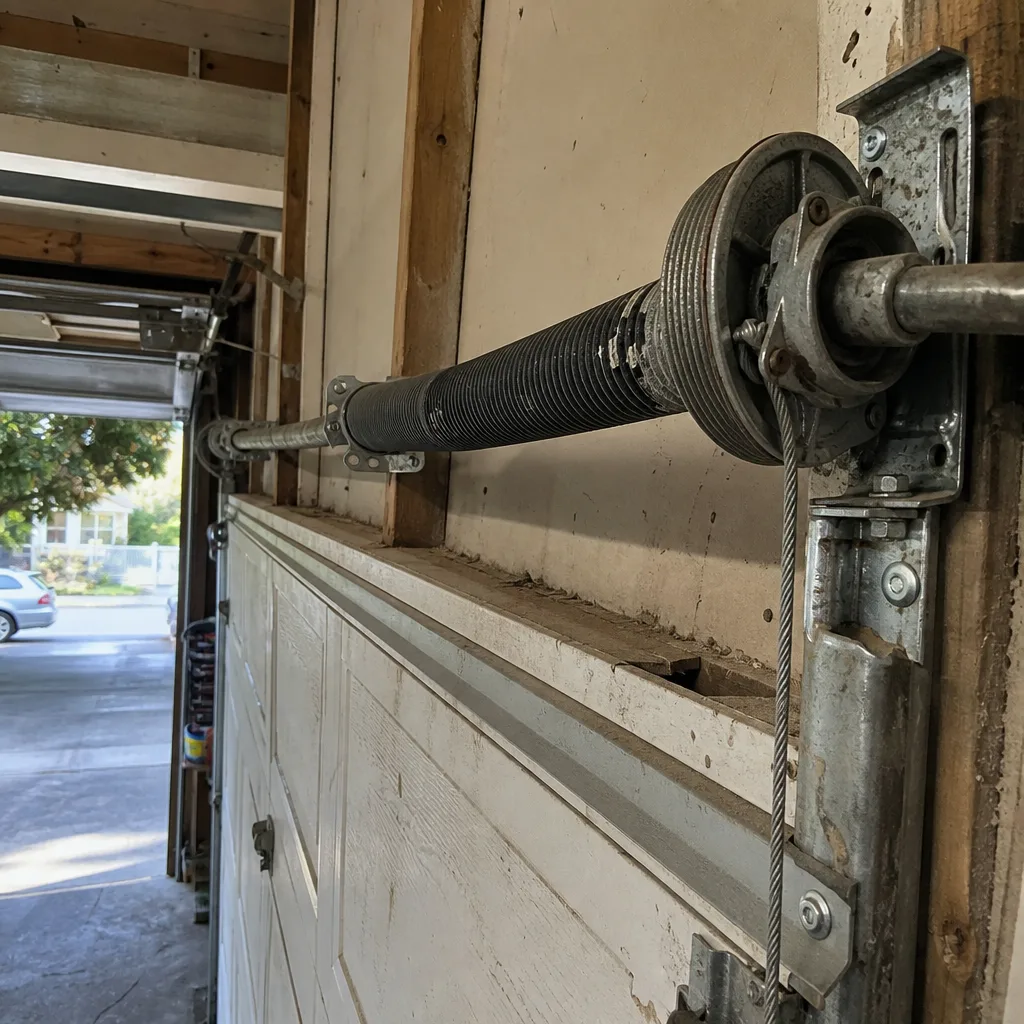 Before
 After
After Before
 After
AfterThe Complete Guide to Garage Door in Oakland
Most garage door hardware installed in Oakland was spec’d for a different climate zone entirely. The marine layer, salt-air cycling from the Bay, and the microclimate swings between Temescal’s fog pockets and the Oakland Hills’ dry heat create failure patterns that inland manufacturers never test for. We’ve replaced torsion springs in Rockridge that failed at 8,000 cycles instead of the rated 15,000, and we’ve warped wood panels in the Estuary that delaminated in half the expected lifespan. This guide maps what actually fails in Oakland’s housing stock, why it fails faster here, and what documentation you need before calling any contractor.
Quick Answer
A garage door in Oakland requires different specifications than the same door in Sacramento or San Jose due to marine-layer humidity, salt-air exposure, and microclimate variation across the city. Homeowners should expect faster corrosion on steel hardware, more frequent tension adjustments on wood doors, and potential structural modifications when replacing pre-1960 doors with modern insulated panels. The most cost-effective approach is reading your existing door’s hardware generation before requesting estimates, so contractors price the actual job rather than a generic replacement. For help deciding who should do that reading, see our DIY vs Professional Garage Door: The Oakland Homeowner’s Decision Guide.
Table of Contents
- How Oakland’s Microclimates Affect Garage Door Lifespan
- Oakland Housing Stock: What Door Types and Hardware Generations You’ll Find
- Component Failure Patterns in Coastal-Adjacent Environments
- How to Read Your Existing Hardware Before Calling a Contractor
- The Documentation You Need on File Before Getting Estimates
- What Garage Door Replacement Actually Costs in Oakland
- Garage Door Opener Repair and Installation in Oakland: Special Considerations
- Common Mistakes to Avoid
- When to Call a Professional
- Frequently Asked Questions
 Before
 After
AfterHow Oakland’s Microclimates Affect Garage Door Lifespan
Oakland isn’t one climate. It’s several stacked on top of each other, and your garage door experiences them differently depending on which neighborhood you’re in.
The flatlands and Estuary - including Jack London Square, Jingletown, and the industrial conversions near the waterfront - get the most salt-air exposure. The Bay’s marine layer pushes in nightly, depositing chloride on steel tracks, torsion springs, and cable drums. We’ve measured surface rust on 3-year-old hardware in these neighborhoods that inland locations don’t show until year 8. Aluminum doors and stainless-steel hardware upgrades pay for themselves faster here than anywhere else in the East Bay.
The hills - Montclair, Piedmont Pines, Oakmore - experience the opposite problem. Less humidity, but more UV exposure and wider temperature swings. Wood doors, especially the uninsulated cedar and redwood panels common on 1920s and 1930s bungalows, dry out and check (develop surface cracks) faster than manufacturers’ moisture-content specs predict. We’ve replaced warped bottom sections in the hills where the wood shrank unevenly, pulling the door out of square and stressing the track hardware.
The interior flatlands - Temescal, Rockridge, North Oakland - get the marine layer without the salt, creating a high-humidity cycling environment that’s particularly hard on galvanized steel. The zinc coating on budget-grade track and springs degrades in these conditions, exposing the underlying steel to rust that starts at the molecular level and isn’t visible until the component fails.
Here’s what this means in practical terms:
- Steel doors in salt-air zones: inspect bottom brackets and cable drums annually for corrosion pitting
- Wood doors in the hills: check panel moisture content and sealant integrity every 18 months
- All doors in high-humidity cycling areas: torsion springs lose tension faster due to micro-corrosion at the coil ends
- Coastal-adjacent installations: consider 316-grade stainless hardware for components rated below 10,000 cycles
We document the neighborhood microclimate on every service record at Servo Garage Doors Oakland home, because it changes what we recommend and what we expect to find.
Oakland Housing Stock: What Door Types and Hardware Generations You’ll Find
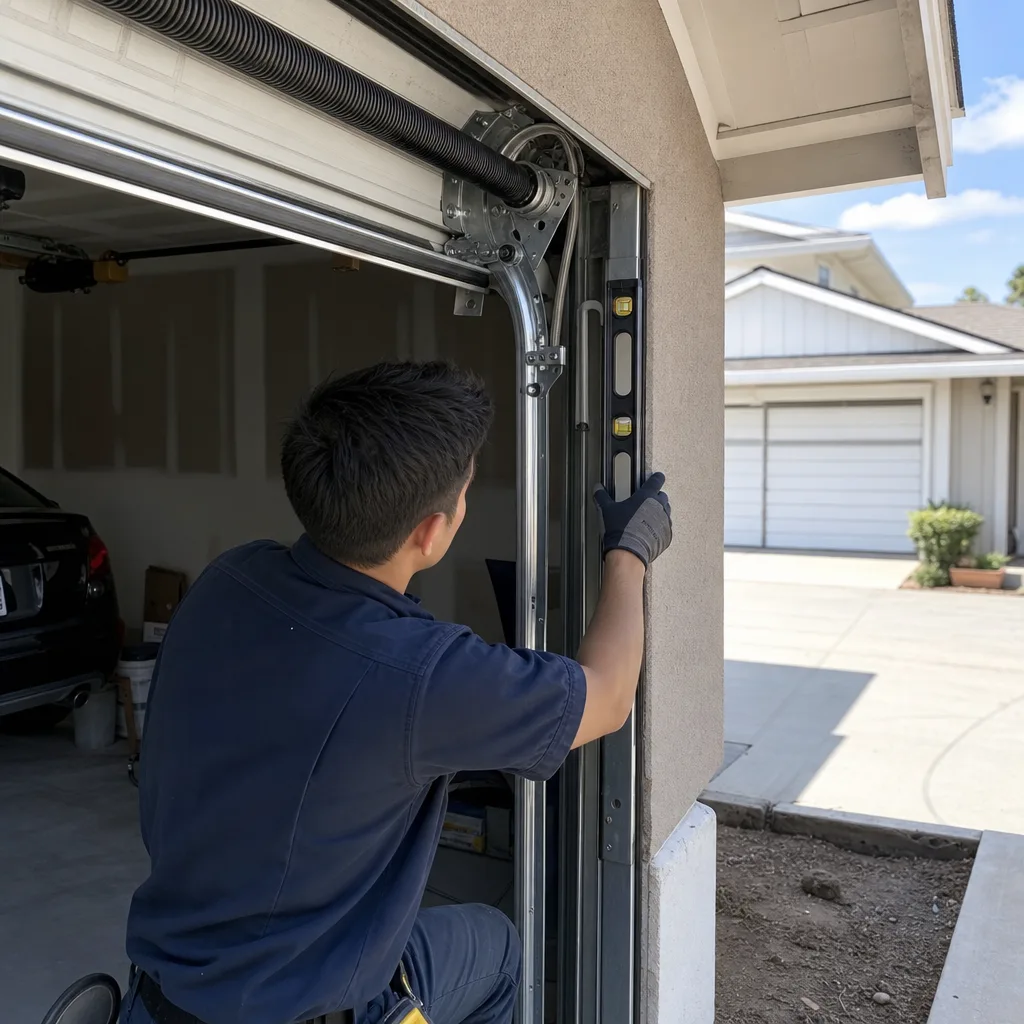
Oakland’s building eras created three distinct garage door populations, each with its own replacement challenges.
Pre-1960: The Narrow Garage Problem
The 1920s Craftsman bungalows in Rockridge, the 1930s stucco cottages in Maxwell Park, and the 1940s minimal traditional homes in the Laurel District share a common feature: garage door openings that are 8 feet wide or narrower, with header clearances of 8 to 10 inches. Modern insulated steel doors require 12 to 14 inches of header clearance for the track radius and opener mounting. Retrofitting these garages means either:
- Switching to a low-headroom track configuration (adds $400-$700 to the job)
- Raising the header by reframing (requires structural assessment and permit in Oakland)
- Accepting a thinner, less-insulated door that fits the existing opening
We’ve done all three. The right choice depends on whether the garage is detached, whether the wall is load-bearing, and whether the homeowner plans to stay long enough to recover the energy savings from a thicker door. Clause 4 of The Haven Standard requires us to photograph the header condition and show the customer the clearance measurement before quoting any of these options.
1960-1995: The First Generation of Attached Garages
Postwar ranch homes and split-levels in Redwood Heights, Sequoia, and the Diamond District introduced the 16-foot double-wide opening and the first generation of automatic openers. These doors are typically 1-3/8 inch thick non-insulated steel or wood composite, hung on hardware rated for 10,000 cycles. The openers are often chain-drive LiftMaster or Craftsman units from the 1980s and 1990s, mounted to ceiling joists that weren’t designed for the dynamic load of a modern belt-drive motor.
When we replace these systems, we almost always find that the opener mounting needs reinforcement. The original lag bolts were driven into 2×4 ceiling joists with no backing plate. A modern opener, especially a jackshaft or side-mount unit, transfers torque differently and can pull out of undersupported framing.
1995-Present: The Retrofit Era
The converted industrial lofts in West Oakland, the ADU garage conversions in Temescal, and the flipped homes in Bushrod all share a common issue: the garage door was often an afterthought. We’ve seen 10-foot-wide openings in former warehouse bays where someone installed a standard 9-foot residential door and filled the gap with plywood. We’ve seen garage door opener repair and installation in Oakland where the opener was mounted to exposed conduit because there was no finished ceiling. These jobs aren’t standard replacements; they’re reconstructions that require field measurement and custom fabrication.
Garage Door Installation in Oakland covers our process for these non-standard openings in detail.
Component Failure Patterns in Coastal-Adjacent Environments
Garage door components fail in a predictable sequence in Oakland’s climate. Knowing the sequence helps you decide whether to repair or replace, and whether the estimate you’re getting addresses the actual failure or just the symptom.
Torsion Springs: The 8,000-Cycle Reality
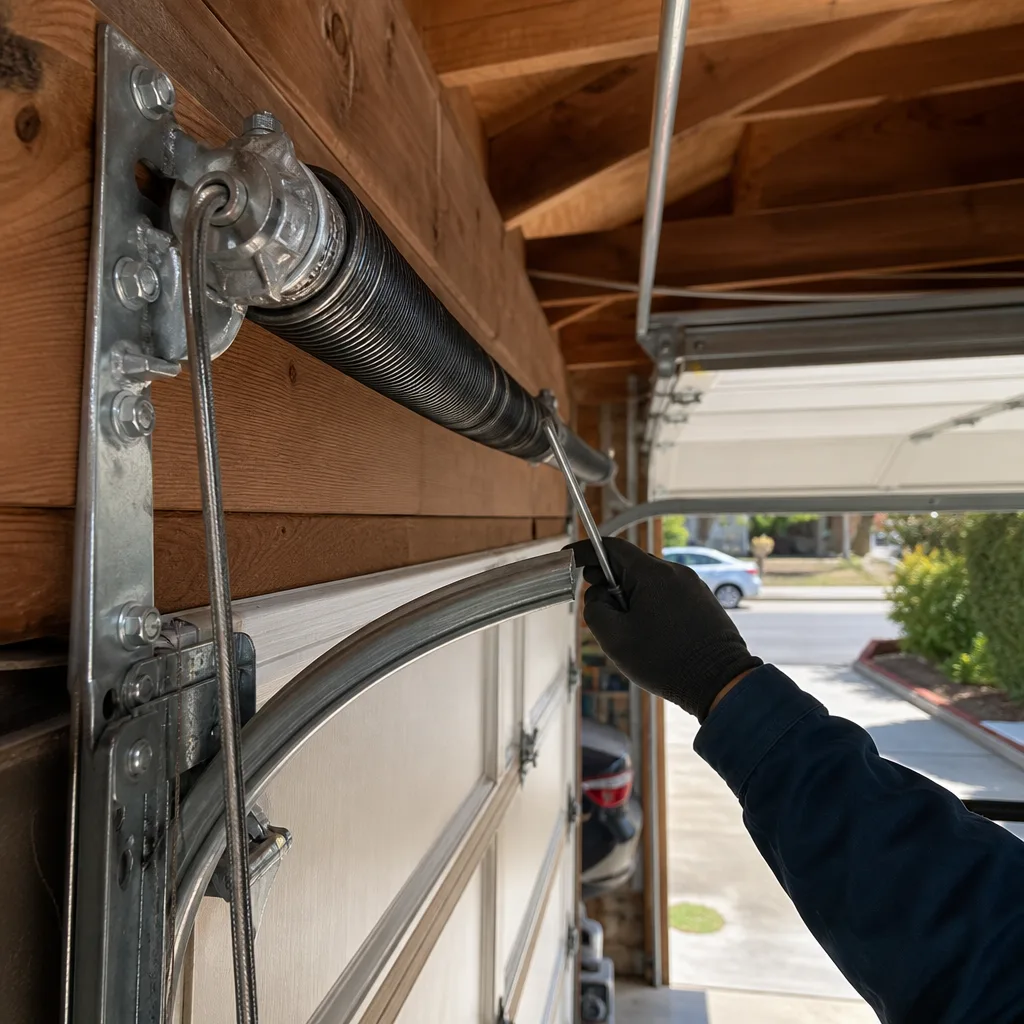
Standard torsion springs are rated for 10,000 cycles (one cycle = one open and one close). In Oakland’s high-humidity cycling zones, we regularly see failures at 7,500 to 8,500 cycles. The mechanism isn’t dramatic corrosion; it’s micro-pitting at the coil ends where the spring sits on the winding cone. The pitting creates stress risers that accelerate metal fatigue.
We measure this on every spring replacement. The technician photographs the fracture surface, and we show the customer whether the break was a clean fatigue fracture (expected) or a corrosion-initiated failure (suggests environmental factors that may shorten the replacement spring’s life). For doors in salt-air zones, we spec powder-coated or stainless springs that add $80-$140 to the job but typically last 12,000+ cycles in these conditions.
Safety note: Torsion springs store lethal energy. A standard 2-car door spring holds roughly 100 foot-pounds of torque. Never attempt to wind, unwind, or replace a torsion spring without proper training and tools. The winding bars can slip, the cone can fracture, or the spring can release unexpectedly. We see emergency room visits from DIY spring attempts every year in Oakland. This is not a component to learn on.
Bottom Brackets and Cable Drums: Corrosion Sequence
On steel doors in marine-layer zones, the failure sequence runs: bottom bracket bolts → cable drum set screws → track mounting brackets. The bottom bracket is the lowest point in the system, collects condensation, and is often the least inspected component. We’ve pulled brackets in Jingletown where the bolt heads sheared off with finger pressure because the threads were reduced to rust powder.
The cable drum fails next because its set screws grip a shaft that’s developing surface corrosion. The screws loosen incrementally, the drum slips, and the door goes out of level. Homeowners notice this as “the door closes crooked” or “one side hits the ground first.” By the time it’s visible, the drum has usually scored the shaft, requiring drum and shaft replacement rather than just re-tightening.
Wood Door Panels: Moisture Cycling Damage
Wood doors in Oakland fail from the inside out. The exterior may look sound while the interior plies delaminate due to moisture cycling. We find this most often in doors facing west or southwest, where afternoon sun drives moisture out of the outer ply faster than the inner plies can equalize. The resulting internal stress pops glue joints and creates the “oil-canning” effect - a visible bulge or depression in the panel surface.
Individual panel replacement is sometimes possible, but matching a 20-year-old stain or paint is nearly impossible. We document the existing finish with a colorimeter photo and give customers the match probability before quoting panel replacement versus full door replacement.
How to Read Your Existing Hardware Before Calling a Contractor
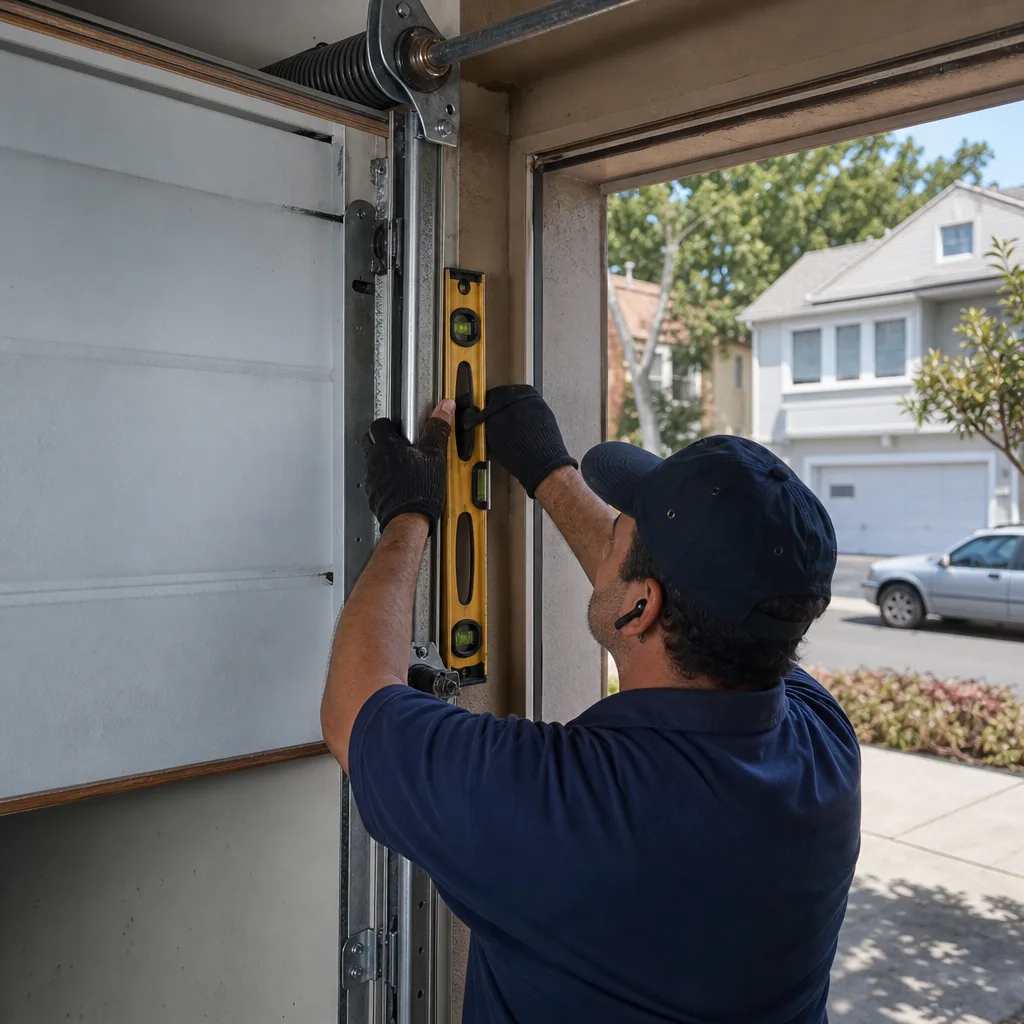
The hardware generation on your door determines whether you’re getting a standard replacement estimate or a custom job. Here’s how to read what you have.
Step 1: Identify the Spring System
Look above the door. If you see a single long spring across the header, that’s a torsion system. If you see two springs, one on each side of the door, running parallel to the tracks, that’s an extension spring system. Extension springs are obsolete for doors over 150 pounds and indicate either an older installation or a budget retrofit. Converting to torsion adds $350-$600 but is necessary for modern insulated doors.
On the torsion spring, look for a paint daub or tag indicating the wire size and length. Common markings: .250 x 2.00 x 31 means 0.250-inch wire diameter, 2.00-inch inside diameter, 31-inch length. If there’s no marking, the spring was likely a generic replacement that may not be properly calibrated for your door weight.
Step 2: Check the Track Radius
Measure from the top of the door opening to the center of the horizontal track. Standard radius is 15 inches. Low-headroom track is 10 inches or less. If you have low-headroom track and the contractor quotes a standard door without mentioning this, the door won’t fit or will bind on opening.
Step 3: Read the Opener Mounting
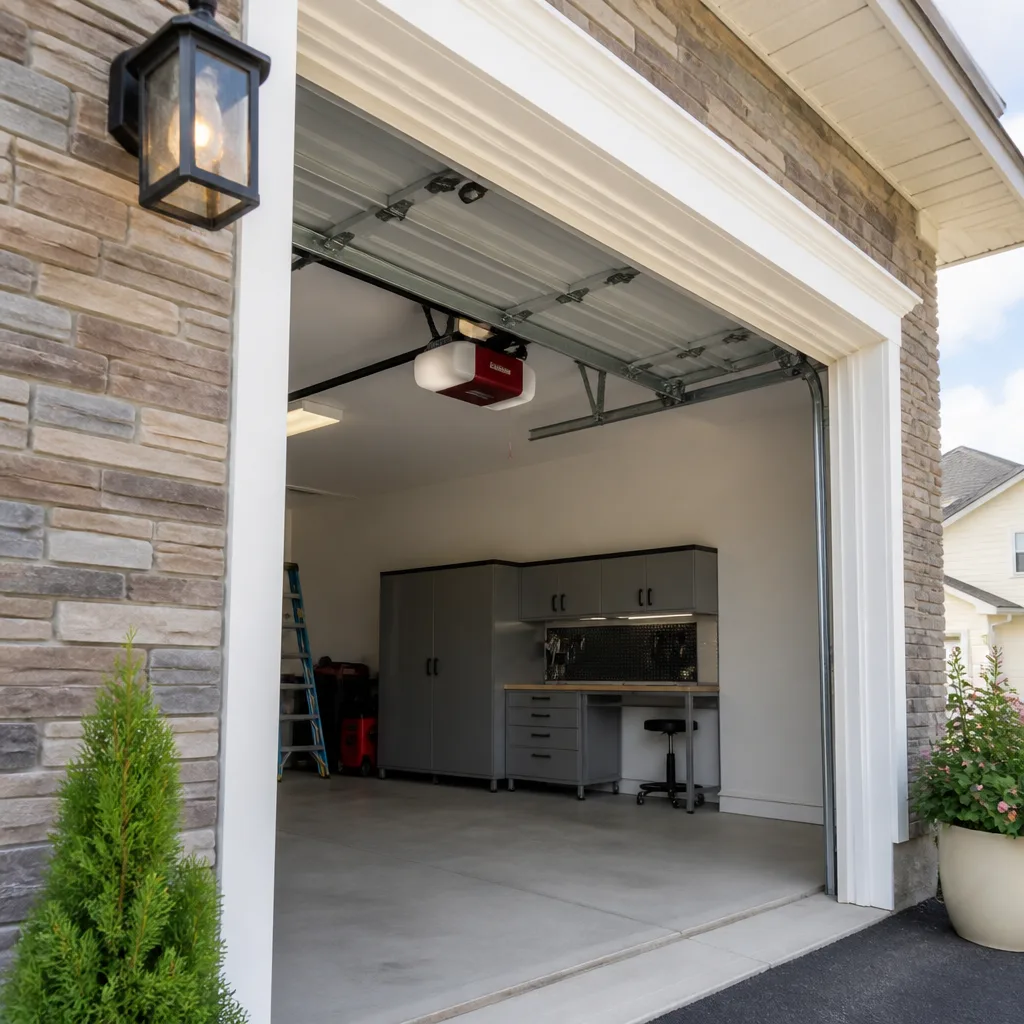
Is the opener mounted to finished ceiling, exposed joists, or a wall bracket? Is it a central trolley (standard), a jackshaft (side-mounted on the torsion tube), or a direct-drive (motor travels with the door)? Each requires different replacement procedures. A jackshaft conversion in a garage with no side room adds complexity that generic estimates miss.
Step 4: Determine if the Door Was Originally Spec’d or Retrofitted
This is the most important reading, and it’s the one most contractors skip. Look at the track mounting brackets. Are they bolted through the wall framing with backing plates, or surface-mounted with lag bolts into the jamb? Original spec installations have backing plates and often a manufacturer’s sticker on the door interior with the model number and installation date. Retrofits have improvised mounting, mismatched hardware colors, and often no documentation.
A retrofitted door requires more labor to remove safely and more care to replace without damaging the surrounding finish. At Garage Door Repair in Oakland, we price these jobs differently because they are different jobs. Clause 1 of The Haven Standard requires the written price to reflect the actual scope, not a standard template.
The Documentation You Need on File Before Getting Estimates
The most expensive estimate is the one that’s wrong because the contractor guessed. Here’s what to have ready before you call anyone.
- Door serial number and model: Usually on a sticker on the interior face of the bottom section or the track side of the top section. Photograph it. This tells us the original weight, insulation value, and wind load rating.
- Spring specifications: If visible, photograph the paint daub or tag. If not visible, measure the wire diameter with calipers (or photograph a quarter next to the wire for scale) and count 20 coils to estimate wire size.
- Opener model and manufacture date: The label is on the motor housing. Openers over 15 years old often lack safety features (photo eyes, force sensing) that are now required by California building code for replacement.
- Date of last tension adjustment: Torsion springs lose approximately 5% of their tension per year in normal conditions, faster in high-humidity cycling. If it’s been more than 3 years, assume the spring is under-lifted and the opener is compensating with excess force.
- Photos of the header area and side clearance: Show the full width of the opening, the header condition, and any obstructions (conduit, ductwork, shelving) within 18 inches of the tracks.
- Any previous estimates or invoices: Our Free Second Opinion applies to any competing written estimate. Bring the paperwork. We’ll tell you what’s accurate, what’s inflated, and what’s missing.
We build every quote from this documentation. The customer receives a written scope with line-item pricing and a photo record of what we found, before any work starts. That’s Clause 1 and Clause 4, and it’s how we’ve operated since 2015.
What Garage Door Replacement Actually Costs in Oakland
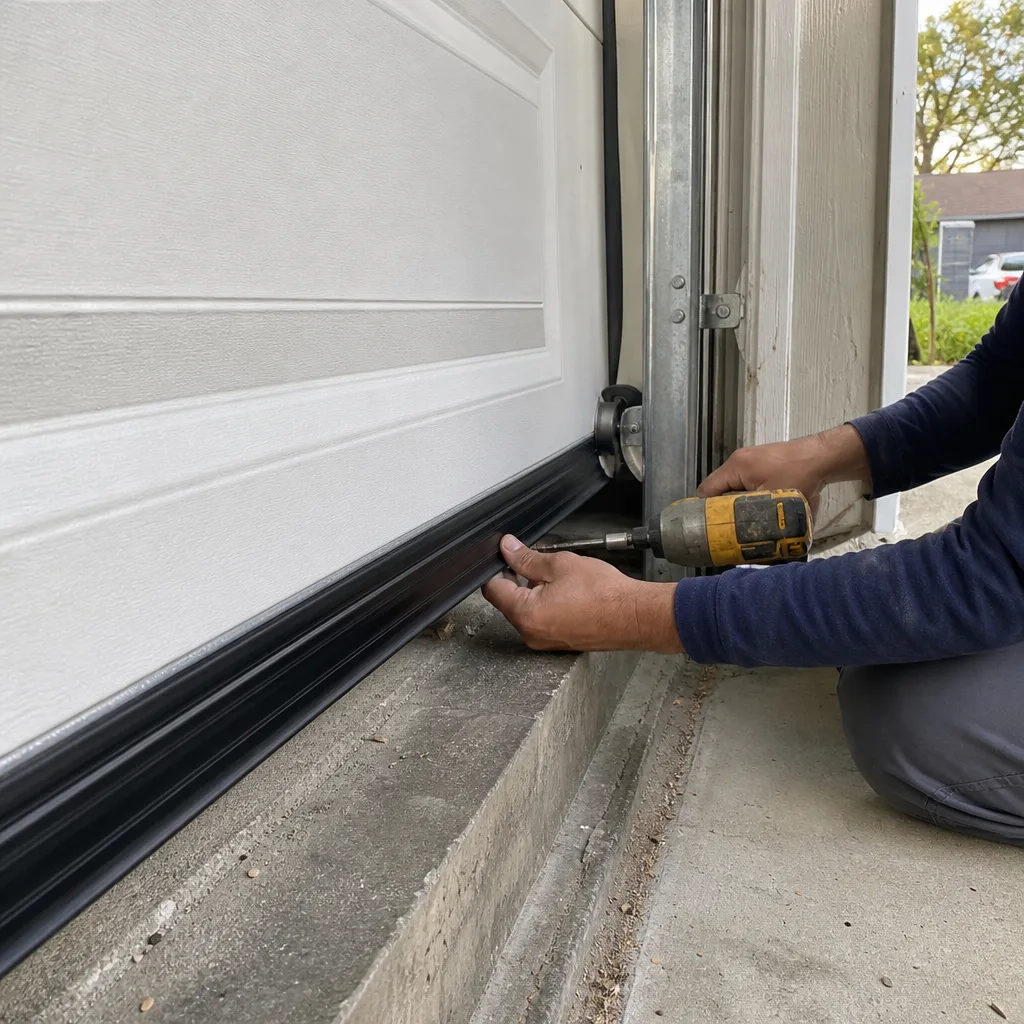
These are the price ranges we quote in Oakland for standard configurations, based on 2024-2025 material costs and Oakland’s permit and disposal requirements. For a detailed breakdown of where those numbers come from, see our Garage Door Cost Breakdown: The Oakland Homeowner’s Reference for 2026. Every job gets a flat, written price before work starts.
| Scope | Typical Range | Notes |
|---|---|---|
| Single-layer steel door, 8×7, standard hardware | $1,200-$1,800 | Non-insulated, 25-gauge steel. Suitable for detached garages in mild zones. |
| Double-layer steel door, 16×7, insulated | $1,800-$2,800 | 1-3/8″ or 1-3/4″ thick, R-6 to R-12. Standard for attached garages. |
| Carriage-style composite door, 16×7 | $3,200-$4,800 | Insulated steel core with composite overlay. Heavier; requires heavier-duty hardware. |
| Low-headroom track conversion | $400-$700 | Add to any door price for pre-1960 garages with limited header clearance. |
| Torsion spring replacement (standard cycle) | $280-$420 | Includes both springs, winding cones, and safety cables. 10,000-cycle spec. |
| Torsion spring replacement (high-cycle/stainless) | $360-$520 | 12,000-15,000 cycle rating. Recommended for salt-air and high-humidity zones. |
| Garage door opener replacement, belt drive | $650-$950 | Includes removal, disposal, new unit (LiftMaster or Chamberlain), and safety sensor alignment. |
| Jackshaft opener conversion | $1,100-$1,600 | Side-mount unit, requires 8+ inches of side room and structural header assessment. |
| Full hardware upgrade (springs, cables, drums, rollers) | $850-$1,400 | For doors with mismatched or corroded hardware. Includes 2-year tension adjustment. |
These prices include removal and disposal of the old door, permit fees where required, and our documented photo record. They do not include structural modifications, electrical work for new opener circuits, or custom paint matching. Any additional scope is quoted separately and approved in writing before work proceeds.
Garage Door Permits, Codes & Inspections in CA: What You Need to Know - in Oakland, replacement of an existing door on the same opening typically does not require a permit. Structural modification of the opening, conversion of a garage to living space, or new construction does. We handle permit research as part of our estimate process and include the fee in the written price if required.
Garage Door Opener Repair and Installation in Oakland: Special Considerations
Opener work in Oakland has specific complications that inland guides don’t address.
Power stability: Oakland’s grid experiences more voltage fluctuation than surrounding areas due to aging infrastructure and fire-safety shutoff events. Modern openers with soft-start motors and battery backup (now required for new installations in California) are more sensitive to voltage sag than the old AC induction motors. We test line voltage under load before installing any opener and recommend surge protection for units with logic boards - the computerized control module that manages safety sensors, force settings, and WiFi connectivity.
WiFi and smart home integration: The myQ and similar systems depend on 2.4 GHz WiFi reaching the garage. Oakland’s older construction with lath-and-plaster walls, metal lath in stucco, and concrete foundations creates more signal attenuation than drywall-on-studs construction. We test signal strength at the opener location and recommend a mesh extender if the RSSI is below -65 dBm. This isn’t upselling; it’s preventing a callback when the customer’s app won’t connect.
Side-mount and jackshaft conversions: Popular in garages with high ceilings used for storage, but Oakland’s pre-1960 garages often lack the structural header to support the torsion tube bearing required for a jackshaft installation. We assess this with a torque-load calculation and show the customer the math. If the header won’t support it, we recommend a ceiling-mount belt drive with a high-lift track conversion instead.
Garage Door Opener Repair & Installation in Oakland details our full diagnostic process for opener issues, from logic board failure to trolley carriage wear to limit switch drift.
Common Mistakes to Avoid
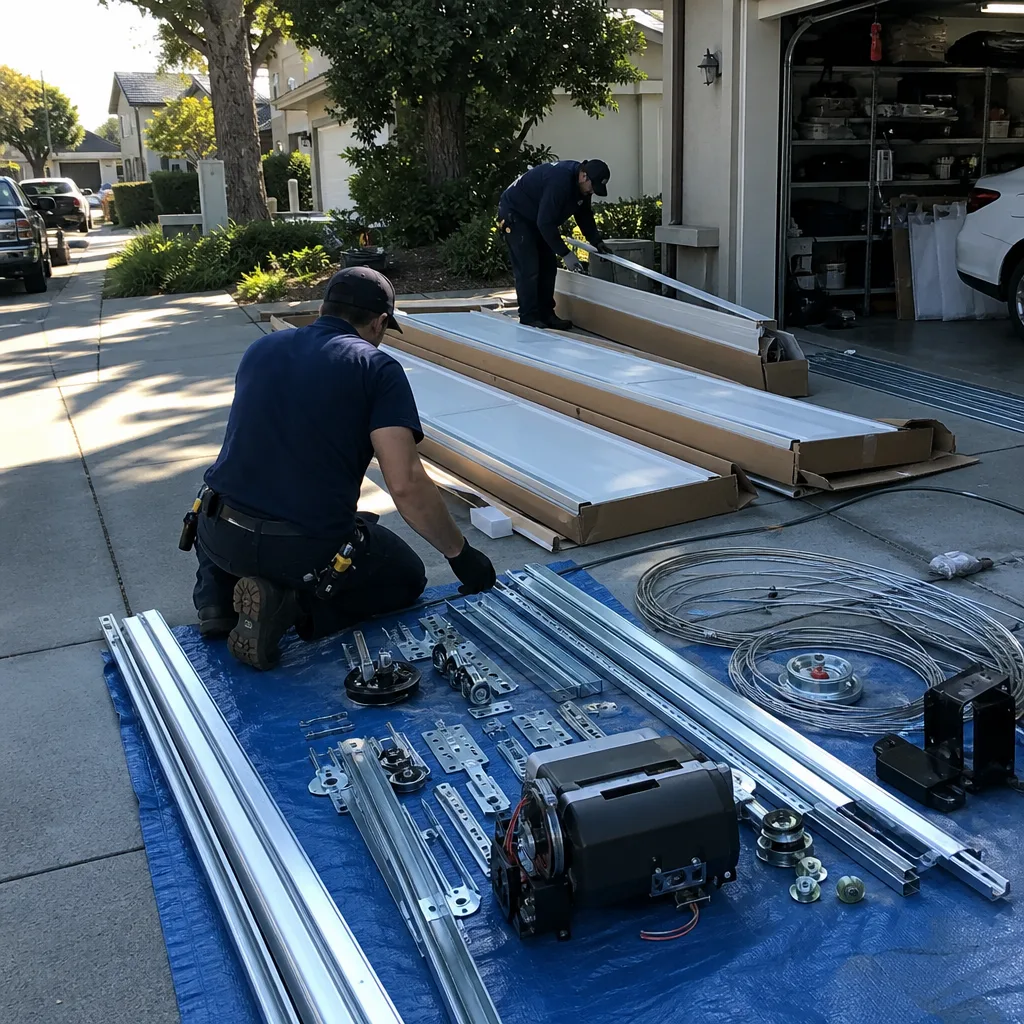
- Buying a door online and hiring separate installation. The warranty on most major brands (Clopay, Amarr, Wayne Dalton) is voided if not installed by an authorized dealer. We’ve been called to fix DIY installations where the customer lost $2,000 in warranty coverage to save $300 on labor.
- Ignoring the header condition. In Oakland’s older housing stock, the header above the garage door is often a single 4×10 or 4×12 with rot at the ends where roof leaks pooled. Replacing a door without addressing this is building on a failing foundation. We photograph the header on every pre-1960 job and show the customer what we found.
- Matching a new door to old track. Track geometry is specific to door weight and thickness. A heavier insulated door on track spec’d for a lighter uninsulated door will bind, wear rollers prematurely, and potentially jump track. Always replace track with door.
- Neglecting the bottom seal and threshold. Oakland’s winter storms can push water under garage doors with worn seals. The damage isn’t immediately visible; it’s the slow rot of the bottom section interior and the rusting of the bottom bracket. A $45 seal replacement prevents $800 in panel damage.
- Accepting a phone estimate without inspection. No contractor can price a garage door replacement accurately without measuring the opening, assessing the header, and testing the opener’s force settings. “Ballpark” estimates almost always balloon. Our written price requires an on-site inspection; anything else would violate Clause 1.
- Forgetting that garage door work triggers home sale disclosure. In California, recent garage door replacement or repair must be disclosed in a home sale. Our documented photo record and written warranty transfer cleanly to the next owner, protecting your sale price.
When to Call a Professional
Call when the door makes noise it didn’t make before, when it reverses unexpectedly, when one side hangs lower than the other, or when the opener strains but the door barely moves. These are not “wait and see” symptoms; they’re the early stages of component failure that gets more expensive the longer it’s ignored.
Call immediately if a spring is broken, a cable is frayed, or the door is off its tracks. These are safety hazards, not maintenance items. A door with a broken spring can crash closed with enough force to cause serious injury. A frayed cable can snap under load. An off-track door can twist and collapse.
Servo Garage Doors Oakland offers free estimates in Oakland - call (628) 300-0423. For more guides & resources on keeping your door running, explore our blog. Every estimate includes a written scope, a flat price approved before any work starts, and a documented photo record of what we found. No coupon required. No urgency theatre. Just the actual condition of your door, priced honestly.
Frequently Asked Questions
A steel door typically lasts 20-30 years in Oakland’s interior neighborhoods, 15-25 years in salt-air zones like the Estuary, with hardware requiring replacement every 8-12 years depending on cycle count and humidity exposure. Wood doors last 15-25 years with proper sealing, less in the hills where UV exposure is more intense. The most accurate predictor isn’t age; it’s cycle count and maintenance history. Call (628) 300-0423 for a free inspection and cycle estimate.
Microclimate variation is the primary factor. Salt-air exposure near the Bay accelerates steel corrosion. High-humidity cycling in fog-prone flatlands degrades spring coatings and swells wood panels. UV exposure in the hills dries and cracks wood and degrades plastic components like photo-eye housings. We adjust our hardware recommendations based on the specific neighborhood, not a one-size-fits-all spec.
Sometimes, but matching is the constraint. Manufacturers change panel profiles and paint formulations every 3-5 years. A panel replaced after 7 years will almost always be visibly different, even with professional color matching. We photograph the existing door and give customers a match probability before quoting panel replacement. For doors over 10 years old, full replacement is usually more cost-effective and carries a full warranty.
Most repairs fall between $180 and $650. Spring replacement runs $280-$520 depending on cycle rating and material. Cable and drum replacement is $220-$380. Opener repairs range from $150 for a limit switch adjustment to $650 for logic board replacement. Every repair gets a flat, written price before work starts, per Clause 1 of The Haven Standard. Call (628) 300-0423 for an exact quote - estimates are free.
Direct replacement of an existing door on the same opening typically does not require a permit. Structural modification of the opening, conversion to living space, or new construction does. We research permit requirements as part of our estimate process and include any fees in the written price. The customer approves everything before work begins.
We service and install all major brands including LiftMaster, Chamberlain, Genie, Clopay, Amarr, Wayne Dalton, Craftsman, and Raynor. For new installations, we recommend specific models based on the door weight, cycle requirements, and smart-home integration needs. We do not install brands we cannot warranty and service long-term.
Every visit includes photographs of the failed or worn component, the measurement data (spring specs, track dimensions, opener settings), the completed work, and any conditions we flagged for future monitoring. The customer receives these via email or text before the technician leaves. This traces back to the founding rule of Servo in 2015: the customer sees the failed part before anyone quotes a replacement. It’s now Clause 4 of The Haven Standard.
The Bottom Line
Oakland’s garage doors fail in patterns that generic guides miss because they don’t account for marine-layer humidity, salt-air corrosion, and the structural constraints of pre-1960 housing stock. The homeowners who get the best outcomes are the ones who read their existing hardware before calling, maintain documentation of past service, and choose contractors who price from inspection rather than templates. The right door, properly spec’d for your neighborhood’s actual conditions, installed with hardware rated for real-world cycles, costs less over its lifespan than the cheapest option replaced twice.
We’ve made right 18,000+ garage doors since 2015, every one with a written price before work started and a documented record when we left. If you’re researching before you call, you’re already doing this correctly. The next step is getting the actual condition of your door assessed by someone who will show you what they found, quote it in writing, and stand behind the work with terms you can read.
Call (628) 300-0423 for a free estimate. A live person answers, 24 hours a day. You’ll get a named technician, an on-the-way text, and a flat written price before any work starts. That’s not a promise. It’s Clause 1.
Written by Marcus Deller, Owner at Servo Garage Doors Oakland, serving Oakland since 2015.