
Last updated September 21, 2026
Full 25-point door and opener safety check with every visit - springs, cables, rollers, tracks, and your LiftMaster or Chamberlain opener included
You get a price before we start. It does not change when the truck arrives.
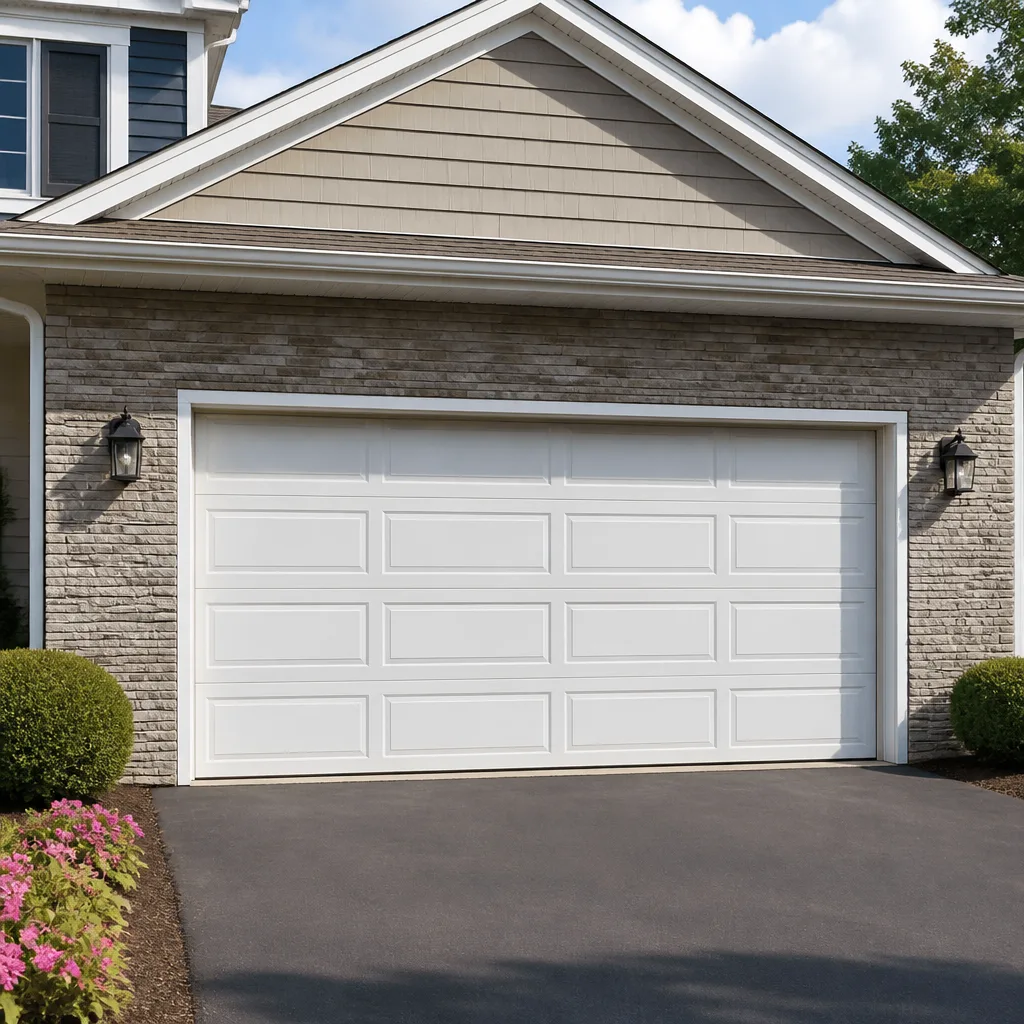
Carriage house
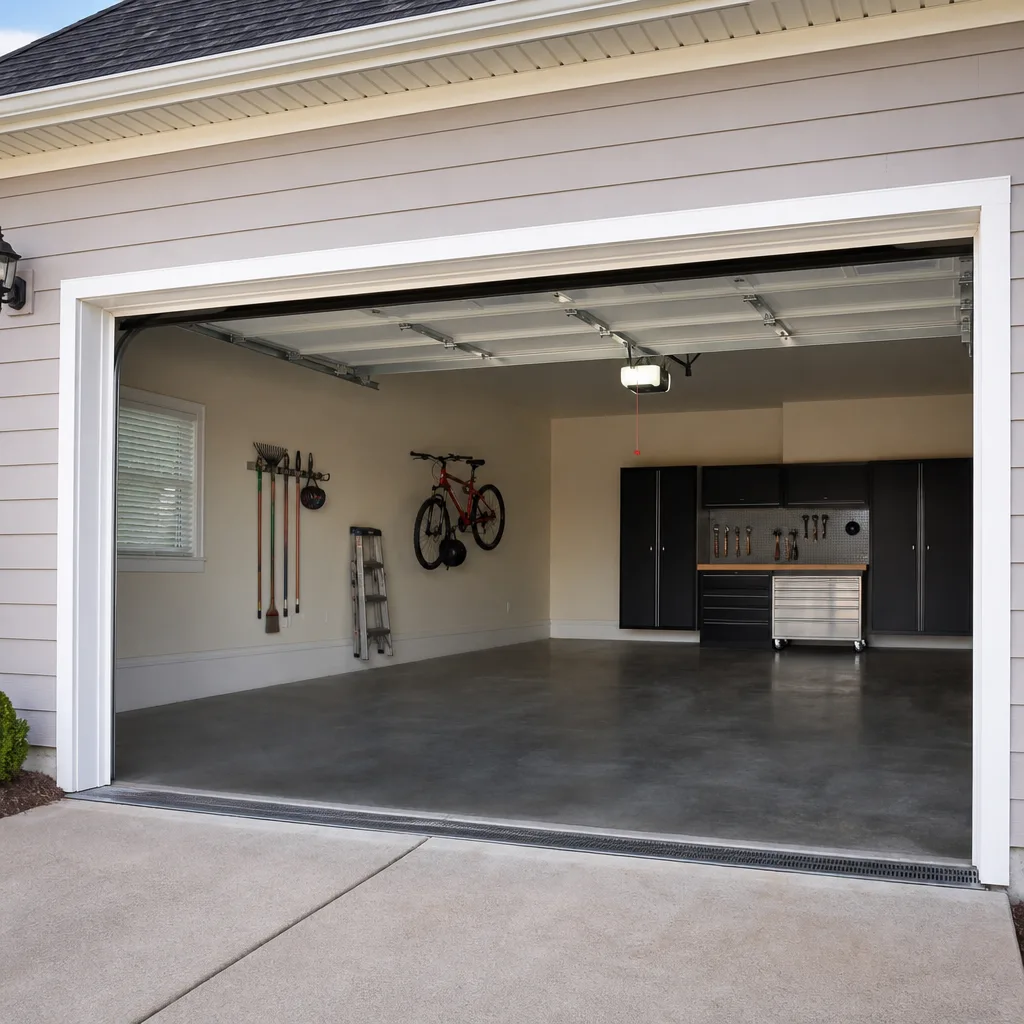
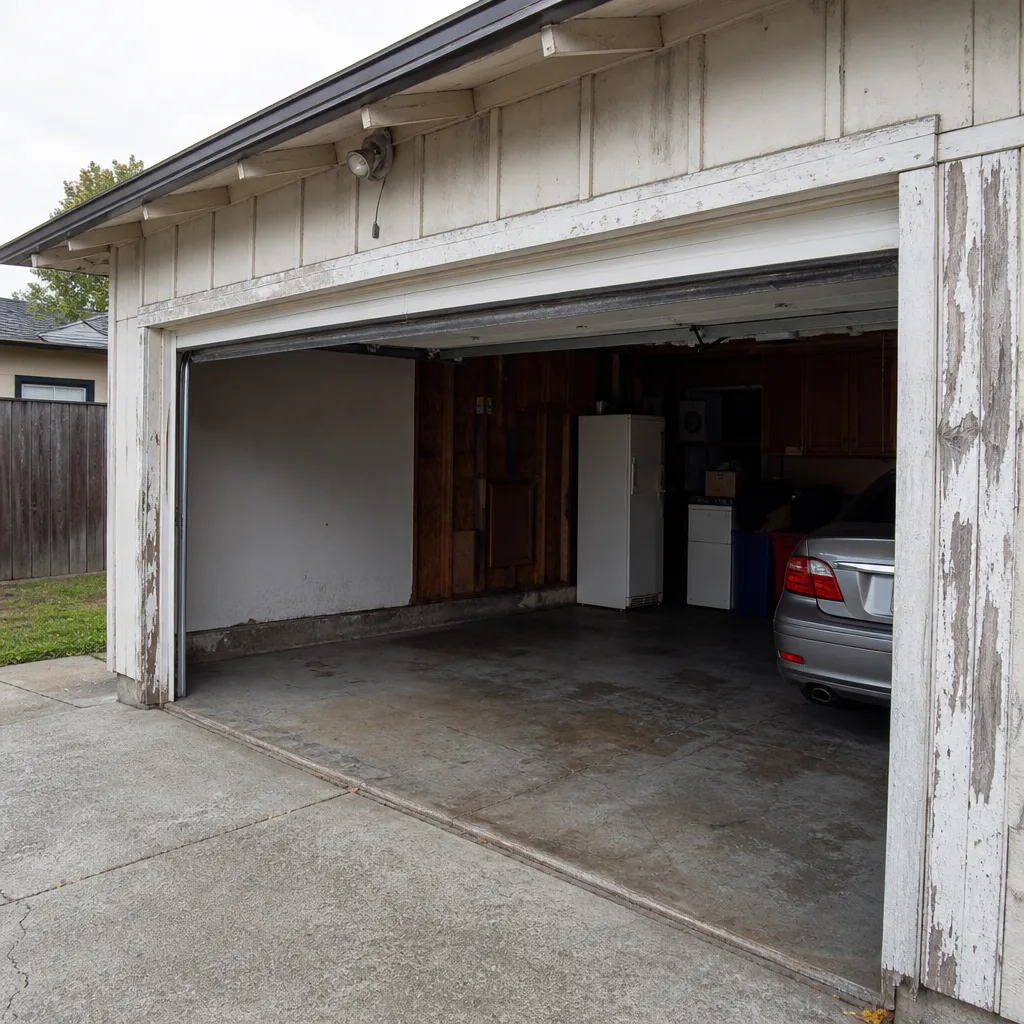 Before
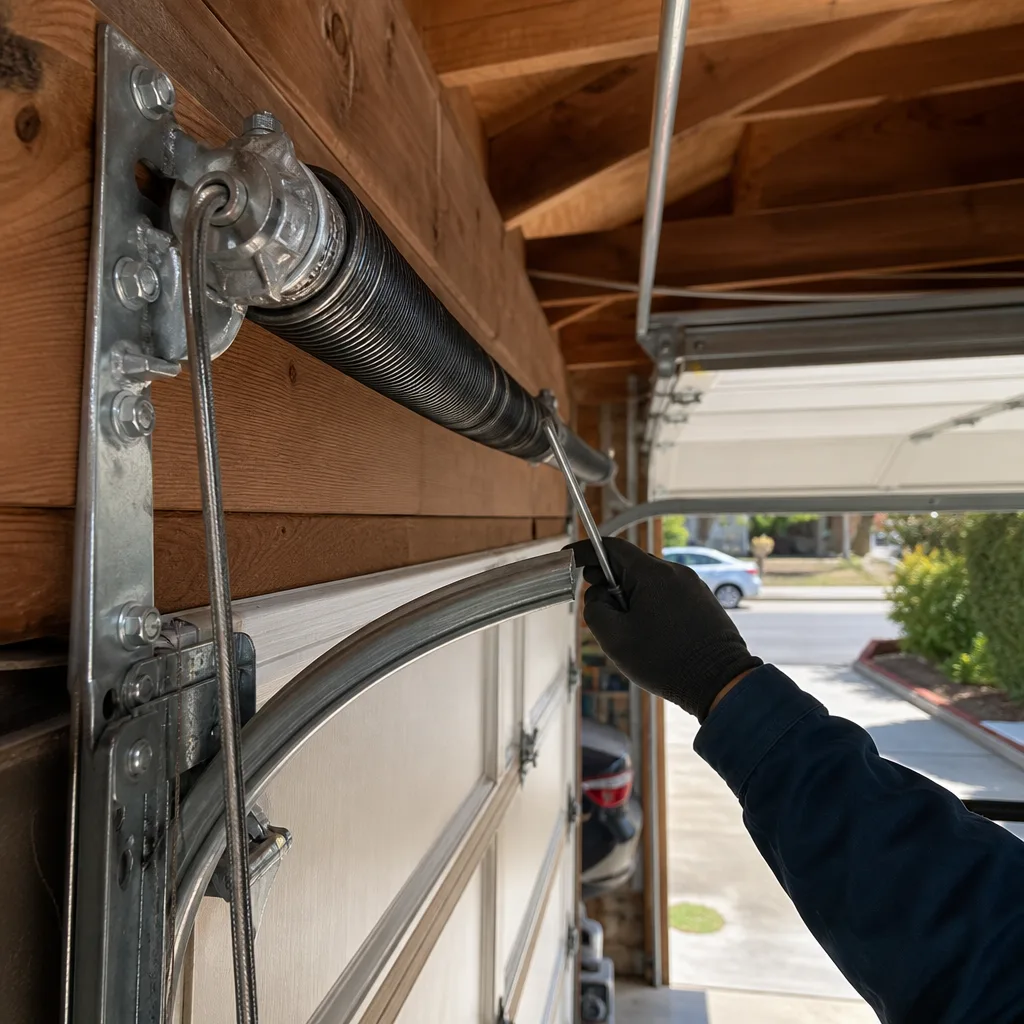 After
After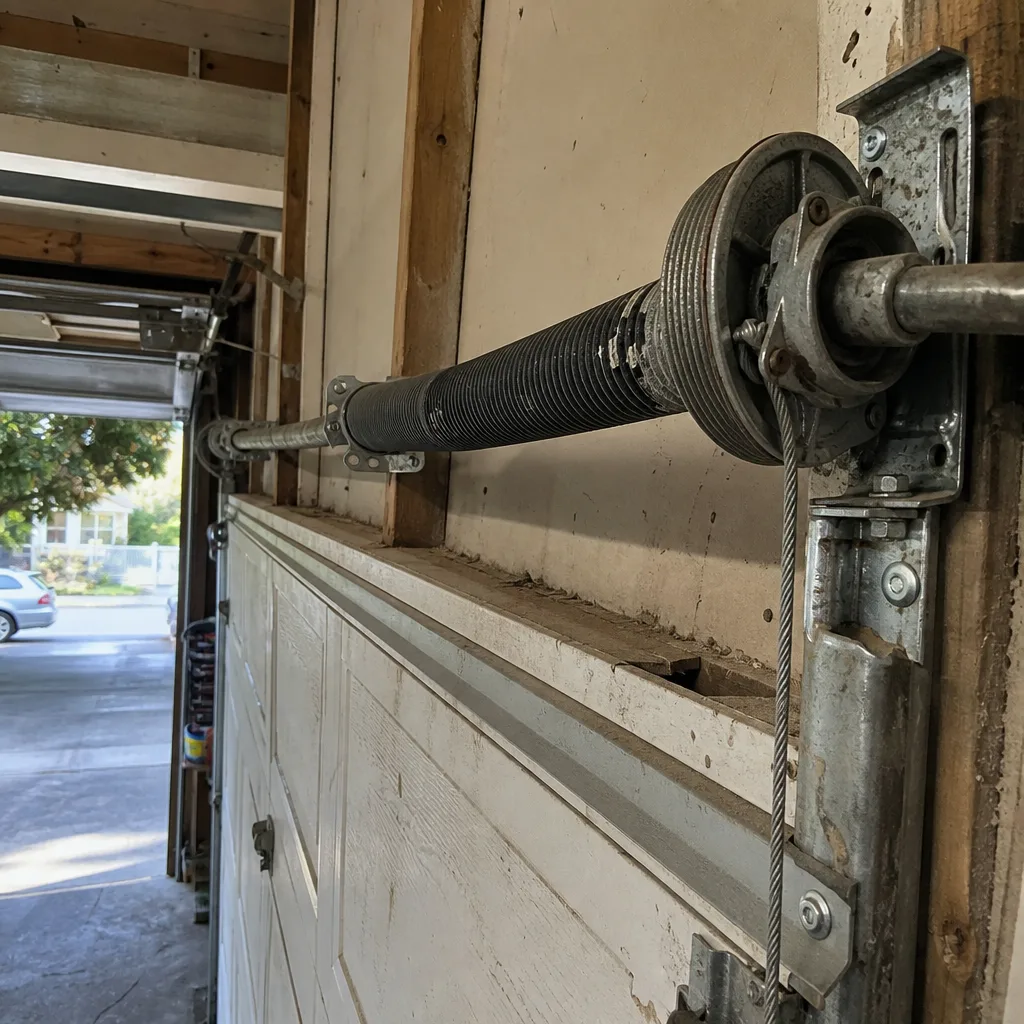 Before
 After
After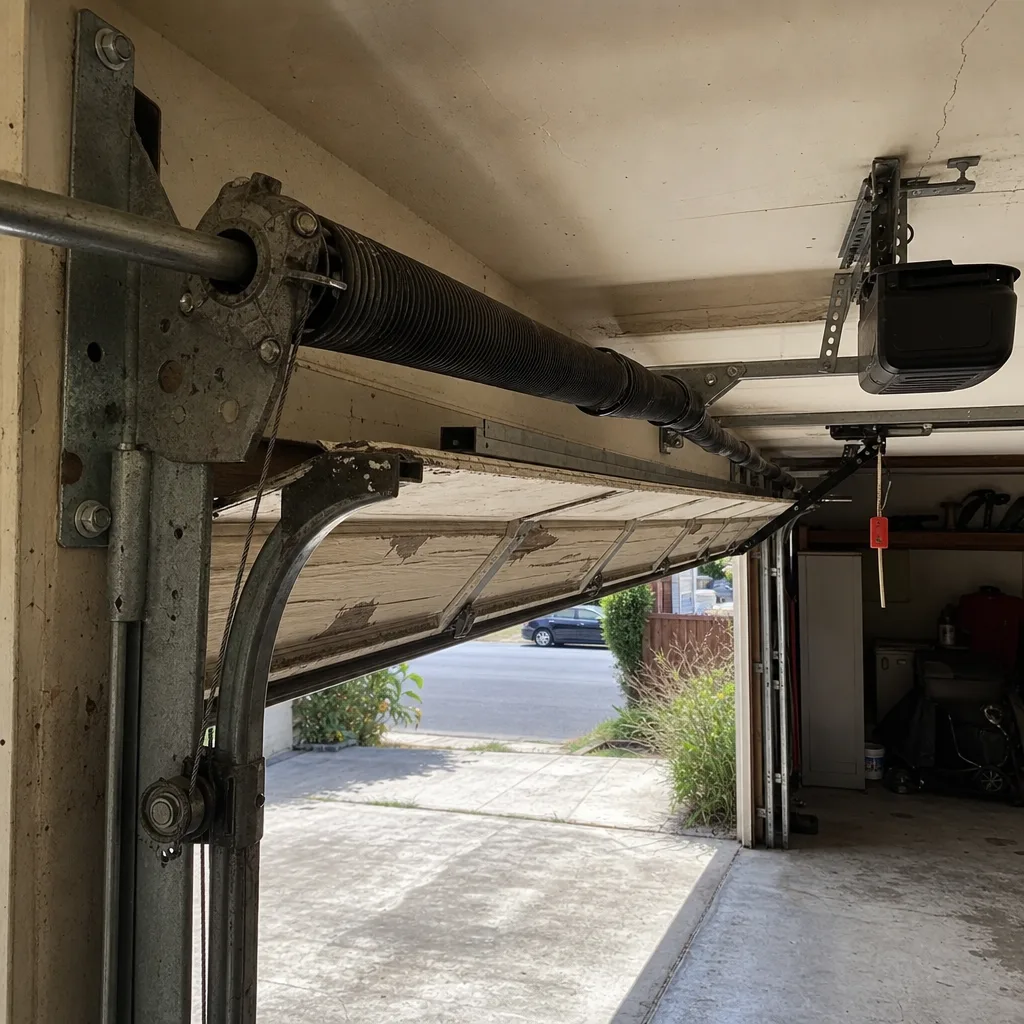 Before
 After
AfterDIY vs Professional Garage Door: The Oakland Homeowner’s Decision Guide
Here’s a number that should change how you think about garage door repair: torsion springs store roughly 10,000 foot-pounds of torque when fully wound, enough energy to fracture a wrist, dislocate a shoulder, or cause fatal head trauma upon uncontrolled release. The Consumer Product Safety Commission has documented spring-related injuries in residential garages consistently for two decades, and unlike ladder falls or electrical shocks, this risk does not diminish with careful technique. The danger is embedded in the physics, not the person’s skill level. In Oakland, where many homes built between 1945 and 1980 still run original single-panel doors with aging hardware, we’ve responded to calls where a homeowner’s weekend project turned into an emergency room visit. This guide will show you exactly which garage door tasks are genuinely DIY-appropriate, which are not regardless of your competence, and how to evaluate a repair situation before you touch a tool.
Quick Answer
Most Oakland homeowners can safely handle weather seal replacement, photo-eye alignment, remote programming, and annual lubrication themselves. Any work involving torsion spring tensioning, cable replacement, or bottom bracket removal under load should be performed by a trained technician - the injury risk is inherent to the component, not the person’s skill level. For installation or replacement of the door itself, professional measurement and alignment prevents track binding and premature opener failure.
Table of Contents
- The Component-by-Component Ruling: What’s Safe and What Isn’t
- DIY-Appropriate Tasks: Step-by-Step
- Never DIY: The Components That Require Professional Service
- What to Do Before Calling a Contractor
- Oakland-Specific Considerations: Rentals, Codes, and Climate
- How to Evaluate a YouTube Repair Video for Accuracy
- The Right Question to Ask a Contractor
- Cost Comparison: When DIY Actually Saves Money
 Before
 After
AfterThe Component-by-Component Ruling: What’s Safe and What Isn’t
The garage door system looks like one machine, but it’s actually several subsystems with radically different risk profiles. Treating them as equivalent is where homeowners get hurt.
DIY-appropriate components share three traits: they carry no stored mechanical energy, they don’t support the door’s weight, and incorrect adjustment won’t cause sudden uncontrolled movement. These include the weather seal at the door bottom, the photo-eye safety sensors, the remote control or keypad, and the exterior weatherstripping around the frame. We’ve seen homeowners in Rockridge and Temescal handle these tasks competently with basic tools and fifteen minutes of attention.
Professional-only components are defined by stored energy or load-bearing function. The torsion spring above the door header is the most dangerous - a wound spring is a mechanical battery waiting for a trigger. The lift cables that run from the bottom bracket to the drum are under constant tension equal to half the door’s weight. The bottom brackets themselves anchor the cable; removing a bracket while the cable is tensioned releases that load instantly. The track system, while less immediately dangerous, requires precise plumb and level; a misaligned track causes rollers to bind and transfer lateral load to the opener, shortening its life.
Here’s the decision framework we use when homeowners call our Garage Door Repair in Oakland line:
- Does the component store energy when the door is closed? If yes, professional service.
- Does the component support the door’s weight in any position? If yes, professional service.
- Would incorrect adjustment cause the door to fall or spring to release? If yes, professional service.
- Is the task cosmetic or communicative (seal, remote, sensor alignment)? If yes, DIY is reasonable.
In the Oakland hills, where many homes have custom wood doors weighing 300 pounds or more, the stakes of misjudging this framework are particularly high. A standard steel door might weigh 150 pounds; a Clopay Reserve Wood Collection door in Montclair can exceed 400. The spring system scales with door weight, and so does the stored energy.
DIY-Appropriate Tasks: Step-by-Step
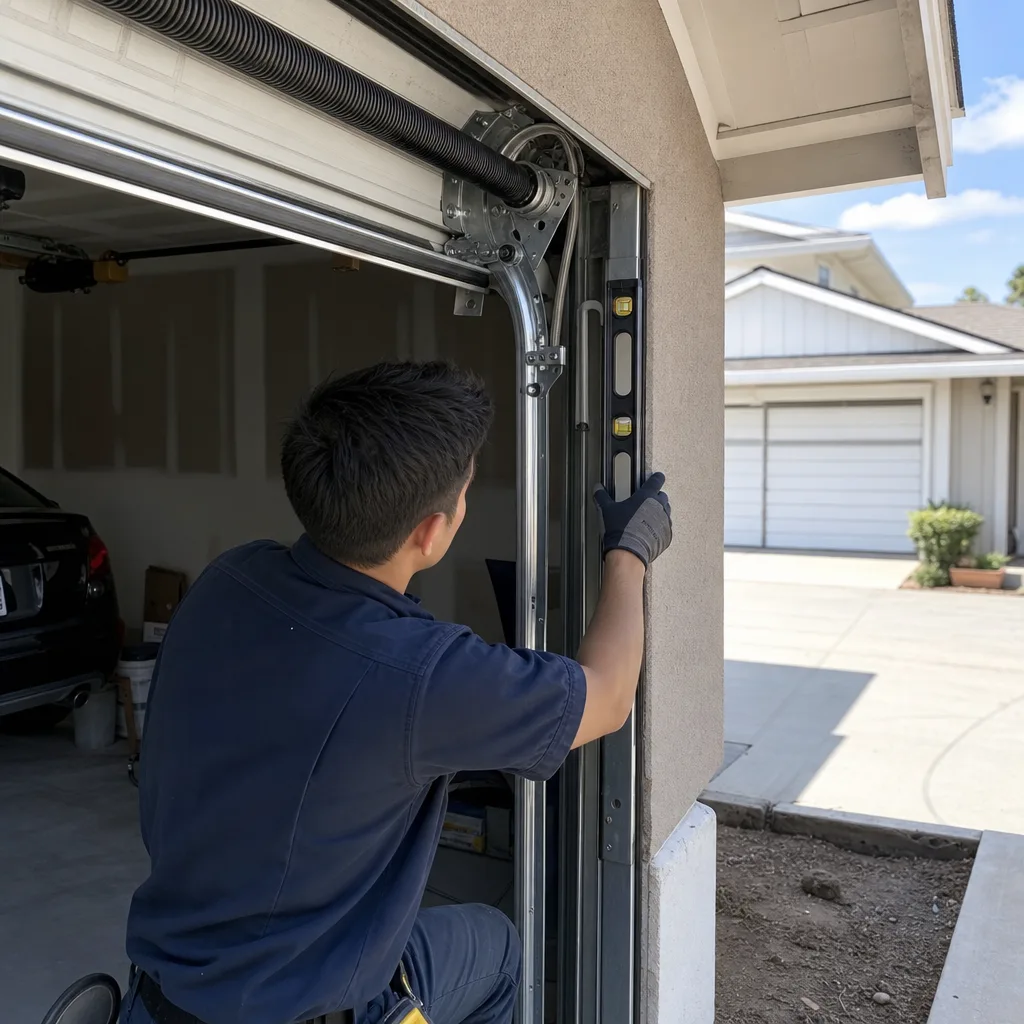
These four tasks are genuinely within reach of most homeowners. We’ve written them with the specificity that Oakland’s research-oriented customers expect, and you can find more guides & resources on our blog for ongoing care.
1. Weather Seal Replacement
The rubber or vinyl seal at the bottom of the door hardens and cracks over time, particularly in Oakland’s marine-influenced climate where morning fog deposits moisture that accelerates UV degradation. Replacement is straightforward:
- Close the door and clamp it to the track with locking pliers to prevent movement.
- Pull the old seal from the retainer channel; if it’s a T-style seal, slide it out one end.
- Clean the channel with a dry cloth - grit will tear the new seal.
- Lubricate the channel lightly with dish soap and water.
- Feed the new seal into the channel, working from one end. A helper prevents binding.
- Trim excess with a utility knife; leave 1/4 inch of compression at the sides.
We stock replacement seal for all major brands including Wayne Dalton, Amarr, and Clopay, but this is also available at Oakland hardware stores. Match the profile exactly - T-style, bead-style, and bulb-style are not interchangeable.
2. Photo-Eye Alignment
The photo-eyes are the small boxes mounted 4-6 inches above the floor on each side of the track. They transmit an invisible beam; interruption causes the door to reverse. Misalignment is the most common cause of a door that won’t close completely.
- Check that both indicator LEDs are lit - usually steady green or amber.
- If one is off or blinking, loosen the mounting bracket wing nut.
- Adjust until the LED steadies; the units must face each other directly.
- Tighten the wing nut without shifting position.
- Test by closing the door; interrupt the beam with your leg to confirm reversal.
In Oakland’s older neighborhoods like Maxwell Park and Laurel, we’ve found photo-eyes knocked out of alignment by gardening equipment, children’s bikes, or vibration from heavy freight traffic on nearby arterials.
3. Remote and Keypad Programming
Modern openers from LiftMaster, Chamberlain, Genie, and Craftsman use rolling-code technology for security. Programming varies by manufacturer and model year, but the general pattern holds:
- Locate the “Learn” button on the opener motor housing - typically purple, red, or yellow.
- Press and release; the adjacent LED will glow for 30 seconds.
- Within that window, press the desired button on the remote.
- The opener lights will flash or you’ll hear two clicks confirming pairing.
Keypads follow the same pattern with an additional step to set a PIN. Consult the specific manual; “universal” remotes often fail with openers manufactured after 2011 due to Security+ 2.0 encryption.
4. Annual Lubrication
This maintenance task prevents noise and extends component life, but most homeowners over-lubricate or use the wrong product. Use white lithium grease on the hinge pivots and roller bearings. Use silicone spray on the torsion spring - never grease, which attracts grit. Do not lubricate the track; the rollers need friction to roll rather than slide. Wipe excess; accumulated lubricant becomes a dust magnet in Oakland’s dry summer months.
Never DIY: The Components That Require Professional Service
This section addresses the tasks where competence is irrelevant because the hazard is structural.
Torsion Spring Tensioning and Replacement
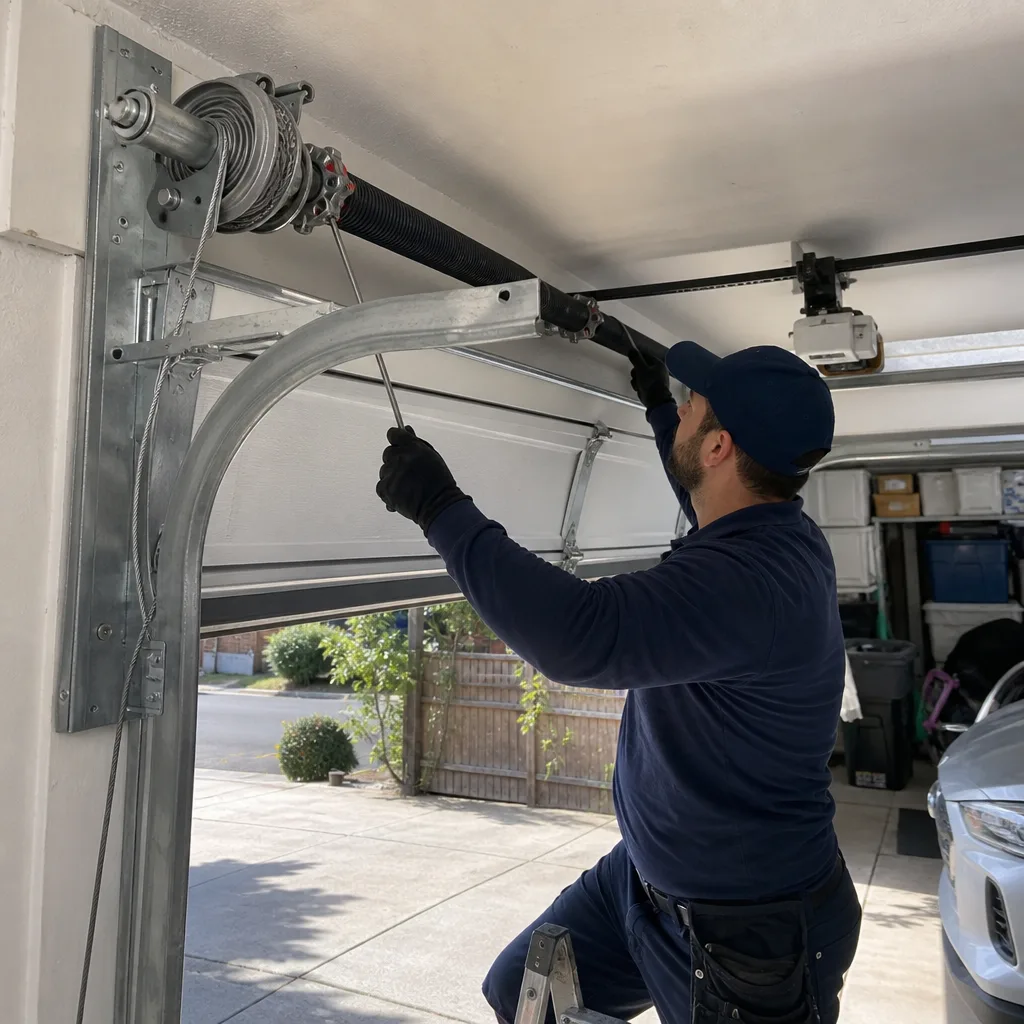
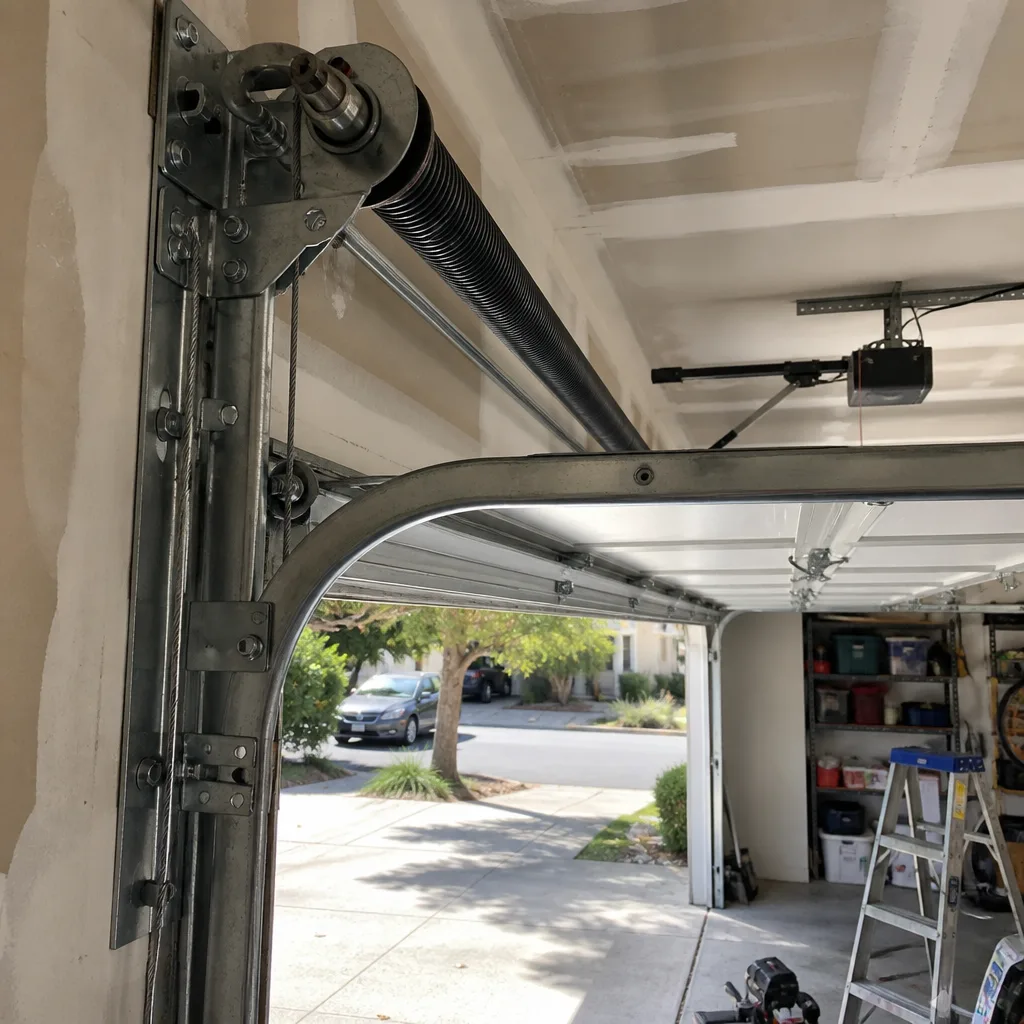
The torsion spring is mounted on a steel shaft above the door header, held under torque by winding cones at each end. To remove or install a spring, a technician inserts winding bars - solid steel bars, not screwdrivers or pliers - into the cone and adds or releases tension in quarter-turn increments. The energy in a wound spring is sufficient to throw a winding bar across a garage with lethal force if the operator loses control.
The critical point: you cannot “be careful enough” to eliminate this risk. The danger is not in clumsiness; it’s in the sudden release of stored energy when a component fails or slips. We’ve responded to calls in Oakland’s Dimond and Fruitvale districts where a homeowner used a screwdriver as a winding bar; the tool shattered, the spring unwound uncontrollably, and the person suffered facial lacerations and a fractured orbit. The Consumer Product Safety Commission data shows this pattern repeats nationally every spring season.
Professional spring replacement also requires matching the spring to the door’s weight and lift type. A spring with incorrect wire diameter, inside diameter, or length will be incorrectly torqued, causing the opener to strain or the door to drift. We measure the existing spring, weigh the door, and calculate the correct replacement - a process that takes specialized tools and cannot be approximated by visual matching.
Lift Cable Replacement
The lift cables attach to the bottom brackets and wind around drums as the door opens. When a cable frays or breaks, the door becomes unbalanced and may fall or jam in the track. Replacing a cable requires releasing the torsion spring tension first - see above - then threading the new cable with the door in the correct position to maintain cable tension equality. An incorrectly seated cable will jump the drum under load, causing immediate and dangerous door drop.
Bottom Bracket Service Under Load
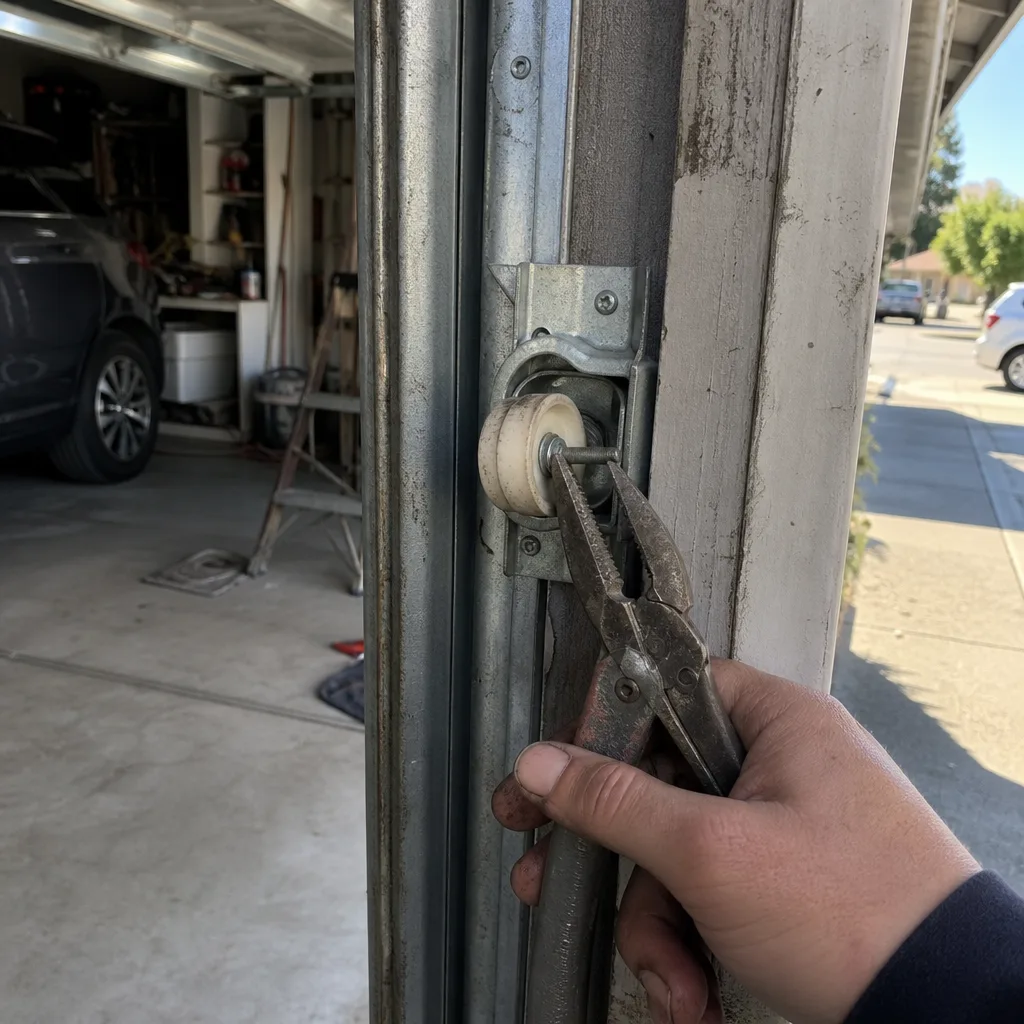
The bottom brackets anchor the lift cable and the bottom roller. They are under constant tension equal to the cable load. Removing a fastener from a bottom bracket without first detensioning the spring causes the bracket to become a projectile. We’ve found online guides that suggest “supporting the door with a 2×4” for this operation; the math doesn’t work. A 200-pound door supported at center exerts 100 pounds per side; the cable tension remains, and the bracket will still release violently if disturbed.
Track Realignment and Replacement
While less immediately dangerous, track work requires precision that most homeowners underestimate. The vertical track must be plumb within 1/4 inch over its height; the horizontal track must slope toward the back of the garage at a specific angle to prevent the door from rolling forward when open. Misalignment causes roller binding, which transfers lateral load to the opener trolley carriage and wears the drive system prematurely. In Oakland’s hillside homes, where garage floors often have slope for drainage, track installation requires compensation that standard guides don’t address.
What to Do Before Calling a Contractor
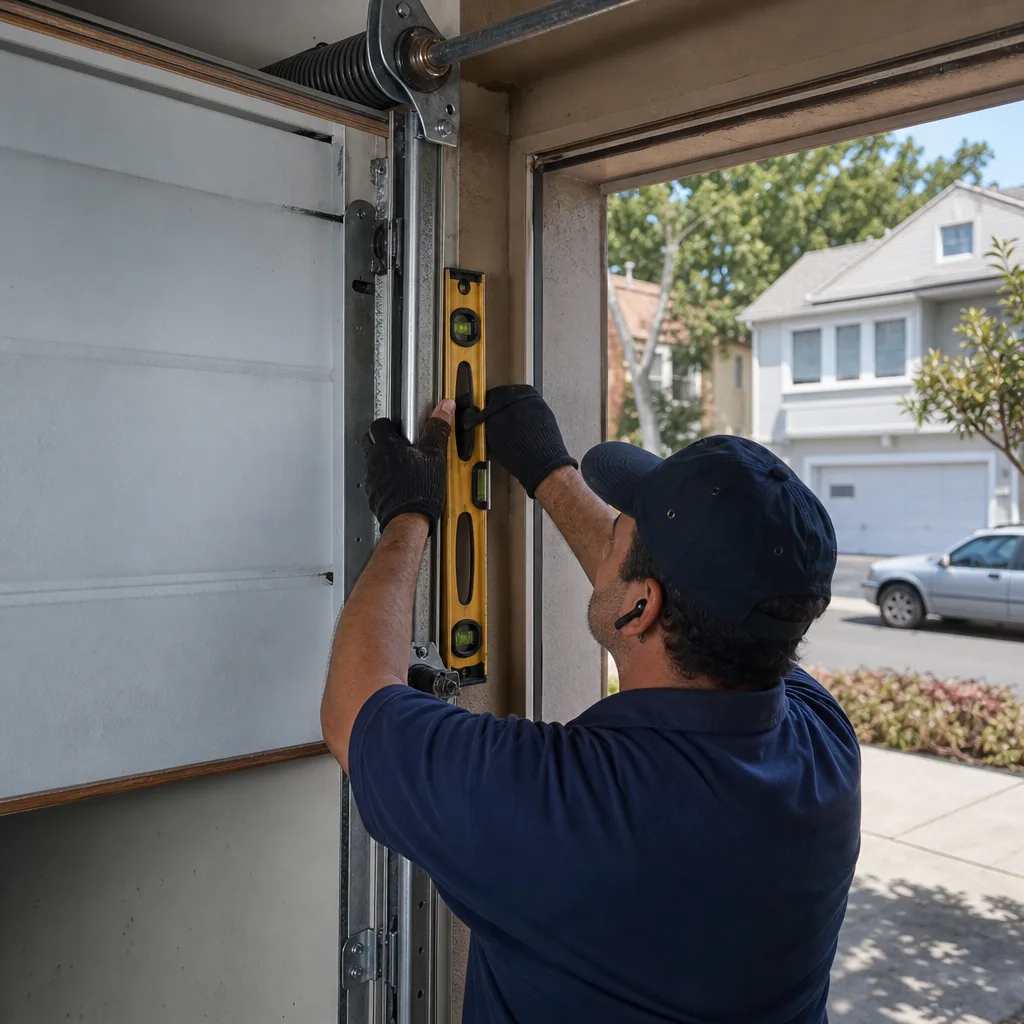
If you’ve determined that your repair requires professional service, you can still reduce billable time and improve diagnostic accuracy with preparation. These steps don’t replace the technician’s work, but they streamline the visit and sometimes reveal that the problem is simpler than assumed.
Clear the work area. Move vehicles, storage, and equipment to provide 10 feet of clear space in front of the door and 3 feet on each side. This is not courtesy; it affects whether the technician can safely position a ladder for spring work or lay out door sections for replacement. In Oakland’s compact garages, particularly in bungalow-era neighborhoods like Glenview and Redwood Heights, space is often the limiting factor.
Locate the door specifications. Check for a sticker or stamp on the door interior that lists manufacturer, model, size, and construction. For Clopay, Amarr, and Wayne Dalton doors, this is typically on the top section edge or the track mounting bracket. If the sticker is missing, measure the width and height, note the panel construction (steel, wood, composite, insulated or non-insulated), and count the horizontal sections (typically four or five). This information lets the technician confirm spring sizing before arrival.
Document the symptom on video. Record the door’s behavior through a complete open-close cycle. Note any points of binding, noise, or asymmetry. A door that lifts unevenly usually indicates a failing spring on one side; a grinding noise from the opener suggests a worn trolley carriage or logic board issue. Video lets the technician see what you see, and in our experience, it often changes the initial diagnosis before we dispatch.
Check the opener diagnostic LED. Most openers manufactured after 2010 flash a diagnostic code when malfunctioning. Count the flashes between pauses and consult the manufacturer’s chart - available online by model number. This can distinguish between a force-setting issue, a limit switch fault, or a motor thermal overload, each with different repair implications.
Gather any prior service records. If the door or opener has been serviced before, note the date and what was done. Springs have a cycle life; knowing whether a spring was replaced three years ago or ten helps assess whether failure is expected or premature. We include this history in our documented photo record for returning customers, but first-time callers often don’t have it organized.
When you call Servo Garage Doors Oakland home, this preparation lets us quote more precisely and dispatch with the correct parts. Our Garage Door Repair in Oakland team carries springs, cables, rollers, and logic boards for all eight major brands on every truck, but confirming the specification in advance eliminates a second trip.
Oakland-Specific Considerations: Rentals, Codes, and Climate
Oakland’s housing market creates legal and practical constraints that generic DIY guides ignore.
Rental Housing and Insurance Exposure
In Oakland’s rental market, where approximately 60% of housing units are renter-occupied, DIY garage door repair by a tenant may violate the lease and expose both tenant and landlord to significant liability. Standard rental agreements designate the landlord as responsible for structural and mechanical maintenance; unauthorized repair can be grounds for lease termination in rent-controlled units. More seriously, if a tenant’s DIY repair fails and injures a subsequent user - a delivery driver, a visitor, the next tenant - the landlord’s insurance may deny coverage based on unauthorized modification.
We’ve responded to calls in Oakland’s multi-unit buildings where a tenant attempted cable replacement, failed to seat the cable in the drum groove, and the door dropped onto a parked vehicle two days later. The tenant’s renter’s insurance denied the claim; the landlord’s carrier disputed coverage; the tenant faced personal liability for the vehicle damage and potential eviction proceedings. The correct protocol in a rental is written notice to the landlord or property manager, followed by professional repair arranged by the owner or their designated agent.
Building Code and Permit Requirements
Garage door replacement in Oakland requires a building permit when the opening is modified or when an automatic opener is installed where none existed. The City of Oakland Building Services Division enforces California Building Code Chapter 10 for door assemblies, including wind load requirements that affect track anchorage and reinforcement. A homeowner-installed door that fails inspection must be corrected at the owner’s expense; professional installation includes permit handling and inspection scheduling.
For repair work, permits are generally not required for like-for-like component replacement. However, if a repair involves structural modification to the header, jack studs, or rough opening, permit requirements may apply. We handle permit determination as part of our written scope under Clause 1 of The Haven Standard.
Climate Effects on Components
Oakland’s climate is mild compared to inland California, but the marine layer and seasonal variation still affect garage door systems. Morning fog deposits moisture on metal components, accelerating surface corrosion on ungalvanized springs and cables. The dry summer months cause wood doors to shrink and check, particularly in hillside neighborhoods with greater sun exposure. Temperature variation between a sun-heated south-facing garage and shaded north-facing installation affects spring torque; a spring calibrated at 55°F operates differently at 85°F.
We see accelerated weather seal degradation in West Oakland and the Port area due to industrial particulate; in the Oakland hills, UV exposure at elevation degrades plastic components faster than at sea level. These factors inform our material recommendations and maintenance scheduling.
How to Evaluate a YouTube Repair Video for Accuracy
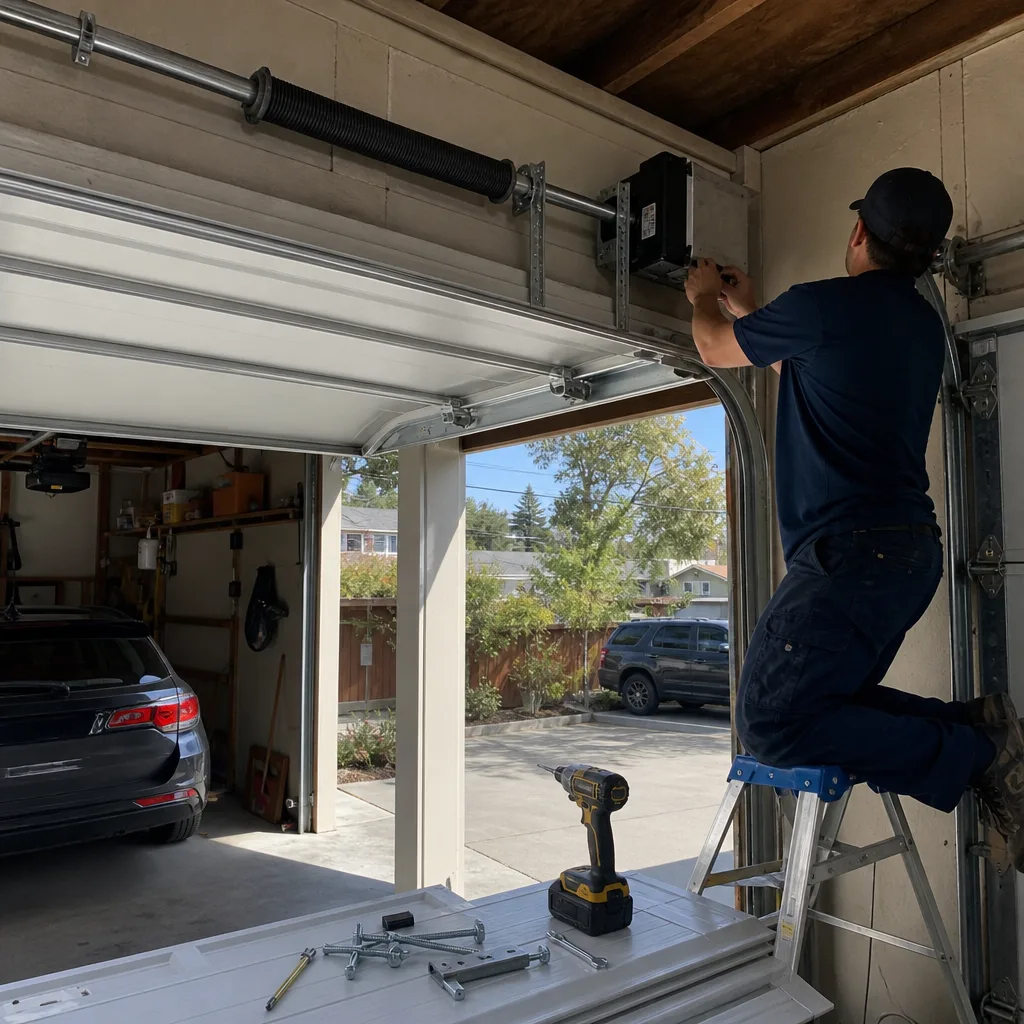
The DIY garage door repair video ecosystem is dangerous. We’ve identified three technical markers that distinguish competent instruction from content that will get someone hurt.
Marker 1: Winding bar specification. Any video demonstrating torsion spring work must specify solid steel winding bars of precise diameter - typically 1/2 inch or 18mm depending on the cone. If the video shows screwdrivers, adjustable wrenches, or “anything that fits,” close it. This is the single most reliable predictor of dangerous content.
Marker 2: Door securing method. Professional spring replacement requires the door to be clamped in the open position with locking pliers or C-clamps on both tracks, or supported by a winding bar through the cogs. Videos that show the door simply “propped open” or held by the opener alone are incorrect; the opener is not a load-bearing device for this purpose.
Marker 3: Spring measurement and calculation. A competent video will show the technician measuring wire diameter with calipers, counting active coils, and recording inside diameter and overall length. Spring replacement by visual matching or “looks about right” guarantees incorrect torque. If the video skips measurement or suggests taking the old spring to a hardware store for matching, the creator does not understand torsion systems.
Additional red flags: videos filmed in commercial or industrial settings with heavy-duty hardware not found in residential installations; creators who disable comments or delete questions about injury; content that emphasizes speed over safety (“replace your spring in 10 minutes!”). We’ve reviewed dozens of these videos; the dangerous ones consistently prioritize watch time over accuracy.
The Right Question to Ask a Contractor
When you’re considering DIY partly to save money, our Garage Door Cost Breakdown: The Oakland Homeowner’s Reference for 2026 can help you understand where professional investment actually protects long-term value.
Ask: “What is the labor-only cost if I supply the parts?”
The answer falls into three categories, each informative:
- Refusal or deflection: “We don’t work with customer parts” or “our warranty requires our parts.” This often indicates a business model built on significant parts markup, sometimes 200-400% over wholesale. The labor rate may be artificially low to attract calls, with profit recovered on components.
- Conditional acceptance with warranty limitation: “We’ll install your parts, but only our parts carry our warranty.” This is reasonable and common. The technician stands behind their labor - proper installation - but cannot warranty components they didn’t source. This is our position at Servo Garage Doors Oakland.
- Full labor quote with no conditions: Rare, and sometimes indicates desperation for work or unsustainable pricing. Verify license and insurance carefully.
At Servo, we quote a flat, written price for the complete job under Clause 1 of The Haven Standard. If a homeowner wants to supply parts, we quote labor separately and document that our 365-Day Done Right Promise covers installation quality, not component failure. We can also evaluate customer-supplied parts for compatibility before scheduling - a Clopay roller may not fit an Amarr track, and a Genie rail assembly won’t mate with a LiftMaster trolley carriage.
The deeper point: if your primary motivation for DIY is cost, a contractor who won’t break out labor and parts is not aligned with your interest in understanding the value proposition. Transparency in pricing is a prerequisite for trust.
Cost Comparison: When DIY Actually Saves Money
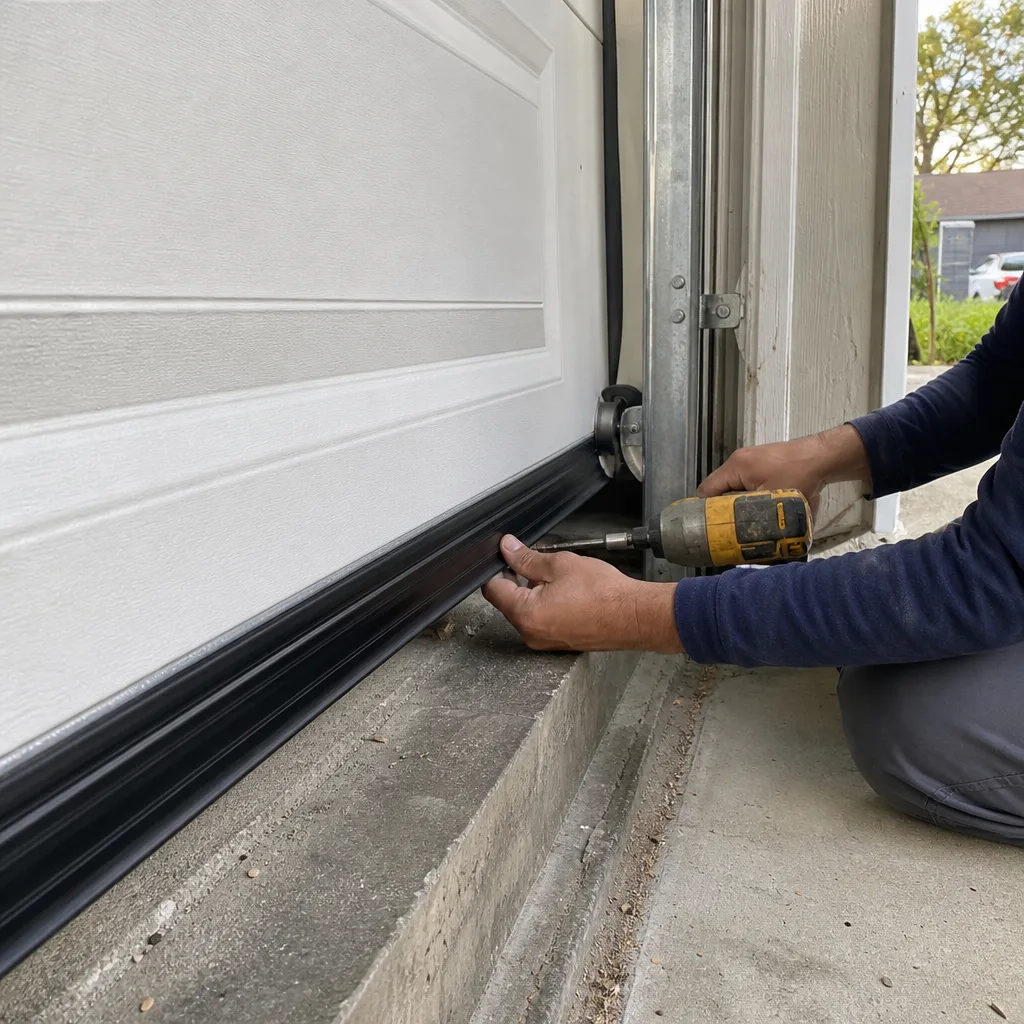
Honest accounting requires including tool acquisition, time value, risk cost, and the probability of error requiring professional correction.
| Task | DIY Cost Range | Professional Cost Range (Oakland) | DIY Savings (Net) |
|---|---|---|---|
| Weather seal replacement | $15-$40 (materials only) | $120-$180 (parts + labor) | $80-$165 |
| Photo-eye alignment | $0 (adjustment only) | $95-$150 service call | $95-$150 |
| Remote/keypad programming | $0-$45 (remote if needed) | $95-$150 service call + remote | $50-$150 |
| Annual lubrication | $12-$25 (products) | $95-$150 maintenance visit | $70-$138 |
| Torsion spring replacement | $40-$120 (spring + tools) | $180-$340 (parts + labor) | Negative when risk cost included |
| Cable replacement (pair) | $20-$50 (cables + tools) | $150-$280 (parts + labor) | Negative when risk cost included |
| Opener installation | $200-$500 (opener + misc) | $450-$850 (opener + labor) | $50-$350 (if no errors) |
| Full door replacement | $800-$2,500 (door + hardware) | $1,400-$4,000 (door + labor) | Variable; measurement errors costly |
The “negative when risk cost included” notation for spring and cable work reflects the non-trivial probability of injury requiring medical treatment, plus the cost of professional correction when DIY fails. We’ve charged $280 to correct a spring installation where the homeowner used an incorrect spring, causing the opener to fail within a month - the “savings” became additional expense.
For Garage Door Installation in Oakland, professional measurement prevents costly errors. A door ordered 1/2 inch too wide requires return shipping and reorder; a door ordered without wind load rating for an exposed hillside location fails inspection. Our written scope under Clause 1 includes measurement, permit handling, and installation with the 365-Day Done Right Promise.
Common Mistakes to Avoid
- Using a screwdriver as a winding bar. We’ve seen this cause three serious injuries in Oakland in the past five years. Screwdrivers are not rated for torsional load; they shatter, and the sudden release of energy is uncontrolled. This mistake persists because it seems to work until it doesn’t.
- Lubricating the track. Rollers are designed to roll, not slide. Grease on the track causes the roller to skid, creating flat spots and transferring lateral load to the opener. Lubricate hinges and bearings, not the track surface.
- Ignoring spring cycle life after repair. A standard torsion spring is rated for 10,000 cycles. If your household opens the door four times daily, that’s seven years. Replacing a broken spring with the same specification without considering increased usage sets up the next failure.
- Programming a remote without clearing lost units. If you’ve lost a remote or had a vehicle stolen with the garage remote inside, failing to clear the opener’s memory leaves your home accessible. The Learn button procedure includes a step to erase all codes before reprogramming current remotes.
- Installing an opener on an unbalanced door. The opener is not a door lifter; it’s a door mover. A door that doesn’t stay at half-open position without opener assistance will destroy the opener’s drive system. Test balance by disconnecting the opener and lifting manually before any opener installation.
- Neglecting permit requirements for replacement. In Oakland, an unpermitted door replacement discovered during a home sale can delay closing and require retroactive inspection with potential correction orders. The permit cost is minor compared to transaction friction.
- Assuming all brands are compatible. A Craftsman opener rail won’t accept a Chamberlain trolley carriage without adapter kits that often fail. A Wayne Dalton TorqueMaster spring system requires proprietary tools and components. Verify compatibility before mixing brands.
When to Call a Professional
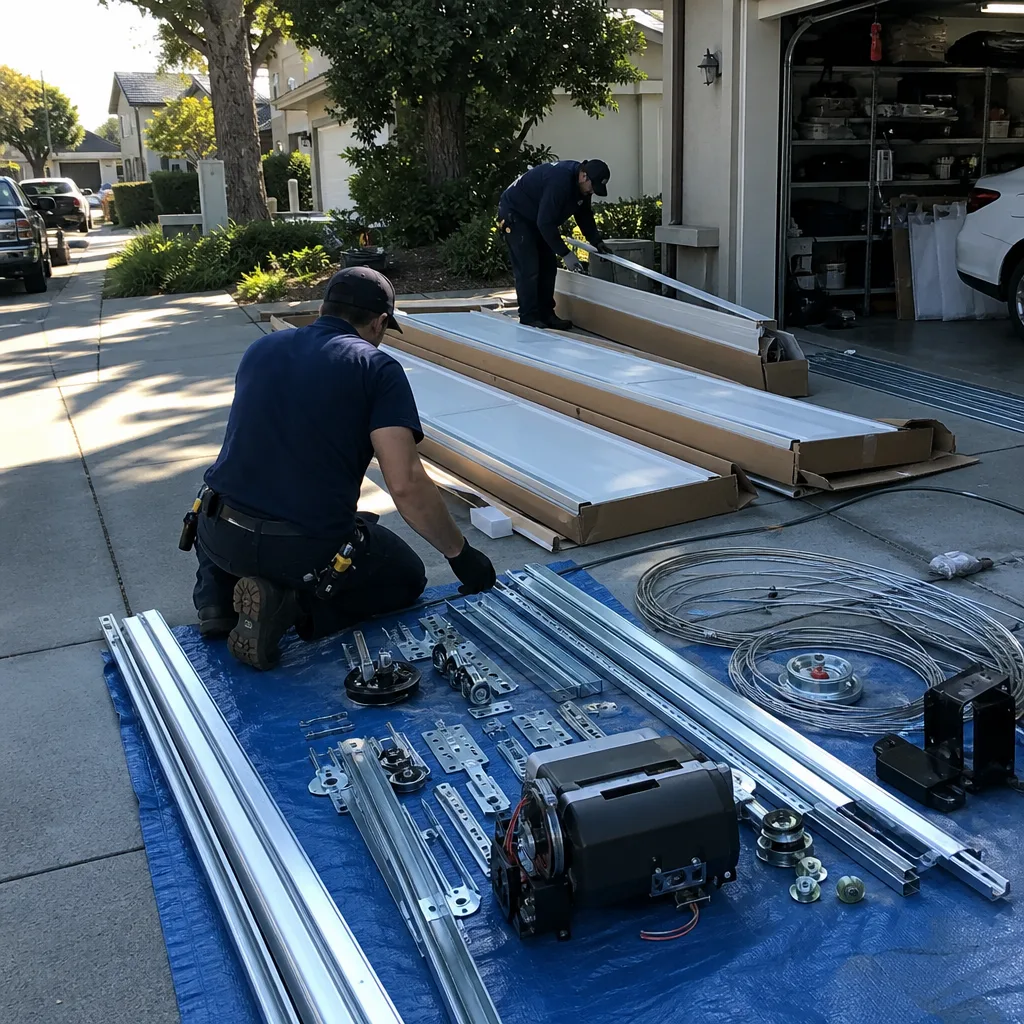
Call a professional when the repair involves torsion springs, lift cables, bottom brackets under load, or track alignment; when the door is unbalanced or has damaged sections; when the opener shows diagnostic codes indicating internal failure; when you’re in a rental unit and lease terms require landlord-arranged repair; or when you’ve attempted DIY and the problem persists or worsens. For installation or replacement, professional measurement and permit handling prevent costly errors.
Servo Garage Doors Oakland offers free estimates in Oakland - call (628) 300-0423. Every estimate includes a written, flat price and scope before any work begins, per Clause 1 of The Haven Standard. Our technicians arrive with a documented photo record system, background-checked and uniformed, with license and insurance verification available on request. Emergency calls are answered by a live person, 24/7, with a named technician and on-the-way text.
Frequently Asked Questions
Garage door spring replacement in Oakland typically costs $180-$340 for a standard torsion spring, including parts and labor. The price varies with door size, spring specification, and whether the door has one or two springs. We quote a flat, written price before any work starts - no exceptions - per Clause 1 of The Haven Standard. Call (628) 300-0423 for an exact quote; estimates are free.
If your door has two torsion springs and one breaks, both should be replaced. Springs are installed as a matched pair with equal cycle life; the unbroken spring has the same fatigue cycles and will fail soon. Replacing one spring creates imbalance and wastes the labor cost of a second visit. We always quote paired replacement when applicable, documented in our written scope.
No. Our written price, delivered before any work starts under Clause 1, is the price you pay. The only exception is if you request additional work not in the original scope - which requires a separate written amendment, not a verbal upsell. We’ve maintained this rule since 2015 across 18,000+ jobs.
Disconnect the opener by pulling the emergency release cord, then lift the door manually to waist height. A balanced door stays in place; an unbalanced door falls or rises on its own. If the door drifts, the spring system needs professional adjustment. Do not attempt to adjust spring tension yourself.
Yes. Our Garage Door Opener Repair & Installation in Oakland trucks carry springs, cables, rollers, hinges, logic boards, and trolley carriages for LiftMaster, Chamberlain, Genie, Clopay, Amarr, Wayne Dalton, Craftsman, and Raynor. For less common components or older discontinued models, we source overnight and schedule return installation.
Every visit closes with a documented photo record: images of the failed component before replacement, the installed component, and the completed work area. You receive this record by text or email, tracing back to Clause 4 of The Haven Standard - the founding rule that the customer sees the failed part before anyone quotes a replacement. You also receive a written warranty document for the work performed.
The Bottom Line
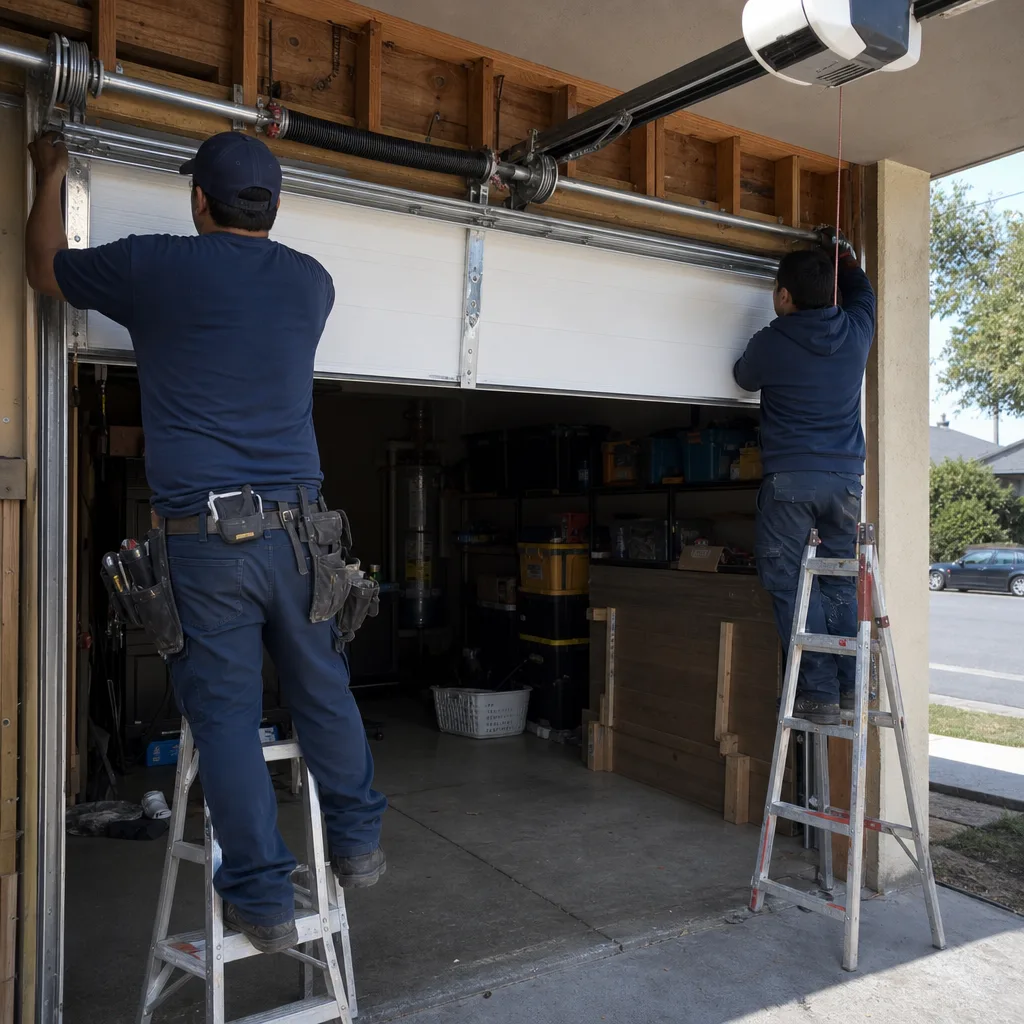
The DIY-versus-professional decision for garage door work is not about your skill level or your budget. It’s about whether the specific component involved stores mechanical energy that releases dangerously regardless of who’s touching it. Weather seal, photo-eyes, remotes, and lubrication are genuinely DIY-appropriate. Torsion springs, cables, bottom brackets, and track alignment are not. In Oakland’s rental-heavy market, legal exposure adds another layer to the calculation. When you do call a professional, the right question - “what’s the labor-only cost if I supply parts?” - reveals whether you’re paying for skill or subsidizing a markup model. At Servo Garage Doors Oakland, we’ve built our practice on written prices before work starts, documented evidence of what we found, and a 365-Day Done Right Promise backed by The Haven Standard, not a handshake. That’s been our approach since 2015, and it’s the approach we’ll bring to your garage.
Ready for a free estimate? Call Servo Garage Doors Oakland at (628) 300-0423. A live person answers 24/7, including holidays. We’ll schedule a technician visit, deliver a flat written price and scope before any work begins, and close with a documented photo record of everything we found and everything we did.
Written by Marcus Deller, Owner at Servo Garage Doors Oakland, serving Oakland since 2015.