
Last updated September 21, 2026
Full 25-point door and opener safety check with every visit - springs, cables, rollers, tracks, and your LiftMaster or Chamberlain opener included
You get a price before we start. It does not change when the truck arrives.
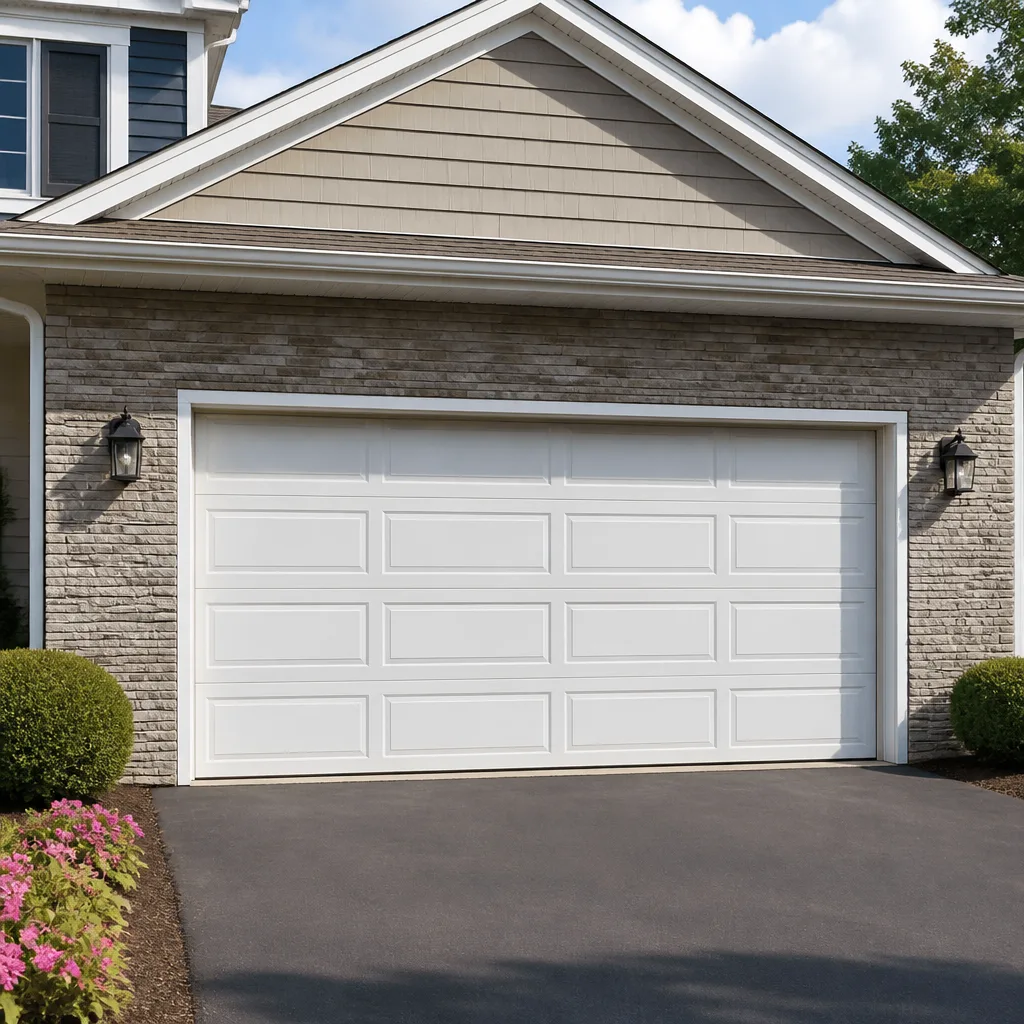
Carriage house
 Before
 After
After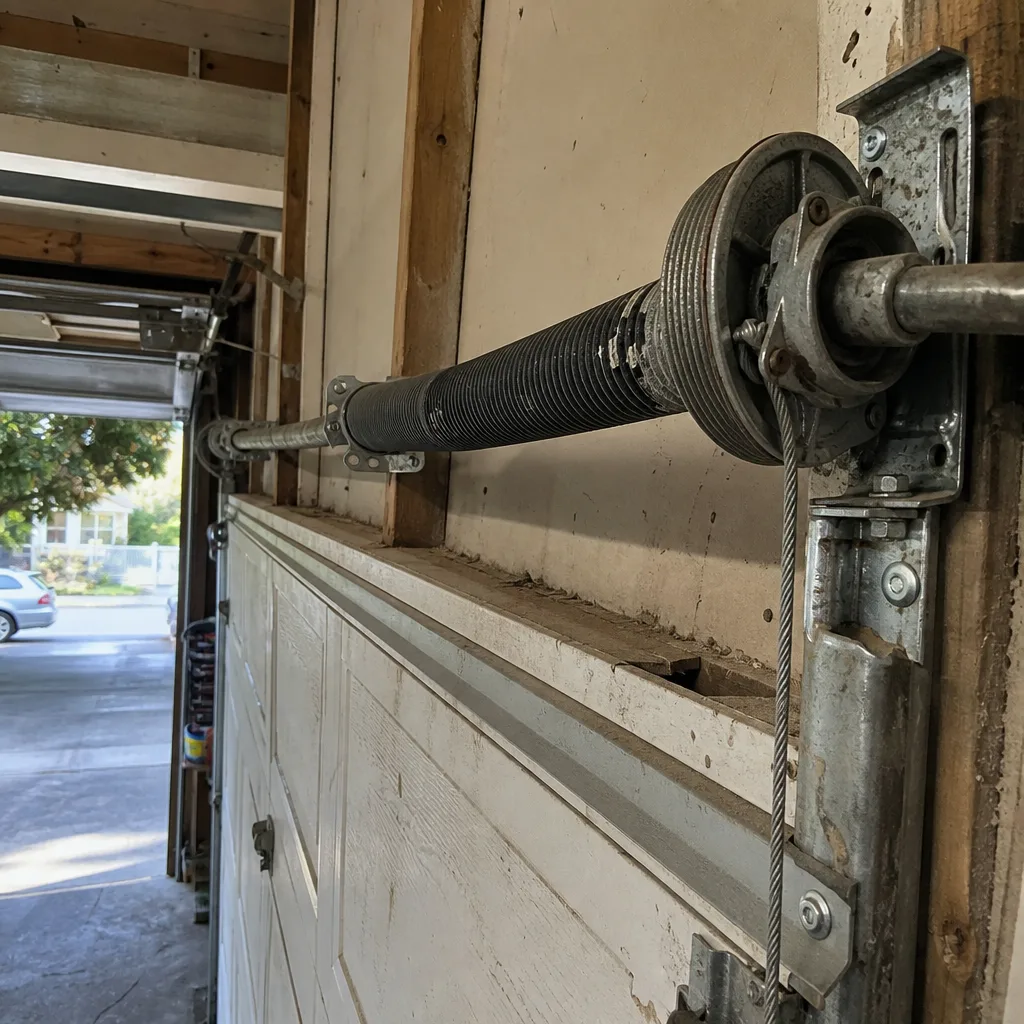 Before
 After
After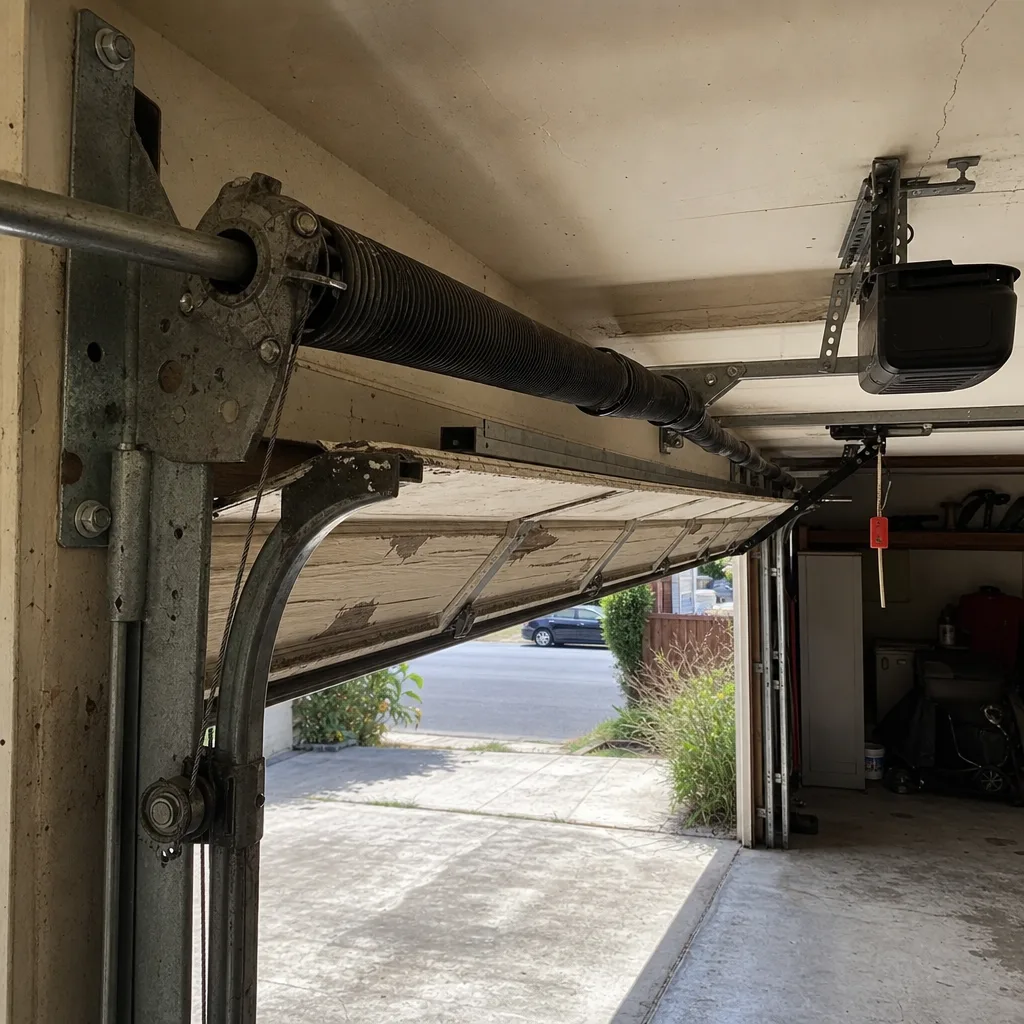 Before
 After
AfterGarage Door Warning Signs: A Oakland Homeowner’s Reference Guide
A garage door that reverses mid-close is not always a sensor problem. In our experience across Oakland, from the hills of Montclair to the flatlands of Fruitvale, it’s more often a torsion spring tension imbalance. Misdiagnose it and you’ll replace a $15 safety sensor when you need a $180 spring adjustment, leaving the actual structural load problem untouched. This guide-along with our The Complete Guide to Garage Door in Oakland-separates urgent safety failures from cosmetic wear, assigns a real response timeline to each, and teaches you to describe symptoms with the correct part names so your quote arrives accurate, not inflated for an assumed worst case.
Quick Answer
The most critical garage door warning signs fall into two categories: stop using the door immediately (broken torsion spring, frayed cable, bent bottom bracket) and schedule service within 30 days (slow travel, off-track roller, worn weather seal). Grinding sounds point to worn rollers or a failing opener gear; popping sounds indicate a torsion spring losing tension; scraping means a door section or track is out of alignment. In Oakland’s coastal climate, salt air accelerates cable corrosion and humidity affects opener logic boards, making seasonal garage door care more valuable than in inland markets.
Table of Contents
- Stop Using the Door Today: Critical Safety Failures
- Schedule Within 30 Days: Progressive Wear Signs
- Sound-to-Cause Translation: What You’re Actually Hearing
- “Works Fine Manually” Is a Spring Sign, Not an Opener Sign
- How to Describe Symptoms Using Correct Part Names
- Photo Documentation Guide: Capture What Matters
- Oakland-Specific Factors: Climate, Code, and Common Failures
- Common Mistakes to Avoid
- When to Call a Professional
- Frequently Asked Questions
 Before
 After
AfterStop Using the Door Today: Critical Safety Failures
These failures can cause the door to fall, trap a person, or damage property. Do not operate the door manually or with the opener. Call for same-day emergency service.
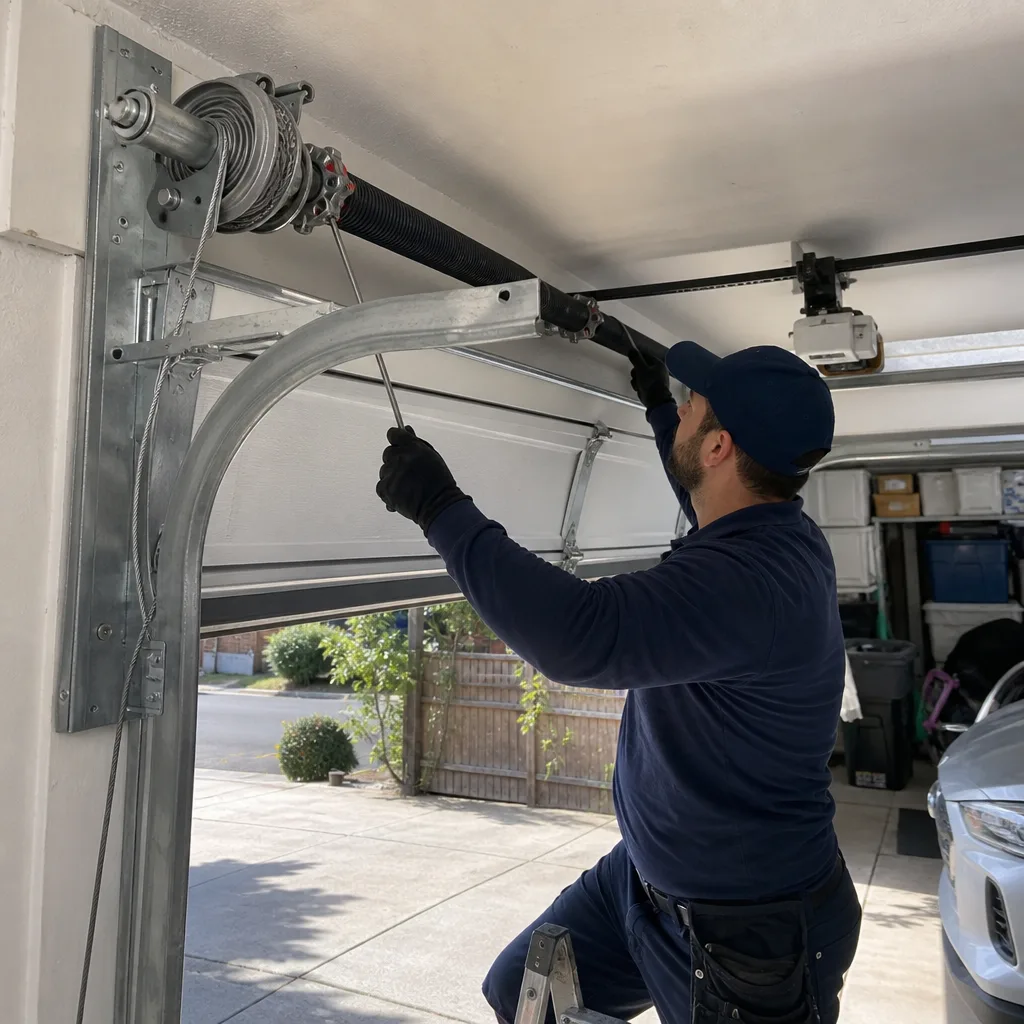
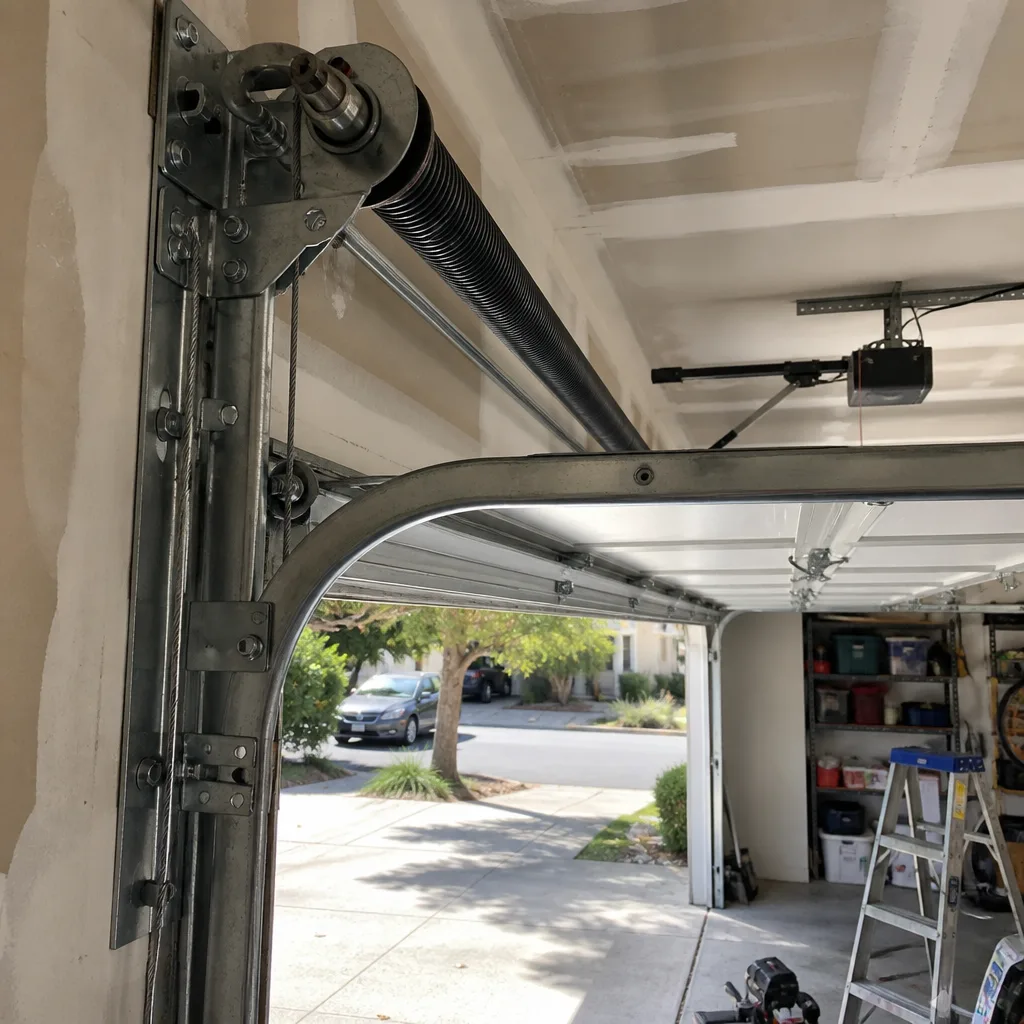
Broken Torsion Spring
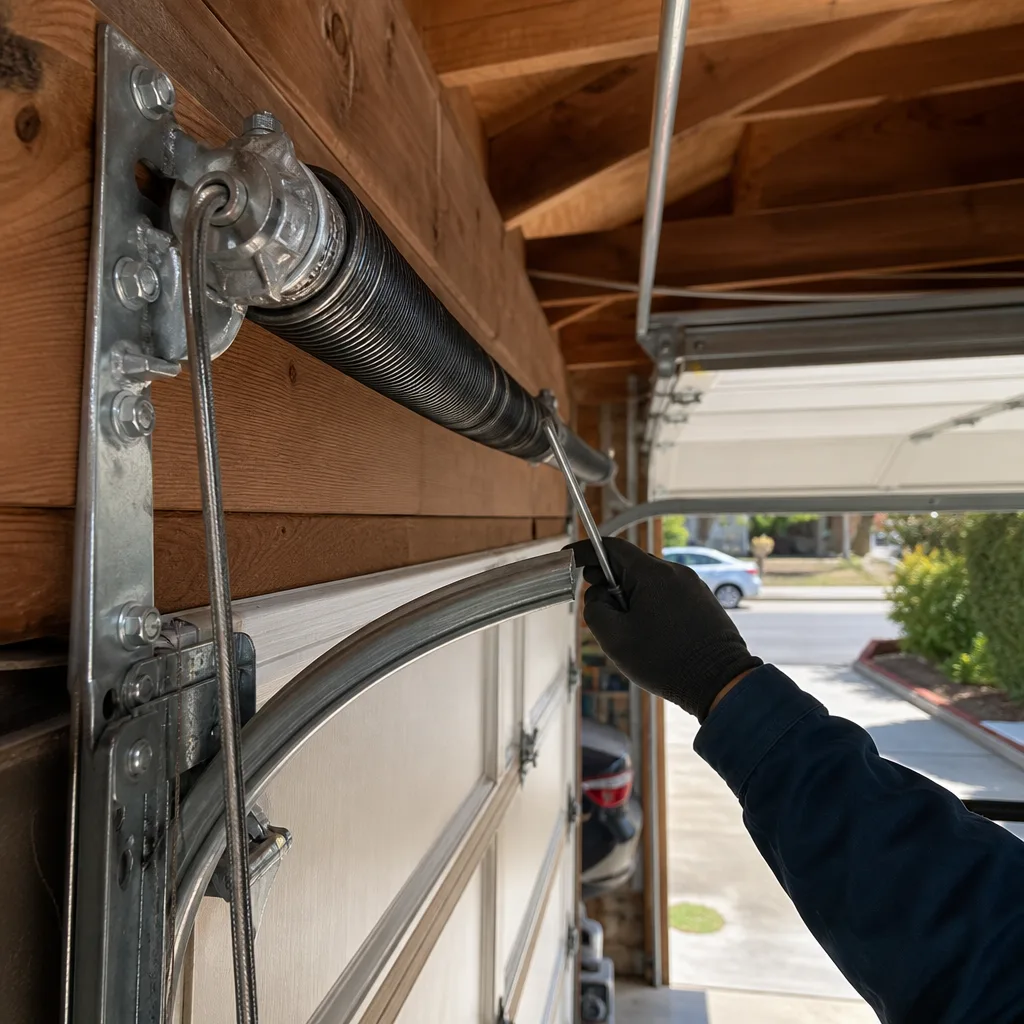
The torsion spring sits horizontally above the door on a metal shaft and counterbalances the door’s weight, typically 150-250 pounds for a standard steel door. When it breaks, you’ll hear a loud bang like a firecracker. The door will feel impossibly heavy to lift manually, or the opener will strain, move the door a few inches, and stop. Some homeowners mistake this for an opener failure and replace a $400 logic board when they need a $180-$340 spring pair.
Why it’s dangerous: The opener’s motor is not designed to lift the full door weight. Running it with a broken spring burns out the gear assembly and can snap the trolley carriage. More critically, a door with one broken spring in a two-spring system can twist in the tracks and fall.
What to check: Look for a visible gap in the coil above the door. In Oakland’s fog-prone neighborhoods like the Rockridge hills, surface rust accelerates fatigue at the coil stress points. A torsion spring rated for 10,000 cycles in a dry climate may fail at 7,000 cycles here.
Frayed or Unraveling Cable
The lift cables run vertically from the bottom bracket roller to the cable drum at each end of the torsion shaft. They transfer the spring’s torque to lift the door. Fraying appears as unwound strands, rust blooming, or a “bird’s nest” of loose wires near the bottom bracket.
Why it’s dangerous: A failed cable drops the door’s full weight onto the remaining cable and spring. The door tilts, jams in the tracks, or falls. We’ve responded to calls in West Oakland where a failed cable pulled the bottom bracket through the door panel, converting a $220 cable replacement into a $1,200+ door replacement.
What to check: With the door closed, inspect the cable from bottom bracket to drum. Any fraying means stop using the door. Do not attempt to adjust or replace cables yourself. The torsion shaft holds lethal tension even with the door down.
Bent or Cracked Bottom Bracket
The bottom bracket anchors the lift cable and the bottom roller to the door’s lowest section. It’s under constant tension from the cable angle. A crack or bend changes the cable’s pull geometry, concentrating load on one side.
Why it’s dangerous: Bottom bracket failure is sudden and violent. The cable releases, the door drops, and the bracket becomes a projectile. We’ve seen brackets punch through Clopay and Amarr steel sections when they failed under load.
What to check: Look for visible cracks in the bracket body, bent flanges, or a bottom roller that sits crooked in the track. In Oakland’s older housing stock, particularly pre-1980s homes in Temescal and Maxwell Park, original bottom brackets may be cast iron rather than modern reinforced steel. Cast iron fatigues without warning.
Door Off Track With Visible Gap
Horizontal track misalignment where the roller has jumped the rail creates a visible gap between door and track, typically at the top or bottom. The door hangs at an angle.
Why it’s dangerous: An off-track door can fall sideways. The remaining rollers carry double load and shear. Do not force the door or disengage the opener. The correct response is securing the door in place and calling for service.
| Failure | Immediate Action | Typical Oakland Repair Range |
|---|---|---|
| Broken torsion spring | Do not operate; call same day | $180-$340 (pair) |
| Frayed cable | Do not operate; call same day | $180-$260 |
| Bent bottom bracket | Do not operate; call same day | $140-$220 |
| Door off track with gap | Secure door; call same day | $160-$300 |
Schedule Within 30 Days: Progressive Wear Signs
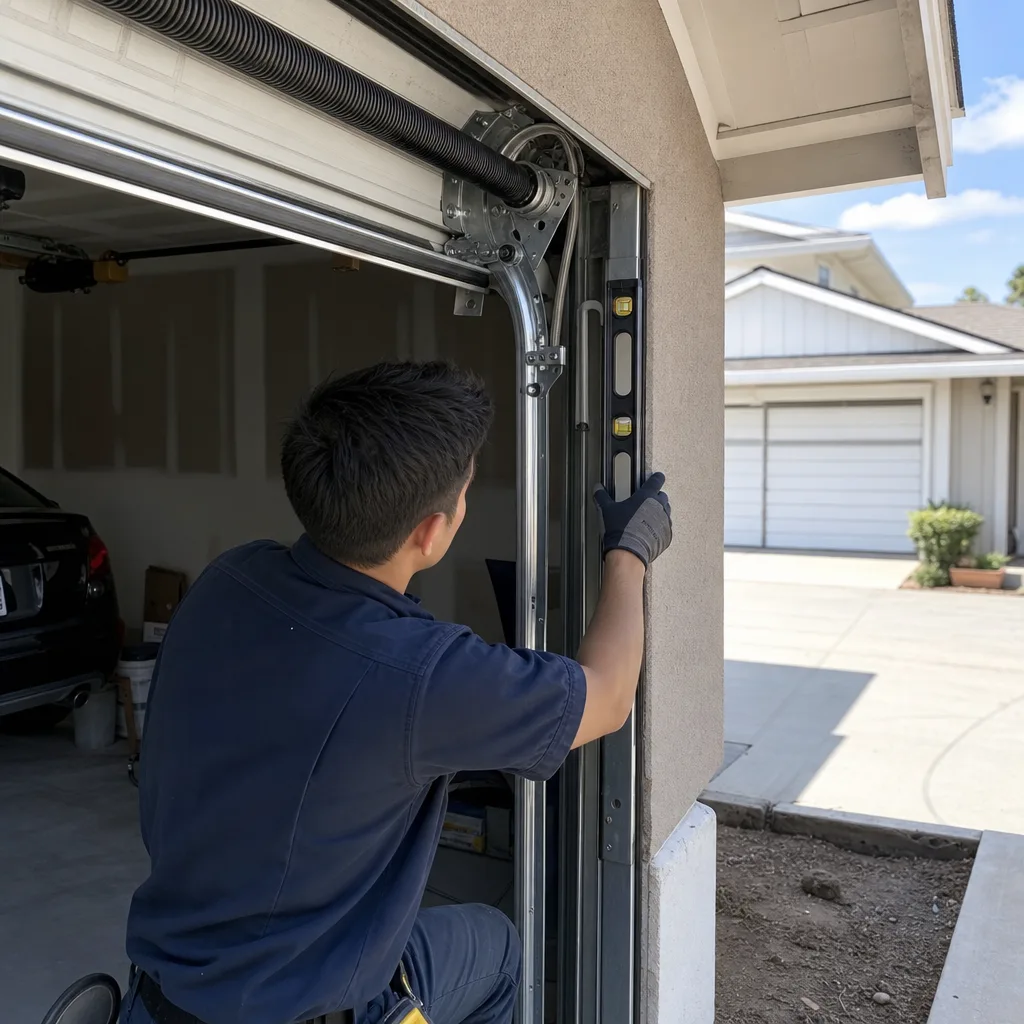
These conditions don’t demand immediate cessation but will worsen, increase repair cost, and eventually create safety hazards. Schedule during regular hours, avoid emergency premiums, and get an accurate quote before work starts.
Slow or Jerky Travel
A door that once opened in 12 seconds now takes 18, or moves in visible pulses rather than smooth motion. The cause is usually worn rollers binding in the track, dried lubricant on the torsion shaft, or opener force settings compensating for increasing mechanical resistance.
In Oakland’s Glenview and Redwood Heights neighborhoods, where many homes have original Wayne Dalton doors from the 1990s-2000s, we see this frequently. The proprietary Wayne Dalton torqueMaster spring system ages differently than standard torsion setups; slow travel often precedes internal spring failure by 6-12 months.
Mechanical cause: Steel rollers develop flat spots. Nylon rollers crack and shed fragments. The opener’s force sensor increases motor output to maintain speed, masking the problem until the motor overheats.
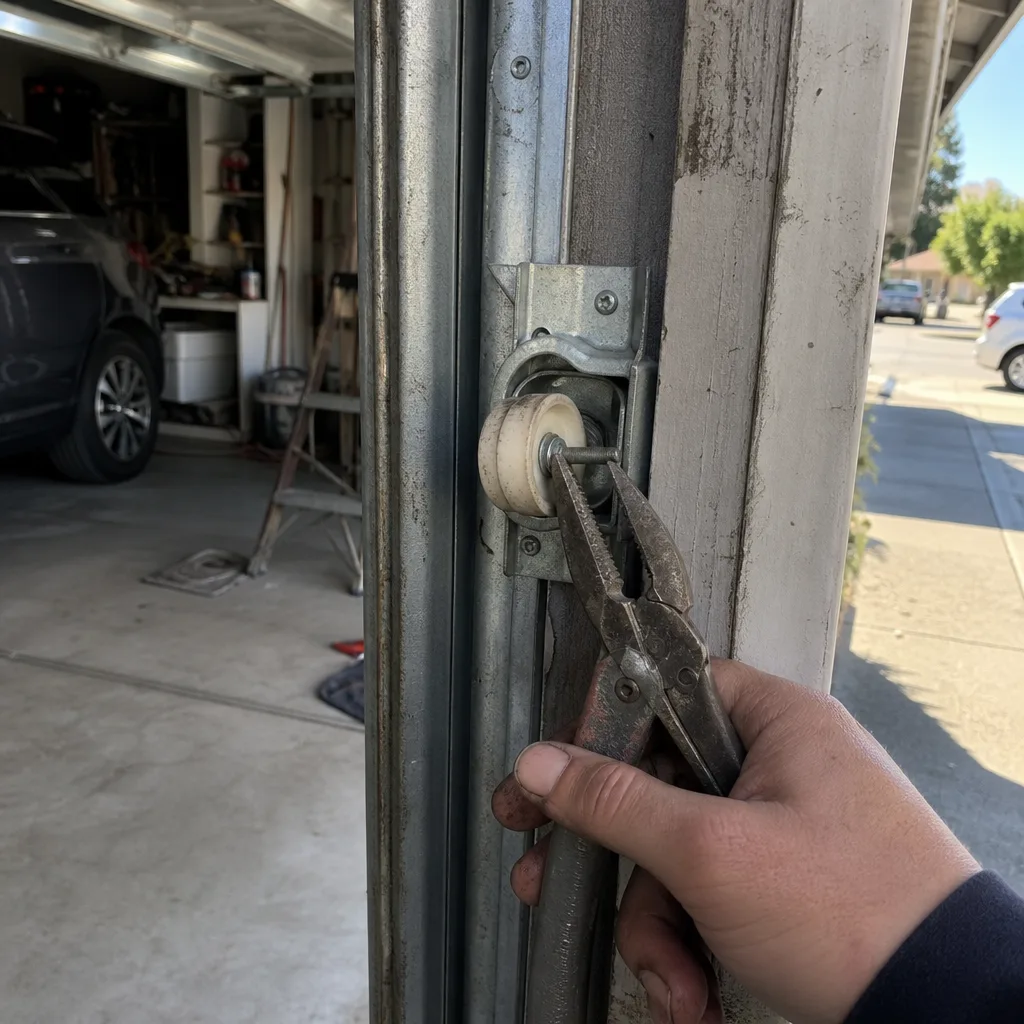
Single Off-Track Roller (Door Still Operates)
One roller has left the track but the door continues to move, often with a rhythmic thump. The remaining rollers carry uneven load and wear prematurely.
Mechanical cause: Track bracket loosened from vibration, or a roller stem bent from impact. Oakland’s proximity to the Hayward Fault means minor seismic settling affects track alignment over years, not dramatically enough to notice immediately but enough to pop a roller eventually.
Worn or Cracked Weather Seal
The rubber or vinyl strip at the door’s bottom edge hardens, cracks, or pulls away from the retainer. Light visible under the closed door is a clear indicator.
Why it matters beyond energy: In Oakland’s winter rainy season, water intrusion rots the bottom door section from inside. We’ve replaced Clopay steel sections where the interior foam core had turned to mud from years of seal failure. The $45 seal becomes a $600 section replacement.
Opener Light Flashing, Door Reversing
The opener’s diagnostic LED flashes in a pattern (typically 1-10 blinks, manufacturer-specific) and the door reverses after touching the floor or mid-travel. This is not always the safety sensors.
Mechanical cause: Flashing codes indicate: force overload (spring weakening), travel limit miscalculation (limit switch drift), or actual sensor misalignment. A Genie opener with a red light steady and green light flashing typically means force settings exceeded, which traces to spring tension loss in 60% of Oakland calls we diagnose.
Panel Dents With Crease Lines
Impact damage that creases a steel or aluminum panel weakens the section’s structural integrity. The door may still operate but the panel will eventually crack at the crease, particularly in wind load.
Oakland consideration: Hillside homes in Montclair and Piedmont Pines experience higher wind exposure. A creased panel in a 25 mph canyon wind can fail completely. Replacement sections for Amarr and Wayne Dalton doors are available; for older brands, section matching becomes problematic.
Sound-to-Cause Translation: What You’re Actually Hearing
Most homeowners describe sounds poorly when they call: “it’s making a noise.” The sound’s character narrows the diagnosis significantly and prevents the contractor from arriving unprepared or over-equipped.
| Sound | Most Likely Cause | Component to Name When Calling |
|---|---|---|
| Grinding (continuous, metallic) | Worn steel rollers or dry torsion shaft bearings | “Grinding from the rollers” or “grinding from the spring shaft” |
| Popping (single loud crack, often at open or close) | Torsion spring coil binding or settling; sometimes a panel hinge pin walking | “Popping sound from the spring” or “popping at the hinge” |
| Scraping (rhythmic, metal-on-metal) | Door section rubbing track; misaligned track; loose track bracket | “Scraping on the left/right track” |
| Squealing (high-pitched, intermittent) | Dry opener drive gear or trolley carriage; sometimes dry hinge pins | “Squealing from the opener motor area” |
| Rattling (loose, irregular) | Loose track hardware, worn roller stems, or loose opener rail supports | “Rattling from the track hardware” or “rattling opener rail” |
| Clicking (rapid, no movement) | Opener logic board relay failure; stripped drive gear; or motor capacitor | “Clicking from the opener with no door movement” |
The grinding-versus-popping distinction is particularly valuable. Grinding means wear in progress; you have weeks to months before failure. Popping means a torsion spring approaching its cycle limit or a structural component moving under load; schedule within two weeks. Scraping means metal contact now, and every cycle damages the door section or track further.
In Oakland’s flatland neighborhoods near the estuary, we see accelerated opener gear wear from humidity affecting the nylon drive gear. The sound is a distinctive squeal-grind hybrid that homeowners often misidentify as a door problem rather than an opener problem.
“Works Fine Manually” Is a Spring Sign, Not an Opener Sign
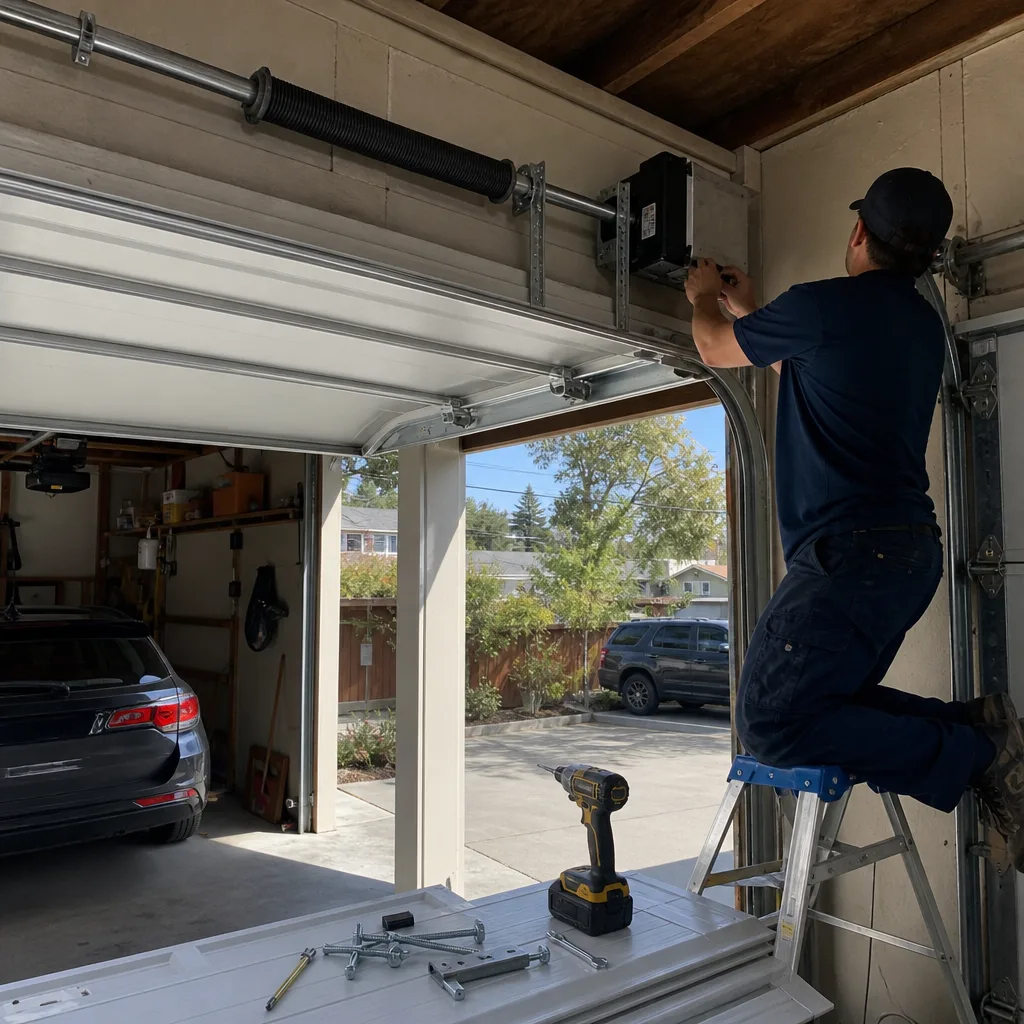
This misdiagnosis costs homeowners hundreds of dollars. The pattern: door opens smoothly by hand, opener strains or fails. The homeowner replaces the opener, and the new opener also strains, because the root cause is spring tension loss, not motor inadequacy.
How to test: With the door closed, pull the red emergency release cord to disengage the trolley carriage from the opener rail. Lift the door manually to waist height and release. A properly balanced door stays in place or drifts slowly. A door that falls closed has insufficient spring tension. A door that rises has excessive tension.
Why the opener masks this: Openers have force sensors that increase motor output as resistance grows. A 15-year-old Genie or LiftMaster can compensate for 20-30% spring tension loss before it triggers the overload protector. By then, the motor has been running at excessive load for months, shortening its lifespan.
The cost distinction: A new garage door opener installation in Oakland runs $400-$800 installed. A spring adjustment or replacement runs $180-$340. Replacing the opener when you need springs means paying for both, and the new opener will fail prematurely from the same overload.
When you call, say: “The door works fine manually but the opener struggles.” This tells a competent technician to check spring balance first, not sell you an opener. At Servo Garage Doors Oakland, Clause 4 of The Haven Standard requires photographing the spring and measuring tension before any opener recommendation.
How to Describe Symptoms Using Correct Part Names
Accurate description gets you an accurate quote. Vague description gets you a “we’ll see when we get there” range that widens on arrival. Use these terms:
- Torsion spring - the coil above the door, not “the big spring” or “the top spring.”
- Extension spring - the stretched springs above the horizontal tracks on older or lighter doors, common on pre-1990 Oakland homes in neighborhoods like Dimond and Laurel.
- Bottom bracket - the L-shaped bracket at each bottom corner, not “the thing at the bottom.”
- Cable drum - the grooved wheel at the shaft end where the cable winds, not “the pulley.”
- Trolley carriage - the moving piece on the opener rail that connects to the door arm, not “the thing that pushes it.”
- Logic board - the opener’s computer module, not “the brain” or “the motherboard.”
- Limit switch - the travel distance setting mechanism, either mechanical switches or electronic travel modules.
- Roller stem - the shaft that connects the roller wheel to the door bracket, not “the pin.”
Example call script: “I have a 16-foot Clopay steel door, probably 2005-2010. The torsion spring is making a popping sound at full open. The door still operates but there’s a two-inch gap at the left side when closed. I think the bottom bracket may be shifting.”
This description lets us bring the correct spring wire size, check bottom bracket integrity, and arrive with a quote accurate to within 10%. Without it, we arrive with a wider parts range and the quote reflects that uncertainty.
Photo Documentation Guide: Capture What Matters
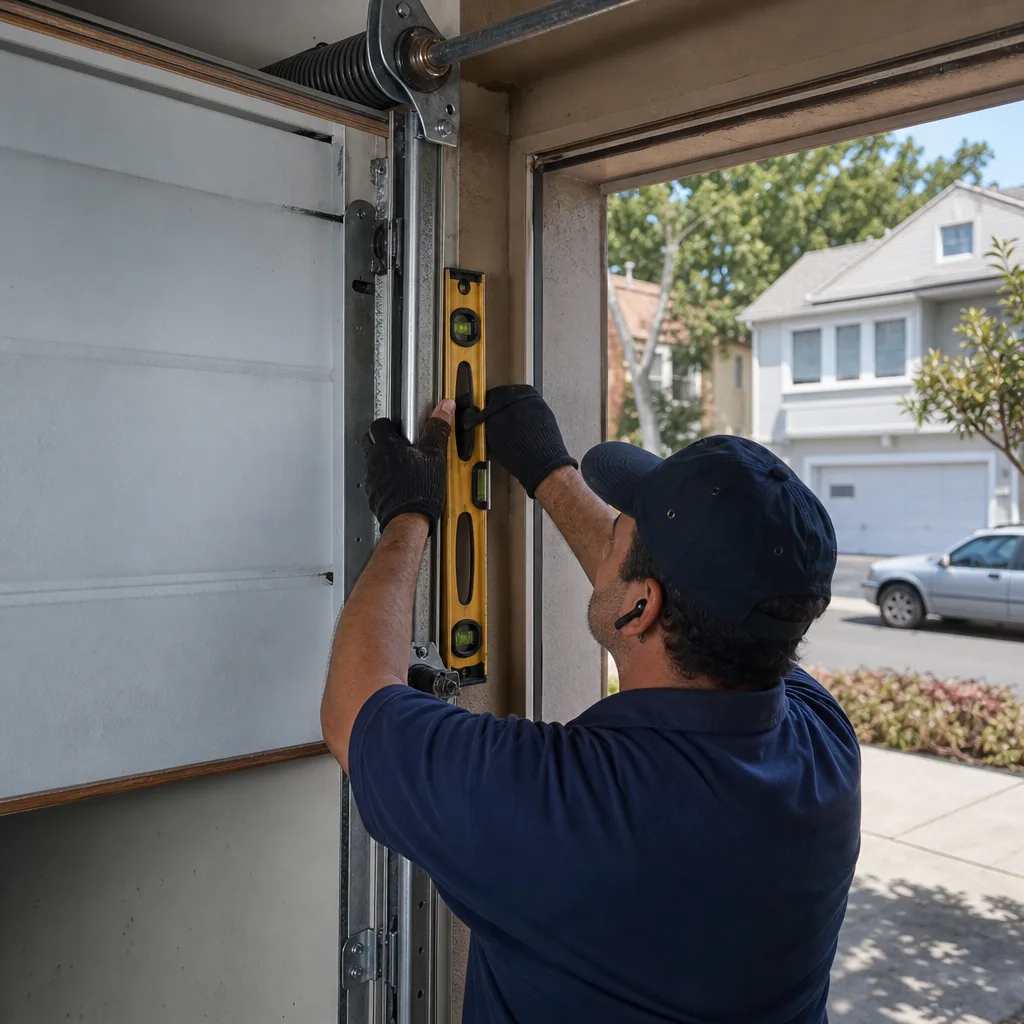
Since 2015, Servo Garage Doors has operated under a founding rule: the customer sees the failed part before anyone quotes a replacement. You can use the same documentation approach to get remote diagnosis and a firm quote before scheduling.
For Spring Issues
- Full-width shot of the torsion shaft and spring assembly from directly below
- Close-up of the spring coil, showing any gap, rust, or paint flaking
- End cone where spring meets shaft, showing winding cone color (indicates wire size)
- Label or sticker on the door’s interior edge with model and size
For Cable or Bottom Bracket Issues
- Full door from inside, closed, showing both cables
- Close-up of bottom bracket from below, showing cable attachment and roller position
- Close-up of cable from bracket to first guide, showing any fraying
- Track section where cable runs, showing any rubbing or rust
For Track or Roller Issues
- Full door from inside at 45-degree angle, showing track alignment
- Close-up of problem roller in track, or gap where it left
- Track bracket attachment to wall, showing any loosening
- Horizontal track slope from opener rail to door, showing any sag
For Opener Issues
- Opener model label, usually on the motor housing side
- Logic board LED status during operation attempt
- Trolley carriage position on rail when door stops
- Safety sensor alignment - both LEDs should be steady, matching color
Send these to Servo Garage Doors Oakland home via text or email. We can pre-diagnose, confirm parts availability, and deliver a written scope and flat price before scheduling, per Clause 1 of The Haven Standard. No “we’ll see when we get there.”
Oakland-Specific Factors: Climate, Code, and Common Failures
Oakland’s geography and housing stock create distinct garage door failure patterns that inland guides miss. For how to hire a garage door contractor in Oakland, see our step-by-step guide.
Coastal corrosion: The marine layer reaches deep into Oakland’s flatlands and canyon mouths. Salt air corrodes galvanized cables from the inside; a cable that looks fine externally can fail with internal rust we’ve documented in photo records from homes near the Port of Oakland and Emeryville border. We recommend 7-year cable replacement intervals here versus 10-year inland standards.
Seismic settling: Minor ground movement loosens track brackets and shifts door frames. In the Oakland hills, particularly above Highway 13, we see track misalignment as a primary service call cause, not wear. The fix is track realignment and bracket reinforcement, not roller replacement.
Historical housing stock: Pre-1960s homes in Rockridge, Temescal, and Adams Point often have single-car garages with 7-foot doors and low headroom. Standard opener and spring configurations don’t fit. A technician who arrives unprepared wastes your time and their own. Mention “low headroom” or “7-foot door” when you call.
Permit and code context: Oakland requires permits for new garage door installations but not for repair or replacement of existing doors on existing frames. If you’re converting a carport or enlarging the opening, plan for permit timing. For standard replacement, we handle the installation under repair classification.
Brand prevalence: Clopay and Wayne Dalton dominate Oakland’s 1990s-2010s construction. Genie and LiftMaster openers are most common. Parts availability is excellent for these brands. Older Craftsman openers (pre-2010) often lack replacement logic boards; we discuss upgrade paths when repair isn’t viable.
Common Mistakes to Avoid
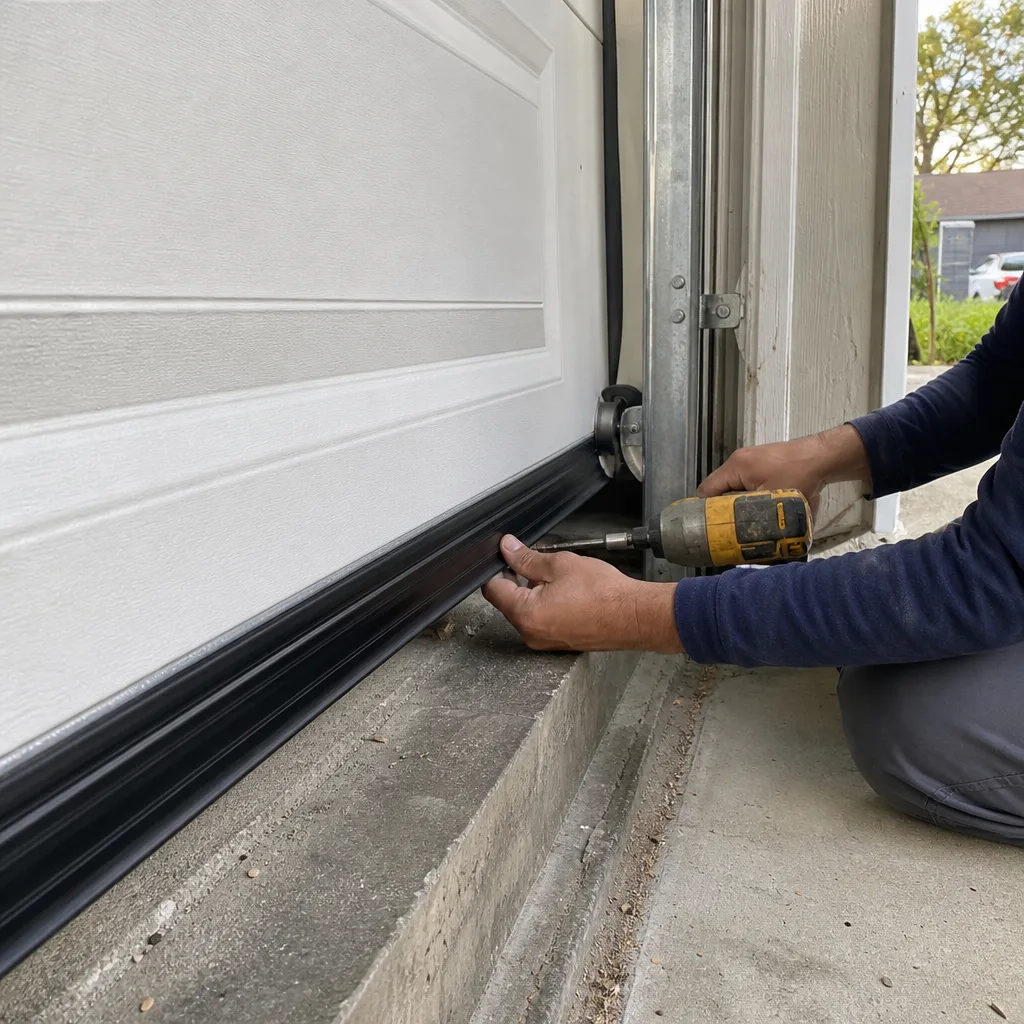
- Replacing the opener when the door is unbalanced. The new opener will also struggle and fail prematurely. Test manual balance first.
- Adjusting torsion springs using online tutorials. The winding bars store lethal energy. We’ve responded to emergency calls in Oakland where DIY adjustment released the spring and damaged the door, the wall, and nearly the homeowner. This is not a savings; it’s a risk transfer.
- Ignoring a single popped roller. One roller out of track concentrates load on the remaining nine. The next failure is often catastrophic, converting a $140 roller and track adjustment into a $400+ multi-component repair.
- Assuming all slow travel is opener-related. In Oakland’s older homes with original Wayne Dalton torqueMaster systems, slow travel means internal spring failure is 6-12 months away. Address it before the spring breaks and traps the door.
- Using WD-40 on tracks or rollers. WD-40 is a solvent, not a lubricant. It strips existing grease and attracts dust. Use lithium-based garage door lubricant on hinges, rollers, and the torsion shaft. Never lubricate the track itself; the rollers need grip.
- Accepting a verbal estimate for spring work. Spring pricing varies by wire size, length, and cycle rating. A verbal “around two hundred” becomes $340 when the technician arrives and measures. Insist on written pricing with the spec before work starts. Clause 1 of The Haven Standard exists for this reason.
- Delaying weather seal replacement until winter. By November, Oakland’s rain pattern is established and water has already intruded. Replace seals in September before the season starts.
When to Call a Professional
Call same day for any critical safety failure: broken spring, frayed cable, bent bottom bracket, or door off track with visible gap. Do not operate the door manually or with the opener. The torsion assembly stores lethal energy even when the door is down.
Schedule within two weeks for popping sounds, single roller issues, slow travel, or opener diagnostic flashes. These conditions worsen predictably and the repair cost increases with delay.
For progressive wear, schedule at your convenience within 30 days, but before seasonal weather changes. Oakland’s rainy season runs November through March; seal and hardware condition before this window prevents water damage and cold-weather binding.
Servo Garage Doors Oakland offers free estimates in Oakland. Every visit includes a documented photo record of findings, a flat written price before any work begins, and the 365-Day Done Right Promise backed by The Haven Standard. Call (628) 300-0423. Live answer, 24/7, including holidays. Emergency calls get a named technician and an on-the-way text, not a callback window.
Frequently Asked Questions
Torsion spring replacement in Oakland typically runs $180-$340 for a standard two-car residential door, including both springs, winding cones, and labor. Single-spring systems or high-cycle springs (25,000+ cycles) run higher. The price depends on wire diameter, spring length, and inside diameter, which we measure on site. Call (628) 300-0423 for an exact quote; estimates are free and the price is written and agreed before any work starts.
You can safely inspect, photograph, and test manual balance. You should not adjust torsion springs, replace cables, or repair bottom brackets. These components are under lethal tension. In our experience, DIY spring adjustment attempts in Oakland have resulted in door damage, wall damage, and serious injury. The documented photo record we provide exists so you see what failed without touching it.
It’s not for no reason. The opener’s force sensor detects resistance exceeding its setting and reverses as a safety function. The cause is usually weakening spring tension (60% of Oakland cases we diagnose), misaligned safety sensors (25%), or a binding roller or track section (15%). A door that reverses mid-travel, not at the floor, strongly suggests spring imbalance rather than sensor issues. We measure spring tension and photograph the assembly before recommending any sensor or opener work.
Twice yearly: September before rainy season, and March after. Inspect cables, springs, rollers, weather seal, and opener safety reverse function. In Oakland’s coastal climate, add a cable-specific check for internal corrosion every three years. A professional inspection with documented photo record runs $89-$140 and includes adjustment of track alignment, lubrication, and safety system testing.
No. At Servo Garage Doors Oakland, the written price and scope delivered before work starts is binding. Clause 1 of The Haven Standard prohibits starting work without a flat, written price agreed by the customer. If we discover additional issues during repair, we document them with photos, stop work, and present a separate written scope. Nothing is added to the original agreement without explicit approval.
Yes. Our Oakland service vehicles stock torsion springs in common wire sizes and lengths, cables, rollers, bottom brackets, hinges, and opener components for LiftMaster, Chamberlain, Genie, and Craftsman. For Clopay, Amarr, and Wayne Dalton door sections, we verify model and size from your photos before dispatch. If a rare part is needed, we order with next-day availability and secure the door safely in the interim. Call (628) 300-0423 to confirm parts for your specific model.
The Bottom Line
Garage door warning signs separate cleanly into two response categories. Stop using the door today for broken springs, frayed cables, bent bottom brackets, and doors off track with visible gaps. Schedule within 30 days for slow travel, single roller issues, worn seals, and opener diagnostic flashes. Learn the sound-to-cause mapping: grinding means wear, popping means spring stress, scraping means misalignment. Test manual balance before blaming the opener. Document with photos from the angles we specified, and describe symptoms using the correct part names to get an accurate quote before the technician arrives. In Oakland’s coastal climate, inspect twice yearly and replace cables on a shorter interval than inland guides suggest.
Written by Marcus Deller, Owner at Servo Garage Doors Oakland, serving Oakland since 2015.