
Last updated September 21, 2026
Full 25-point door and opener safety check with every visit - springs, cables, rollers, tracks, and your LiftMaster or Chamberlain opener included
You get a price before we start. It does not change when the truck arrives.
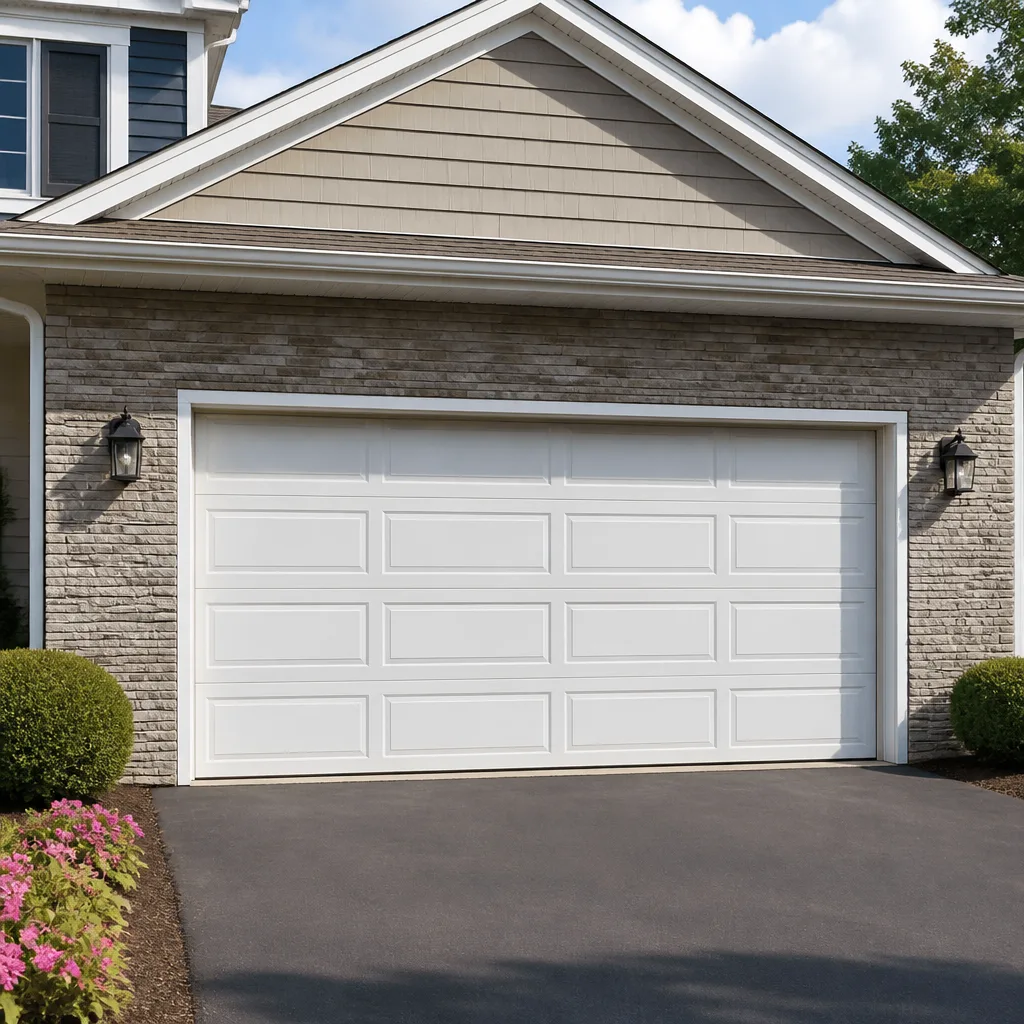
Carriage house
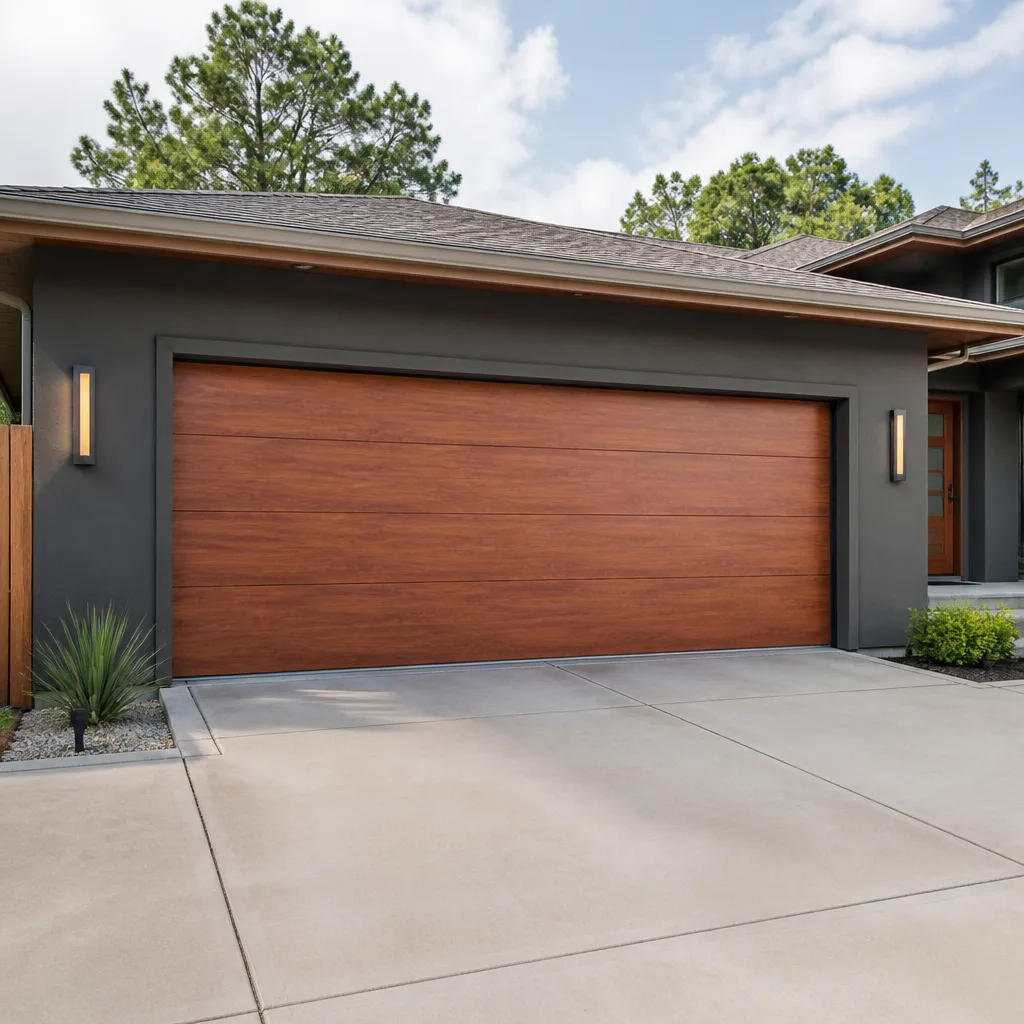
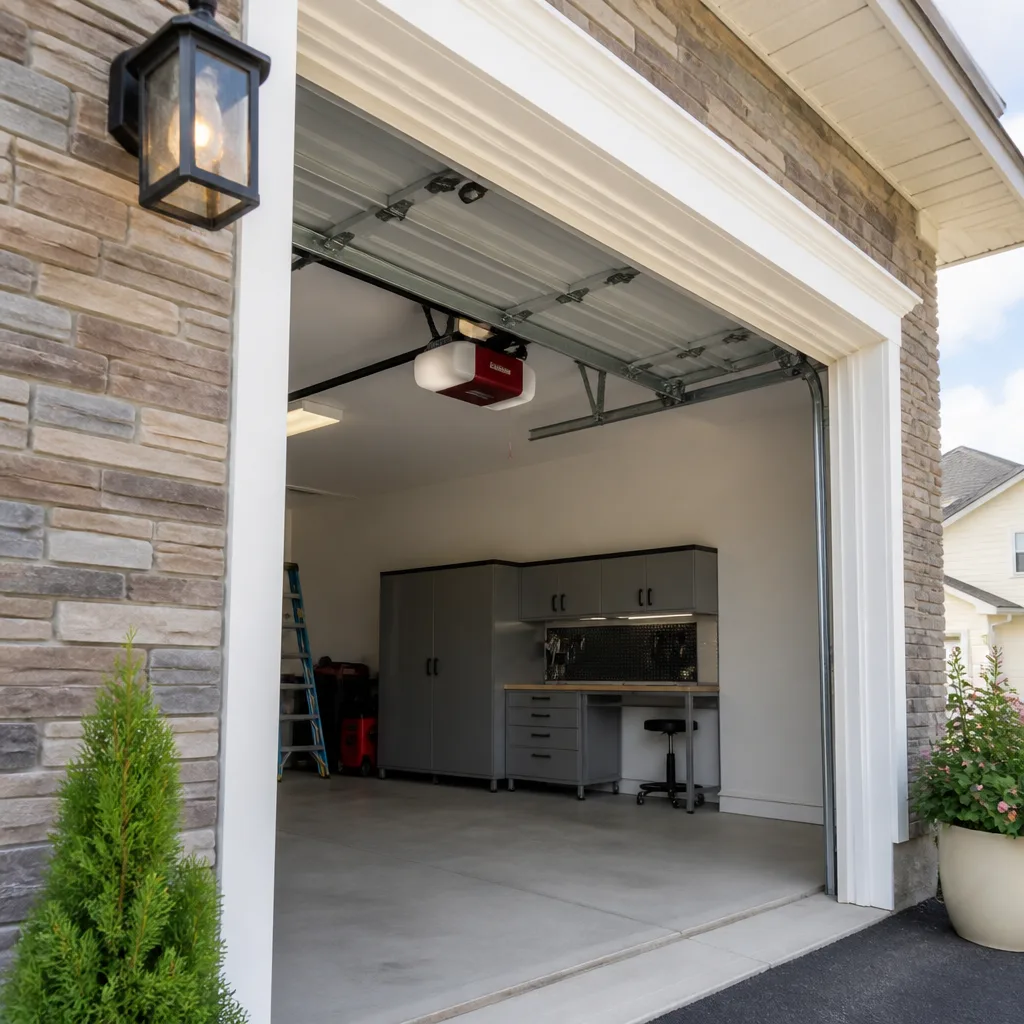
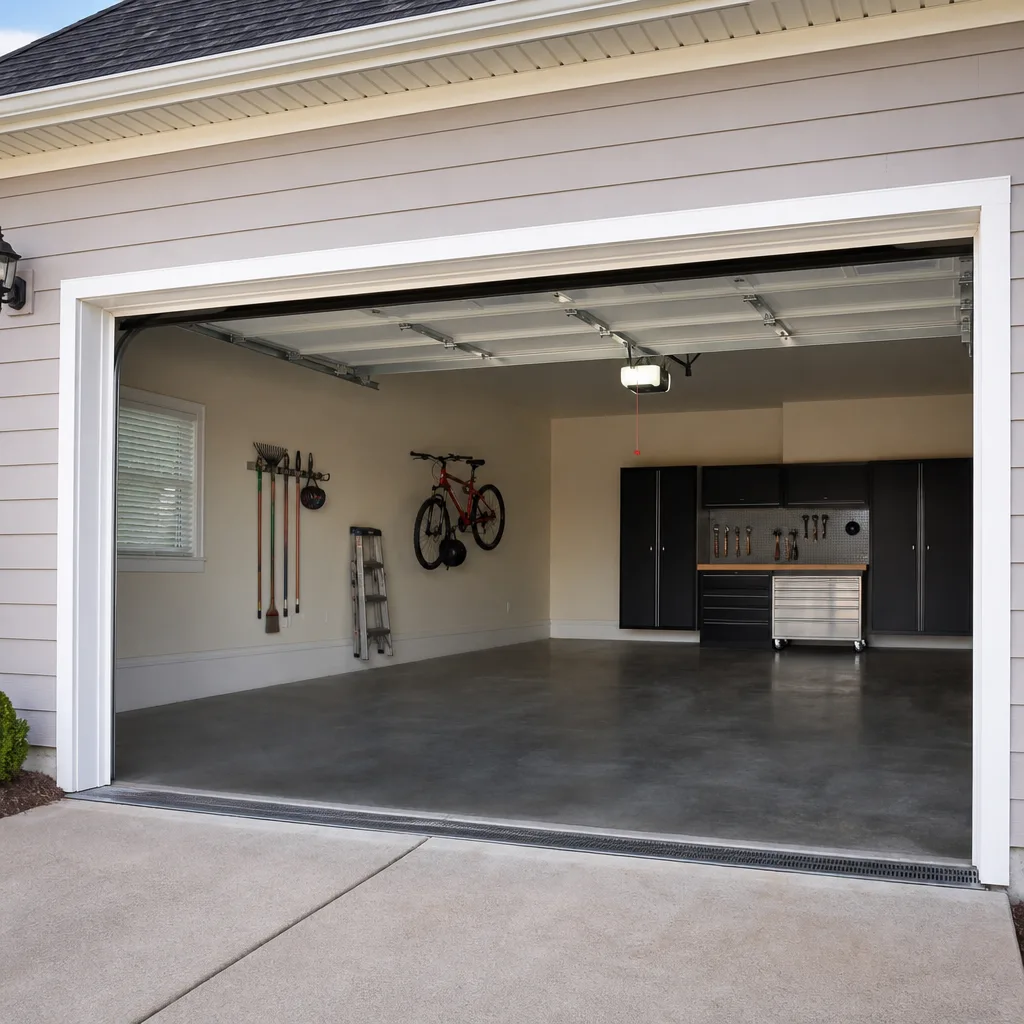
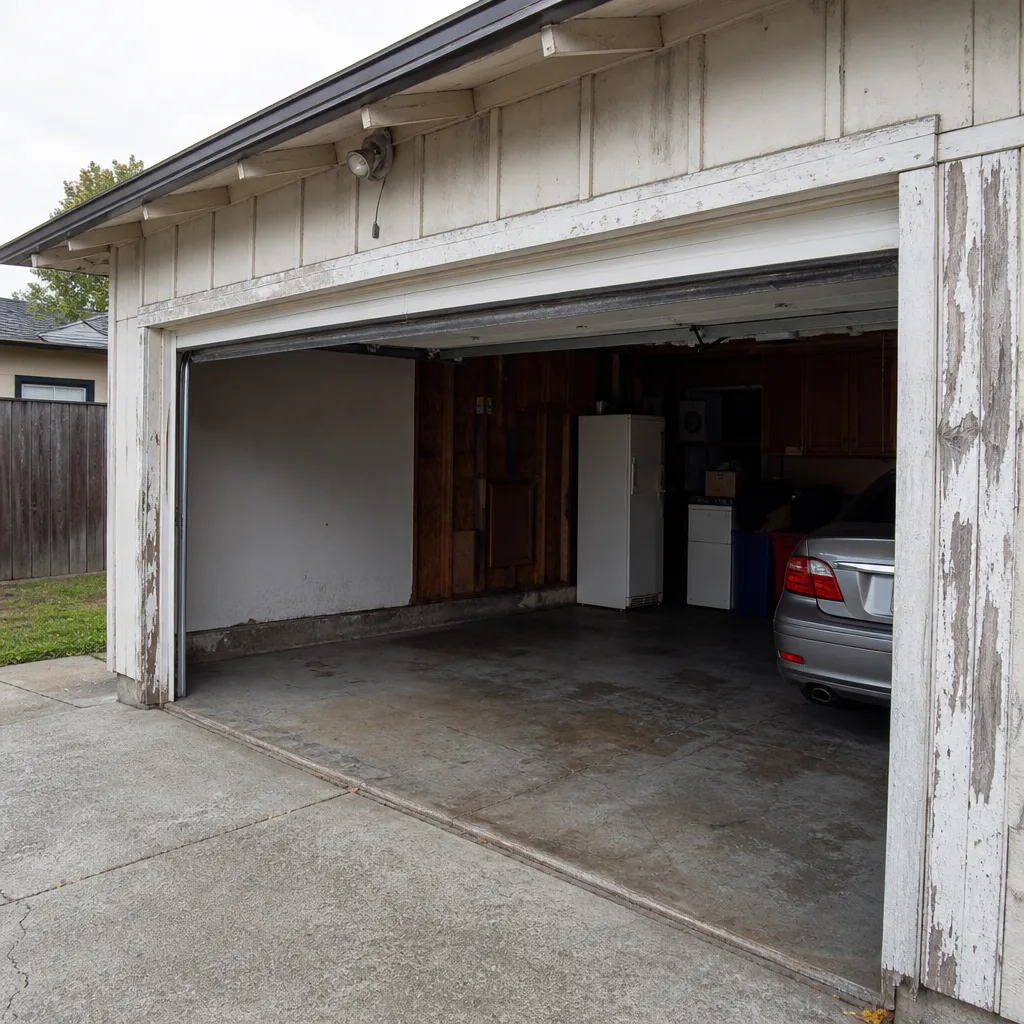 Before
 After
After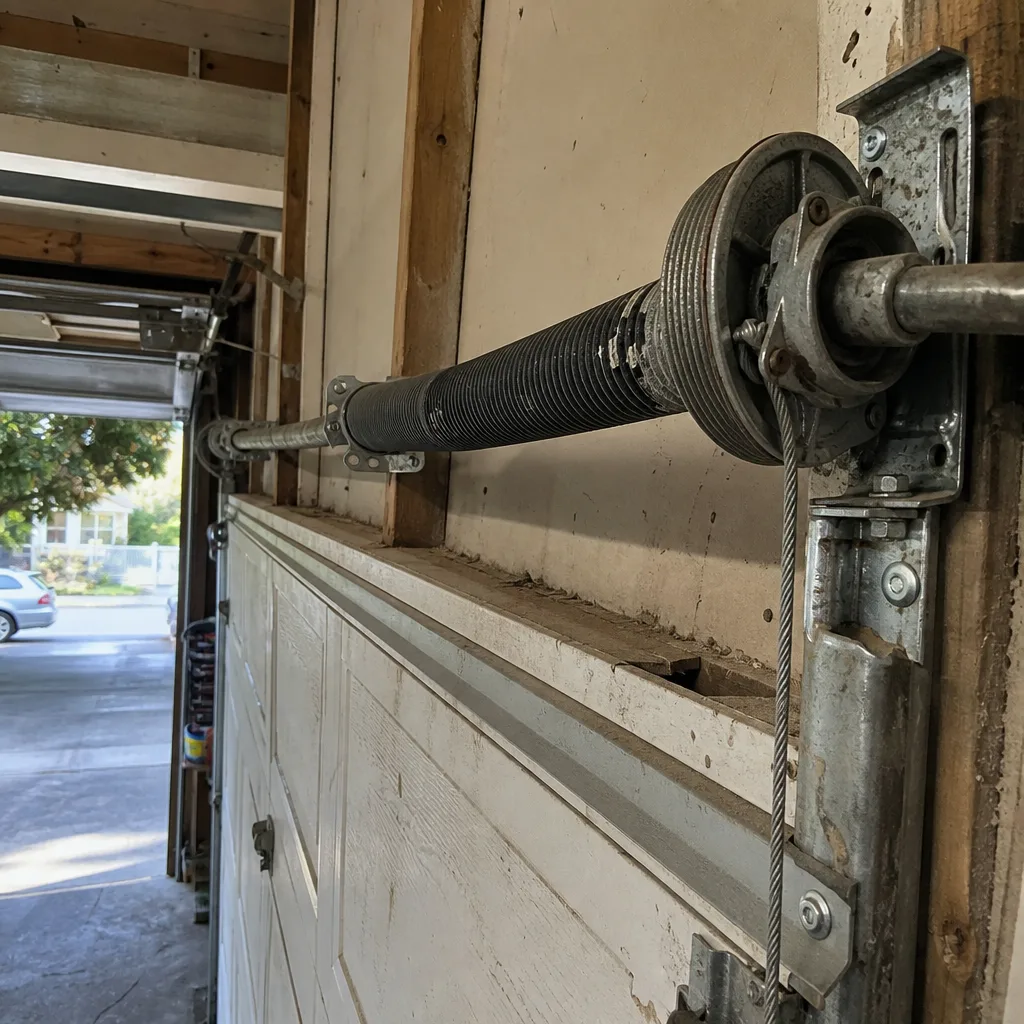 Before
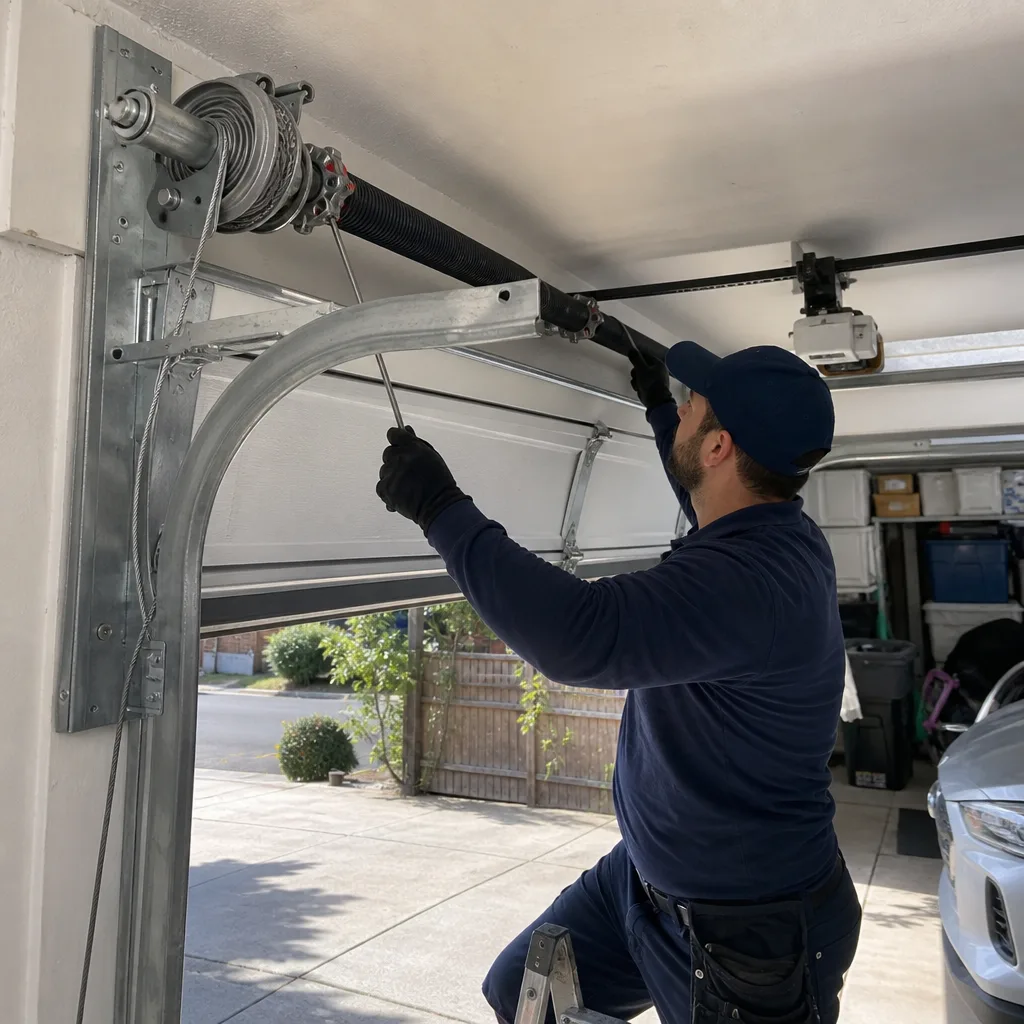 After
After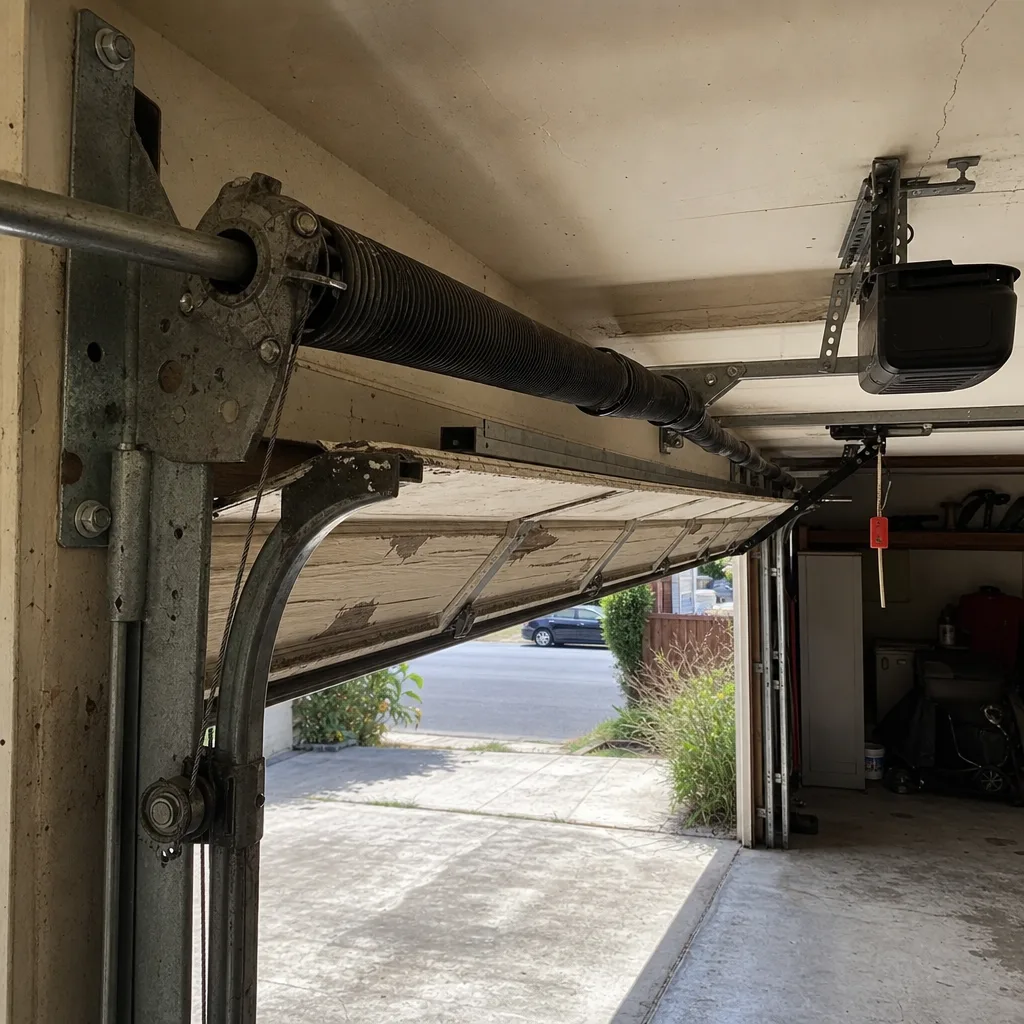 Before
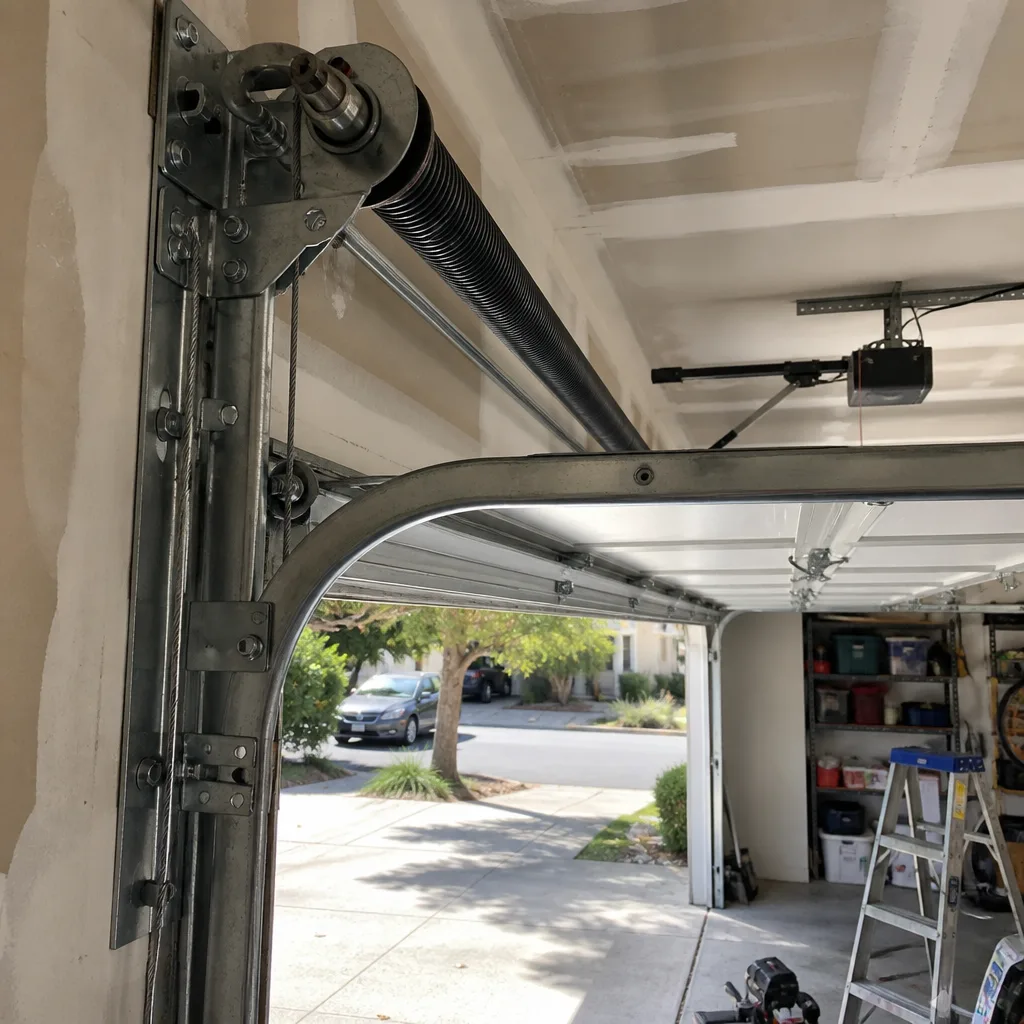 After
AfterGarage Door Repair Maintenance Checklist for Oakland Homeowners
A torsion spring has a finite cycle life - typically 10,000 cycles - and most Oakland homeowners have no record of when theirs was installed, which means the failure is already scheduled; they just don’t know the date. In the hills above Piedmont and the flats near the estuary alike, we’ve found springs that were ticking past 12,000 cycles with no documentation, no warning, and a household routine that guaranteed a 6:47 AM breakdown on a Tuesday. This checklist gives you the actual measurements, the tolerances, and the documentation method to know where you stand before that happens.
Quick Answer
Garage door maintenance in Oakland should be performed quarterly for lubrication and annually for full mechanical inspection, with torsion spring cycle-count estimation, manual balance testing, and weather seal evaluation against the November-through-March wet season. A properly maintained door in Oakland’s moderate-humidity climate costs $0-$180 per year in DIY supplies and preventive attention, while neglected systems typically require $340-$890 in repairs when components fail from friction, imbalance, or corrosion.
Table of Contents
- How to Estimate Your Spring’s Remaining Cycles
- Lubrication Points, Products, and Oakland’s Humidity Schedule
- The Manual Balance Test: Pass/Fail Criteria
- Hardware, Track, and Roller Inspection
- Weather Seal and Pest Intrusion Inspection for Oakland’s Wet Season
- Opener System, Safety Sensors, and Force Settings
- What to Photograph and Document for Remote Quoting
- The Annual Maintenance Calendar
 Before
 After
AfterHow to Estimate Your Spring’s Remaining Cycles
Torsion springs are rated in cycles - one open-and-close equals one cycle - and standard residential springs are built for 10,000. High-cycle springs rated for 15,000 or 25,000 exist, but they’re rarely installed in tract homes built between 2015 and 2025. Without an installation sticker or invoice, you can back-calculate an approximate age from your household usage pattern.
Start with your move-in date or the home’s build date if you’re the original owner. Then apply a usage multiplier based on how your household actually operates:
- Single commuter, one vehicle: 2-3 cycles per weekday, 4-6 per weekend day = roughly 700-900 cycles annually
- Dual-income household, two vehicles: 4-6 cycles per weekday, 6-10 per weekend day = roughly 1,400-1,800 cycles annually
- Family with children, multiple activities: 6-10 cycles per weekday, 8-14 per weekend day = roughly 2,200-3,000 cycles annually
- Home used as office or studio with frequent entry: 10-16 cycles daily = roughly 3,600-5,800 cycles annually
In Oakland’s Rockridge and Temescal neighborhoods, we’ve documented a pattern: homes purchased in 2018-2020 with dual-income owners are now hitting 8,000-11,000 cycles on original springs. The spring doesn’t warn you. The coils fatigue uniformly until one morning the wire fractures at the stress point, usually while the door is in motion.
Look for the installation sticker. It’s typically affixed to the spring cone, the winding cone, or the header bracket above the door. If you find one, photograph it. If you don’t, write down your estimated annual cycle count and the year you moved in. Multiply. A 2018 move-in with 1,500 annual cycles puts you at approximately 10,500 cycles in 2025 - past the rated life.
Pass/fail threshold: If your estimated cycle count exceeds 8,000, schedule a professional inspection. Spring replacement is not a maintenance item; it’s a wear-item replacement that requires winding bars, knowledge of stored energy, and typically two technicians. We’ve responded to garage door repair calls in Oakland where a homeowner attempted this with a screwdriver and a YouTube video. The Haven Standard exists partly because of those calls.
Lubrication Points, Products, and Oakland’s Humidity Schedule
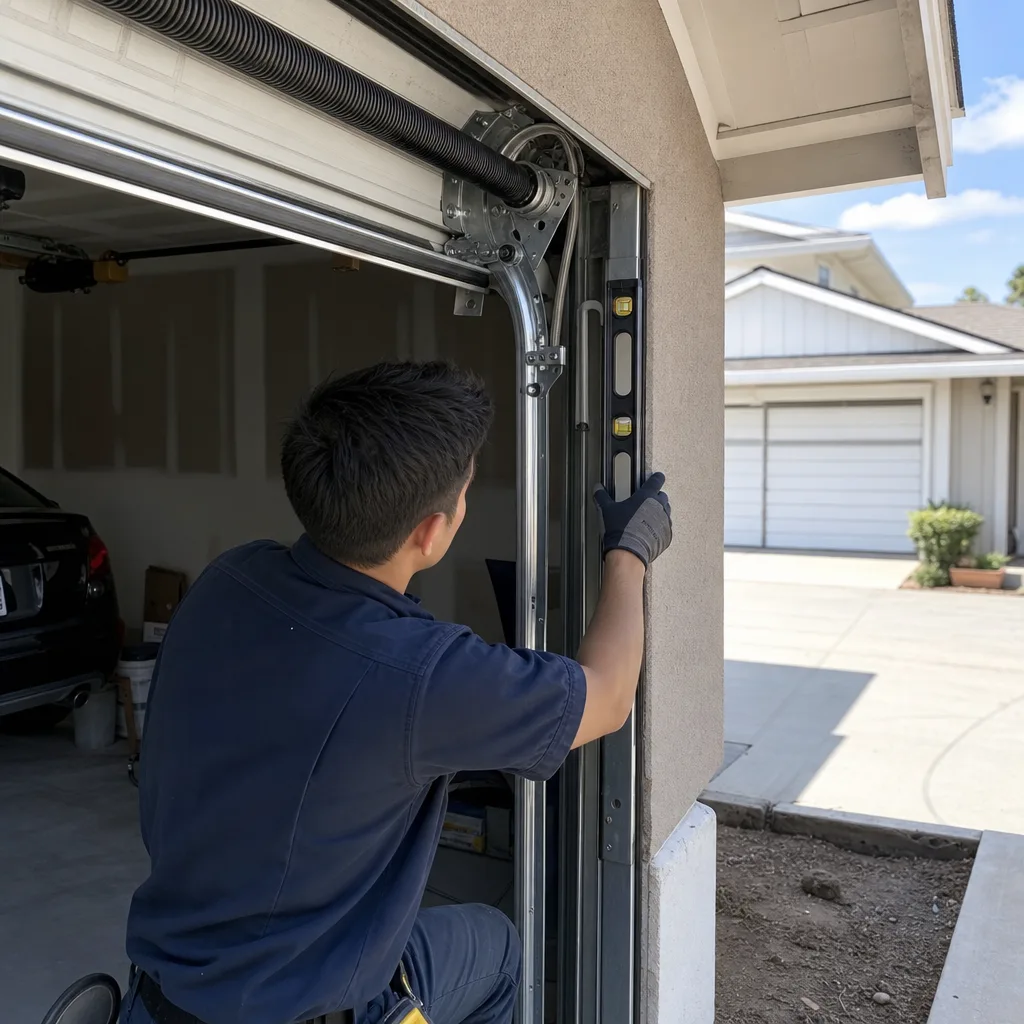
WD-40 is not a lubricant for garage doors. It’s a water displacer and light solvent. It will flush existing grease from roller bearings and leave them dry within two weeks. Use a lithium-based grease or a synthetic garage door lubricant. We stock and apply Lubriplate Aero or a comparable NLGI Grade 2 lithium grease on service visits.
Oakland’s humidity averages 65-75% in winter and drops to 55-65% in summer. The marine layer influence from San Francisco Bay keeps moisture in the air year-round compared to inland California cities. This matters because humidity accelerates oxidation on unprotected steel and washes light lubricants off vertical surfaces faster.
Quarterly lubrication (every 90 days, March/June/September/December):
- Hinges: Apply at the pivot points where the hinge leaves meet. Work the door manually through one cycle to distribute. Wipe excess that drips onto the door panel.
- Roller bearings: If you have steel rollers with exposed bearings, apply at the bearing race. If you have sealed nylon rollers, skip this point; the seal prevents ingress and egress.
- Torsion spring: Light coat across the coils. This reduces friction between active coils during wind and unwind, and the lithium grease resists wash-off.
- Lock mechanism: If your door has a manual lock, lubricate the cam and bolt. Many Oakland homeowners in Montclair and the hills never use their manual locks; they still corrode in place.
Annual lubrication (with full inspection):
- Track interior: Do not lubricate the track where rollers ride. This attracts grit. Instead, clean with a solvent-dampened rag and dry completely.
- Trolley carriage and rail: On chain-drive openers, lubricate the rail where the trolley engages. On belt-drive units (common with Chamberlain and LiftMaster models), inspect the belt for cracking but do not apply lubricant.
- Weather seal contact surfaces: A thin film on the jamb where the seal compresses prevents sticking and tearing during temperature swings.
Humidity adjustment: In Oakland’s November-through-March wet season, check lubricant condition monthly if your door faces west toward the bay. The combination of salt air and moisture accelerates breakdown. If the grease looks gray or watery, reapply early.
The Manual Balance Test: Pass/Fail Criteria
An unbalanced door overloads the opener, strains cables, and creates uneven wear on rollers and tracks. The manual balance test identifies imbalance before it causes secondary damage.
Procedure:
- Close the door fully.
- Disconnect the opener by pulling the emergency release cord. The trolley should separate from the carriage.
- Lift the door manually to approximately three feet above the floor - roughly waist height for most adults.
- Release the door smoothly. Do not throw or guide it.
Pass/fail criteria:
- Pass: The door remains within two inches of the release height for at least thirty seconds. It may drift slightly; two inches is the tolerance.
- Fail - rises: The door drifts upward more than two inches. The springs are over-wound or the wrong strength for the door weight.
- Fail - falls: The door drops more than two inches. The springs are fatigued, under-wound, or incorrect for the door weight.
- Fail - uneven: One side rises or falls faster than the other. The cable drums are mismatched, a spring is failing asymmetrically, or the door is binding in the track.
In Oakland’s Dimond and Laurel districts, we’ve found that doors installed by the same builder between 2016 and 2019 often share a specific failure pattern: the original springs were specced for a lighter door configuration, and homeowners who later added insulation or windows changed the door weight without upgrading the spring system. The balance test catches this. If your door fails, do not operate it with the opener connected. The motor will compensate until it burns out or the drive gear strips. Garage door repair in Oakland for a stripped opener gear typically runs $180-$340; spring correction runs $280-$450. The balance test costs nothing and takes ninety seconds.
Hardware, Track, and Roller Inspection
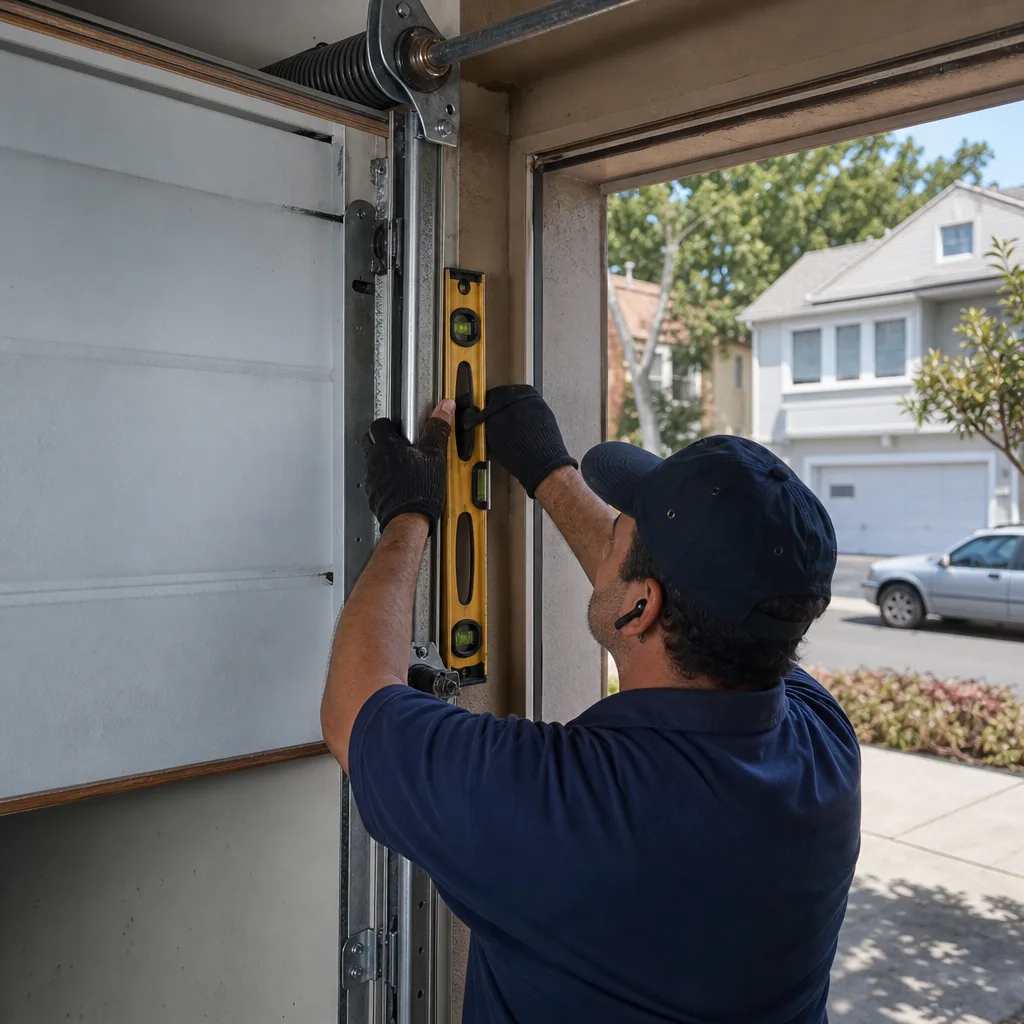
Every moving joint and every fastener that secures a moving part to a fixed part is a wear point. This section names the specific inspection criteria.
Track condition:
- Vertical tracks must be plumb within 1/4 inch over their full height. Check with a level held against the track face.
- Horizontal tracks must slope toward the back of the garage at approximately 1/4 inch per foot. This ensures the door settles into the closed position rather than drifting open.
- Track joints (where vertical meets horizontal, or where extension pieces splice) must be flush. A lip or gap will cause roller bumping and eventual derailment.
- Track mounting brackets must be tight to the jamb framing. In Oakland’s older homes, particularly in the Adams Point and Grand Lake areas, we’ve found original 1920s framing with modern track brackets attached only to deteriorated casing. The bracket pulls out, the track shifts, and the door binds.
Roller condition:
- Steel rollers: Check bearing wear by listening for grinding during operation and inspecting for rust bleed at the axle. Replace when noise increases or rust is visible.
- Nylon rollers: Inspect for cracking at the wheel body and check that the stem is tight in the hinge. Nylon degrades from UV exposure; south-facing doors in Oakland’s sunny Glenview and Oakmore neighborhoods show faster deterioration.
- Pass/fail: Any roller that wobbles in the track, makes contact noise, or shows visible deterioration is a replace item. Rollers are not repaired; they’re replaced in sets.
Fastener torque check:
The vibration of daily operation loosens hardware. With the door closed and opener disconnected, check:
- Hinge bolts at every panel joint. Tighten to snug; do not overtighten into stripped threads.
- Track bracket lag screws. These should seat firmly; if they spin, the hole is stripped and needs a larger fastener or wood filler.
- Spring anchor bracket bolts. These are under extreme tension; do not loosen. Visually inspect only. If loose, this is a professional repair.
- Cable drum set screws. These secure the lifting cable to the torsion spring shaft. Visual inspection only; tightening requires releasing spring tension.
Safety note: Any hardware under spring tension - anchor brackets, cable drums, winding cones - is not a homeowner maintenance item. The stored energy in a wound torsion spring can cause serious injury. We document this in our photo records because we’ve seen the aftermath. Clause 4 of The Haven Standard requires our technicians to photograph the failed component before quoting replacement; the corollary is that some components should never be touched by anyone without training and the correct tools.
Weather Seal and Pest Intrusion Inspection for Oakland’s Wet Season
Oakland’s wet season runs November through March, with January typically the wettest month. The threshold seal at the bottom of your door and the jamb seals at the sides and top are the primary defense against water intrusion, wind-driven debris, and pest entry.
Bottom threshold seal:
- Inspect for cracking, flattening, or permanent compression set. A seal that no longer springs back to original shape has lost its function.
- Check contact pattern across the full door width. Uneven contact indicates door sag, track misalignment, or an uneven floor.
- Pest intrusion threshold: Any gap exceeding 1/4 inch at any point allows rodent entry. In Oakland’s hillside neighborhoods - Montclair, Piedmont Pines, Redwood Heights - roof rats are active year-round and seek garage shelter in winter. A 1/4-inch gap is sufficient.
- Check for moisture staining on the garage floor just inside the door. This indicates seal failure during rain events.
Jamb seals:
- Inspect the vinyl or rubber bulb for cracks, tears, or detachment from the retainer.
- Verify that the seal compresses against the door face when closed, not just near it. A seal that barely touches is a seal that leaks.
- In Oakland’s Temescal and West Oakland areas, where industrial particulate mixes with marine moisture, we’ve found accelerated seal degradation from chemical exposure. Inspect more frequently if you’re near major thoroughfares or the port corridor.
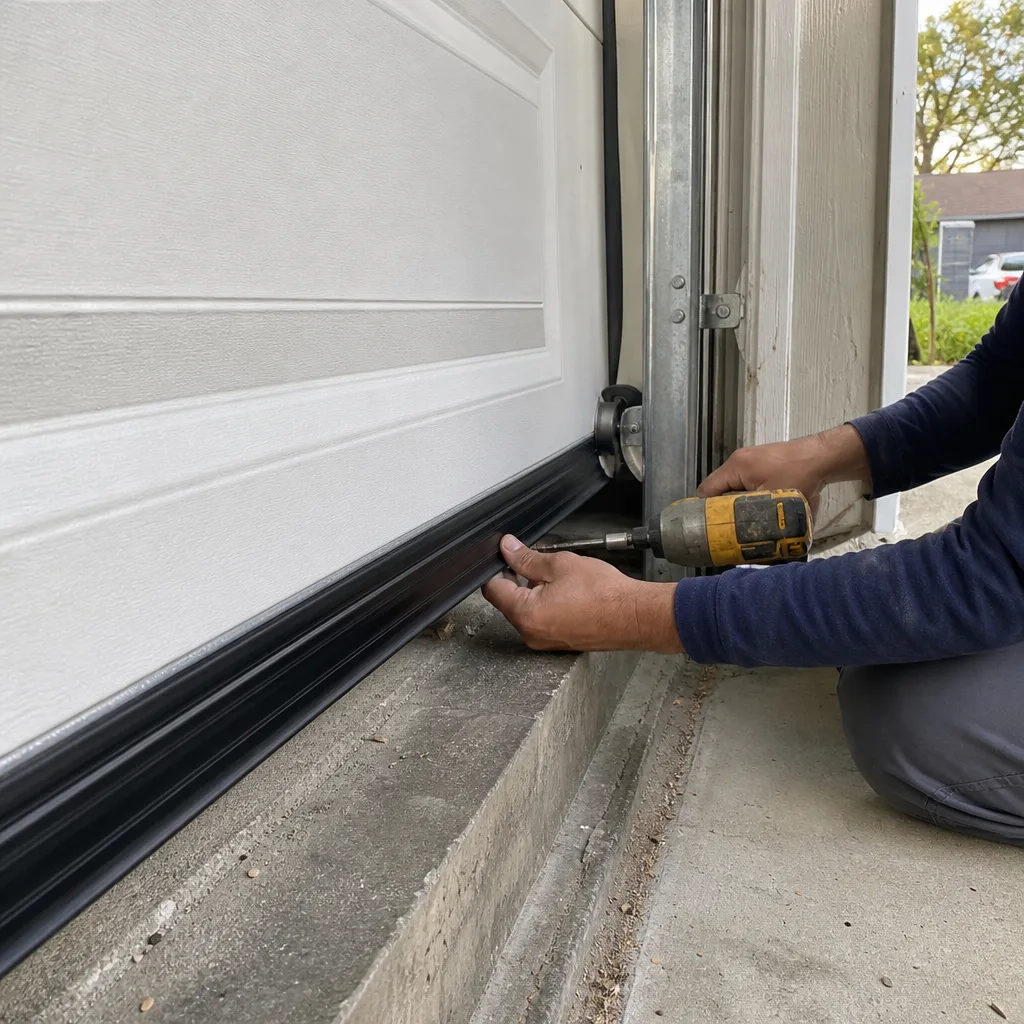
Replacement criteria: Replace threshold seal when any of the following are true: visible cracking through the material, compression set exceeding 50% of original height, gaps exceeding 1/8 inch in the contact pattern, or evidence of pest passage. Jamb seals should be replaced when the bulb material is brittle, torn, or no longer maintains contact pressure.
Weather seal replacement is a maintenance item most homeowners can handle. The retainer strips unscrew, the seal slides out, and new seal of matching profile slides in. If your door uses a proprietary retainer (common on Clopay and Amarr doors from 2015-2020), order the correct profile; generic seal will not seat properly.
Opener System, Safety Sensors, and Force Settings
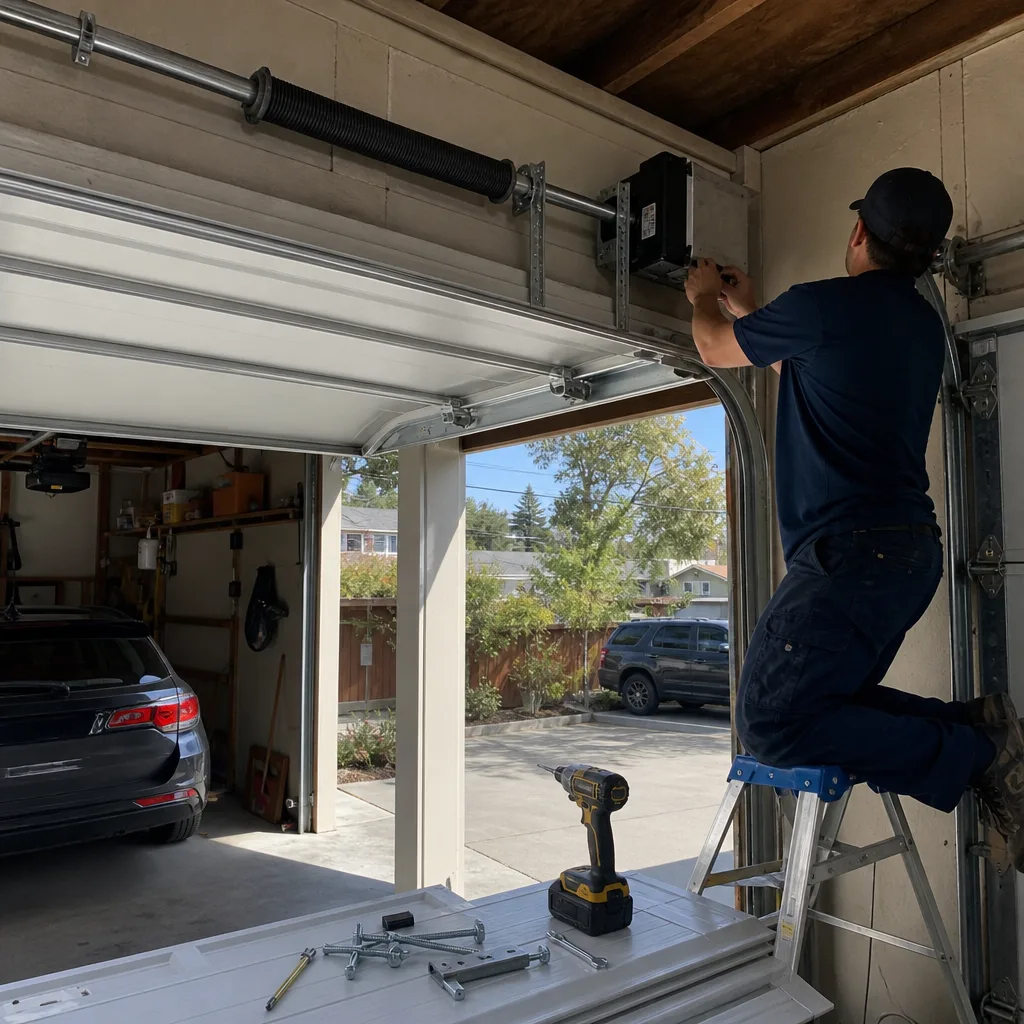
The opener is not the primary lifting force; the springs are. The opener provides controlled motion and holding force. When the opener works harder than designed, it fails prematurely.
Safety sensor test (monthly):
- Close the door using the remote or wall button.
- As the door descends, place a solid object at least six inches tall in the door path, interrupting the sensor beam.
- The door must reverse within two seconds of beam interruption.
- Fail: Door continues descending, reverses after contact, or reverses inconsistently. Clean sensor lenses with a dry cloth first; if failure persists, alignment or wiring is at fault.
Force setting verification (annually):
Opener force settings control how much resistance triggers reversal. Too low causes nuisance reversal on a binding door; too high creates a crushing hazard.
- With the door disconnected from the opener, verify it moves freely and is properly balanced.
- Reconnect the opener.
- Close the door and apply light resistance to the bottom edge as it descends - a gentle hand press, approximately 10-15 pounds.
- The door should reverse. If it continues with significant force, the down-force setting is excessive.
Travel limit check:
The door should stop at the same fully-open and fully-closed positions consistently. Drift indicates limit switch wear or trolley slippage. On Genie and Chamberlain chain-drive units from 2015-2019, we’ve seen limit switch failure manifest as the door reversing two feet from the floor - the opener interprets normal resistance as an obstruction. This is not a door problem; it’s an opener logic board or limit switch issue.
Backup battery: If your opener has battery backup (required on new installations in California since 2019), test by unplugging the opener and operating the door. Replace the battery when runtime drops below 24 hours or the unit signals low battery. In Oakland’s PG&E service territory, planned and unplanned outages make this functionally relevant.
What to Photograph and Document for Remote Quoting
This is where most maintenance guides stop short. They tell you what to inspect but not what to record. Documentation transforms a maintenance routine into a diagnostic history and enables remote quoting when you do need professional service.
After each annual inspection, photograph and note the following:
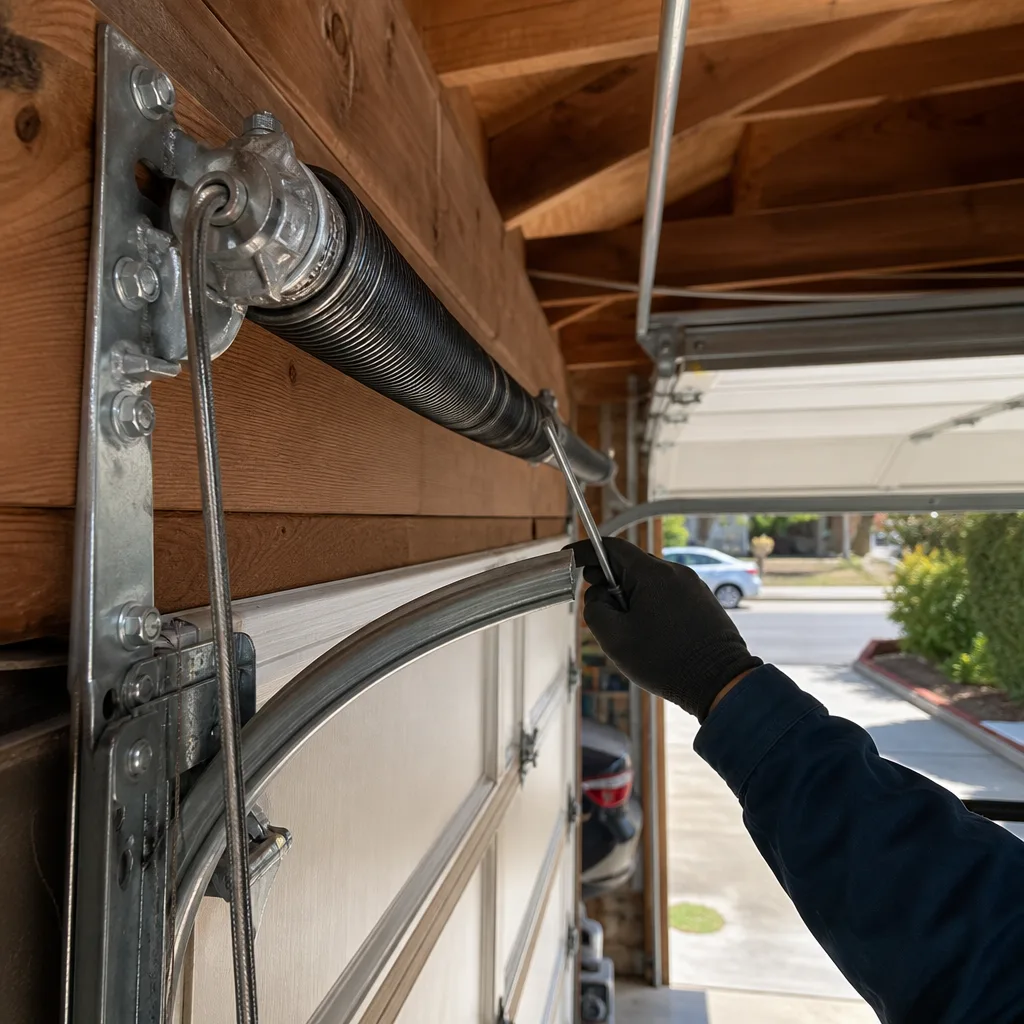
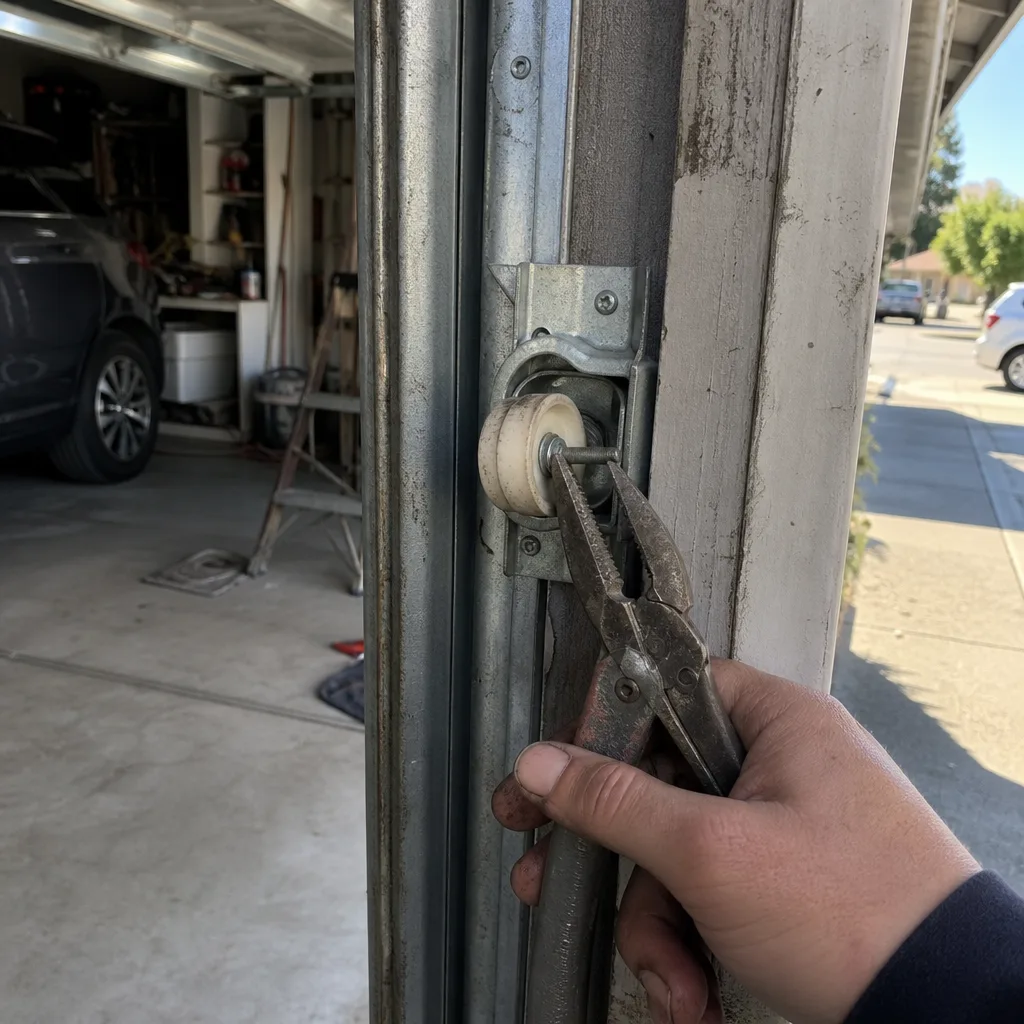
- The spring assembly: Wide shot showing both springs, the anchor bracket, and the header. Close-up of the spring cone showing any sticker or markings. If no sticker, note your estimated cycle count and calculation method.
- The cable condition: Full length from drum to bottom bracket. Note any fraying, kinking, or rust staining.
- The roller type and condition: One clear photo of a roller showing whether it’s steel, nylon, or sealed bearing. Note quantity (typically 10-12 on a standard door).
- The opener model and manufacture date: Label on the motor housing or rail. This determines parts availability for garage door opener repair in Oakland.
- The weather seal profile: Cross-section photo showing the seal shape and retainer type.
- The door panel construction: Thickness, insulation type if visible, and any window inserts. This affects weight and spring specification.
- The balance test result: Date performed, door position held, and drift measurement.
- Any anomalies found: Loose hardware, track damage, moisture staining, pest evidence.
Store these in a dated folder. When you call for service, email the relevant photos. A technician can quote spring replacement, cable replacement, or roller upgrade with confidence - and you can hold that quote against the final invoice. This is the documentation standard we apply on every Servo Garage Doors Oakland home visit: the customer receives the photo record, and the quote traces to what was photographed.
For garage door installation in Oakland, this same documentation method helps specify the correct door for replacement. A photo of the existing track radius, headroom, and side-room dimensions eliminates the measure-and-return visit that some companies use to create urgency.
The Annual Maintenance Calendar
Maintenance distributed through the year is more likely to happen than a single marathon session. This calendar aligns with Oakland’s climate pattern and typical homeowner schedules.
March (post-wet season):
- Full inspection of weather seals for winter damage
- Lubrication of all points
- Balance test
- Opener force setting verification
- Documentation update
June (pre-dry season):
- Lubrication of all points
- Hardware torque check
- Sensor alignment and test
- Inspect for UV damage on nylon rollers and seals
September (pre-wet season):
- Lubrication of all points
- Weather seal replacement if needed - before November rains
- Track cleaning and inspection
- Opener travel limit verification
December (mid-wet season):
- Lubrication of all points
- Moisture intrusion check - floor staining, seal contact
- Pest entry point inspection
- Backup battery test
Monthly, year-round: Visual walk-around, sensor test, listen for operational noise changes.
Annual cost in supplies: lithium grease ($12-$18), replacement weather seal if needed ($25-$65), possibly rollers if inspection finds wear ($40-$90 for a set). Professional inspection if you’re not comfortable with any element: $0 with our free estimate, and you’ll receive the documented photo record whether or not you proceed with recommended work.
Common Mistakes to Avoid
- Using WD-40 as a lubricant. It displaces water effectively and removes existing grease, leaving metal-on-metal contact. Within two weeks of application, noise increases and wear accelerates.
- Ignoring a single noisy roller. One failed roller overloads adjacent rollers and distorts the door panel alignment. We’ve replaced entire door sections in Oakland’s Maxwell Park because a homeowner waited six months on a $12 roller.
- Testing the balance with the opener connected. The opener motor masks imbalance. Disconnect first, every time.
- Adjusting spring tension without training. Torsion springs store lethal energy. In the Oakland hills, we’ve responded to calls where a homeowner used a pry bar and a box wrench. The Haven Standard Clause 4 exists because the customer should see the failed part before anyone quotes replacement - and because some parts should only be handled by equipped technicians.
- Replacing only one spring on a two-spring door. Springs fatigue together. A new spring paired with a fatigued spring creates imbalance and guarantees a second service call. We replace in matched pairs, documented with pre-work photography.
- Sealing a gap with caulk instead of proper weather seal. Caulk rigidifies, cracks, and traps moisture against the door bottom. Use the correct retainer-mounted seal for your door model.
- Assuming an opener problem is an opener problem. A door that binds, has broken springs, or is out of balance will cause opener strain that mimics motor failure. We diagnose the door system first, then the opener. Our free second opinion applies to any written estimate that jumps to opener replacement without this sequence.
When to Call a Professional
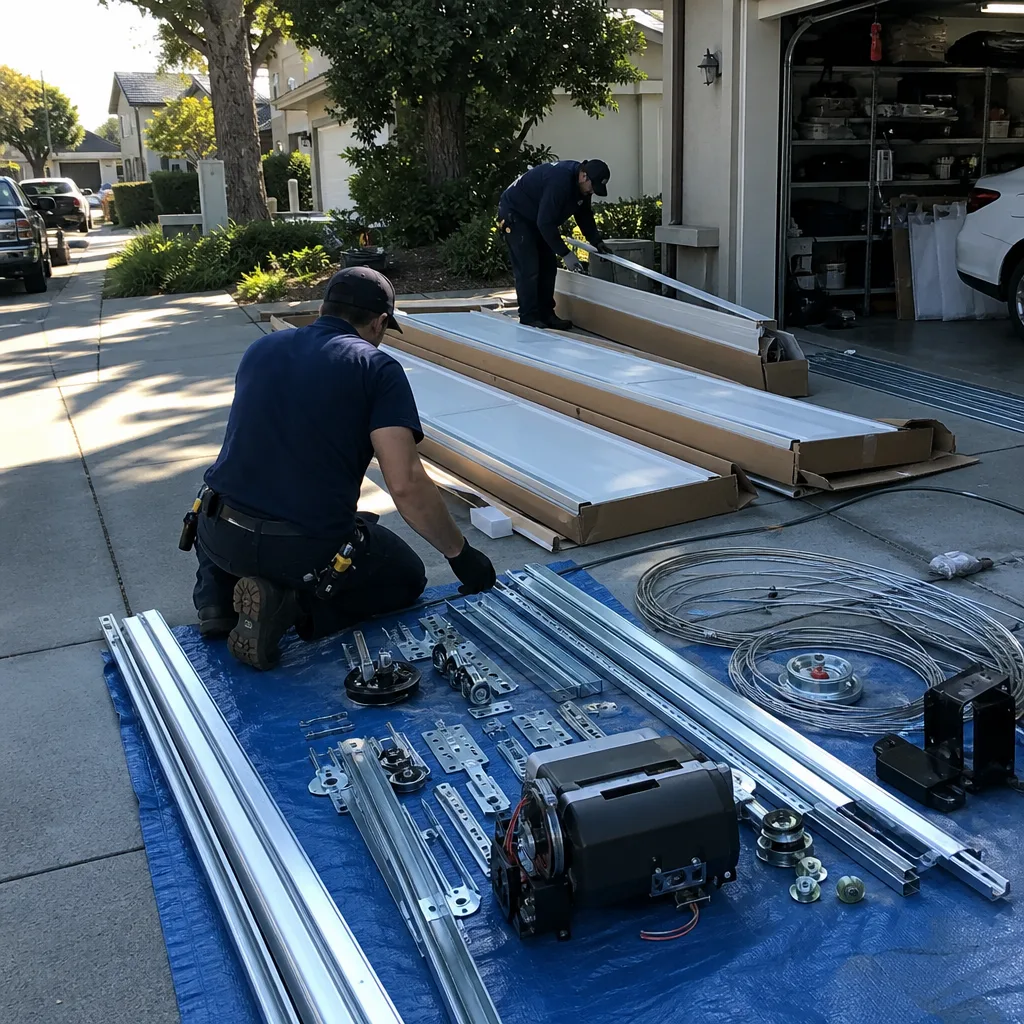
Call when your estimated spring cycle count exceeds 8,000; when the balance test fails; when you find frayed cables, loose spring hardware, or track damage; or when the opener reverses inconsistently after sensor cleaning. For more warning indicators, see our Garage Door Warning Signs: A Oakland Homeowner’s Reference Guide. Call if you smell electrical burning from the opener motor, if the door has come off its tracks, or if any component under spring tension requires attention.
We’re not going to tell you that garage door work is always dangerous - roller replacement and seal replacement are reasonable homeowner maintenance. But spring work, cable work, and any adjustment to tensioned hardware carries genuine risk. For Garage Door Repair services, Servo Garage Doors Oakland offers free estimates in Oakland - call (628) 300-0423. You’ll speak to a live person, receive a named technician and an on-the-way text, and get a flat written price before any work starts per Clause 1 of The Haven Standard. The photo record of findings and completed work is included, tracing back to the founding rule that the customer sees the failed part before anyone quotes replacement.
Frequently Asked Questions
Professional inspection and tune-up service in Oakland typically runs $89-$180, depending on door size, opener type, and whether component replacement is needed. Servo Garage Doors Oakland provides free estimates with a flat, written price before any work begins - no coupon required. Call (628) 300-0423 for an exact quote on your specific door configuration.
Homeowners can safely perform lubrication, sensor testing, weather seal replacement, and visual inspection. Spring work, cable adjustment, and any task requiring release of torsion spring tension should be performed by trained technicians due to stored energy that can cause serious injury - learn How to Hire a Garage Door Contractor in Oakland: A Step-by-Step Guide. We document this in our photo records because we’ve seen the consequences of untrained attempts.
Quarterly lubrication is appropriate for Oakland’s moderate-humidity, marine-influenced climate - March, June, September, and December. West-facing doors exposed to salt air may need monthly checks during the November-through-March wet season. Annual full inspection covers hardware torque, balance testing, and opener force verification.
Use a lithium-based grease or synthetic garage door lubricant, NLGI Grade 2. Apply to hinges, roller bearings (steel rollers only), torsion spring coils, and lock mechanisms. Do not use WD-40, which strips existing lubricant and attracts grit. Do not lubricate the track interior where rollers ride.
Estimate your cycle count from move-in date and household usage pattern; standard springs are rated for 10,000 cycles. Visible signs include a gap in the torsion spring coil, door falling during the balance test, or the opener straining to lift. If your estimated count exceeds 8,000, schedule professional inspection. Spring replacement requires specialized tools and training.
No. Servo Garage Doors Oakland provides a flat, written price and written scope before any work starts - Clause 1 of The Haven Standard. The price quoted is the price invoiced. If additional issues are found during work, we document them photographically, explain the finding, and quote separately before proceeding. No surprises, no escalation.
The Bottom Line
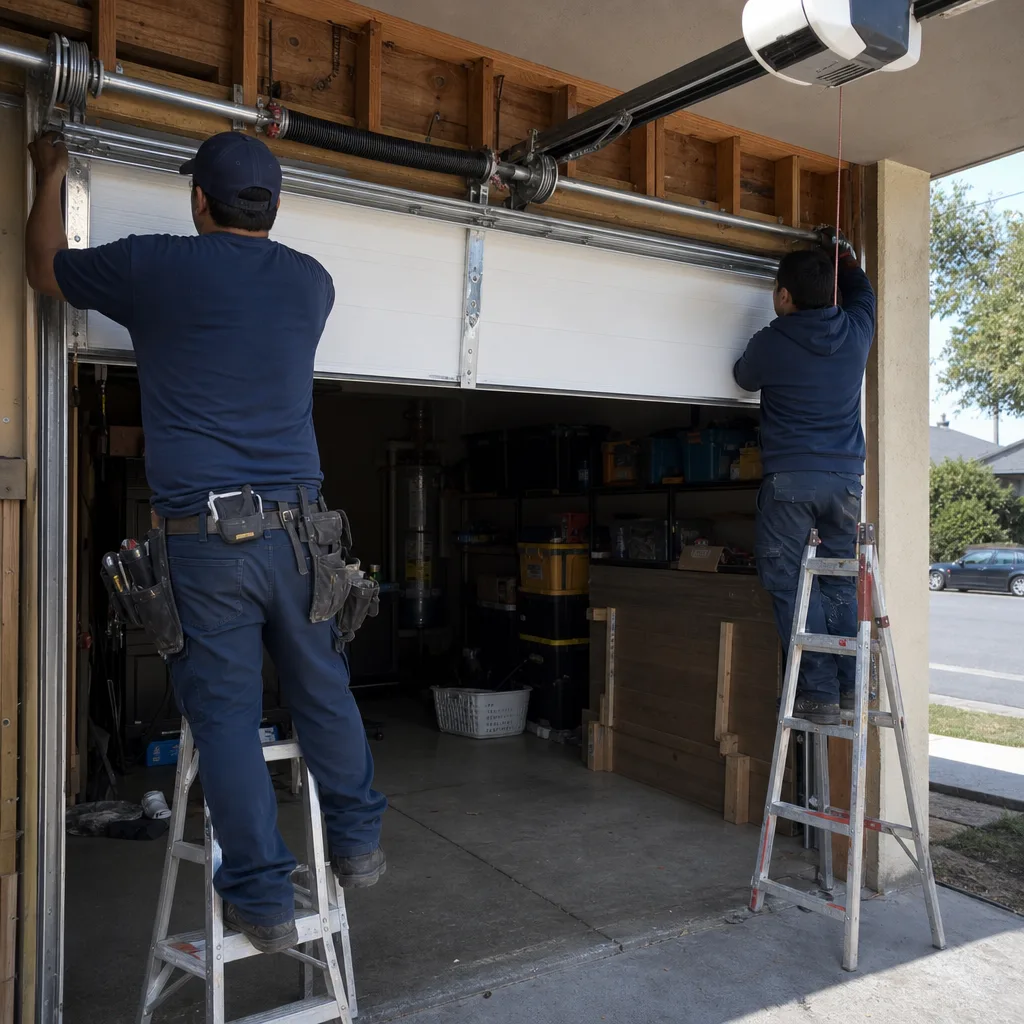
Garage door maintenance is measurable, documentable, and mostly predictable. The spring’s cycle life is finite. The balance test has a numerical pass criterion. The weather seal gap that admits pests is 1/4 inch. Oakland’s wet season is November through March. Record what you find, photograph what you can’t explain, and know that professional help is available with a documented price before anyone touches your door. For more guides & resources, explore our blog. The 18,000+ doors we’ve serviced since 2015 - every one with a written price first and a photo record at completion - confirm that evidence outperforms urgency every time.
Written by Marcus Deller, Owner at Servo Garage Doors Oakland, serving Oakland since 2015.